Retail Awning Refurbishment Options Explained
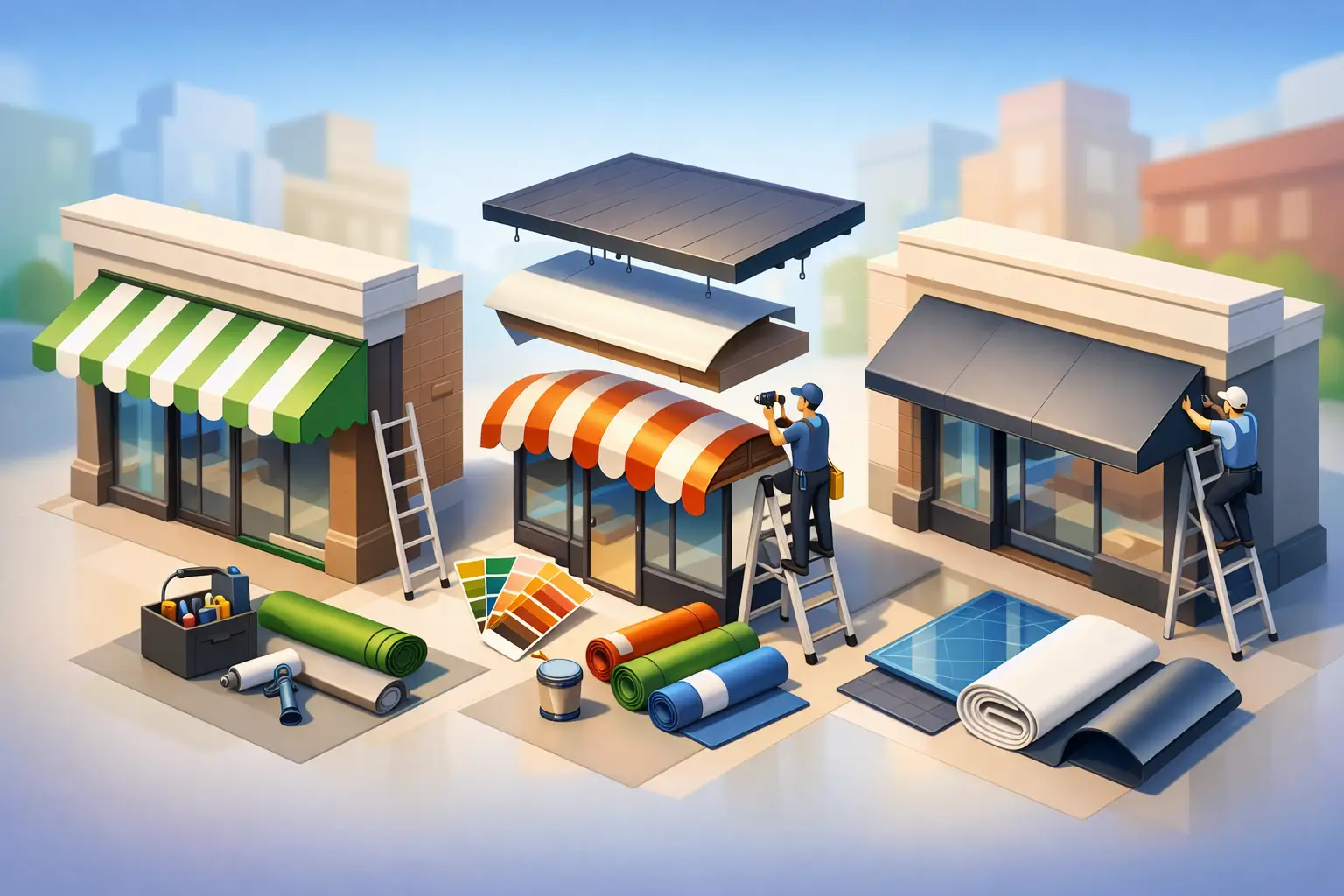
A tired shopfront awning tells people something before they even step inside. Faded skins, rust marks, loose panels or dated signage can make a good business look neglected. That is why retail awning refurbishment options matter - not just for appearance, but for safety, compliance and the long-term value of the building.
For shop owners, landlords and property managers, the right answer is not always a full replacement. In plenty of cases, a solid frame can be kept and brought back up to standard with targeted works. In other cases, patching an old awning is just money spent twice. The key is knowing what can be saved, what needs attention now, and what will hold up in a busy public-facing setting.
When refurbishment makes sense
Refurbishment usually suits an awning that is structurally serviceable but cosmetically worn, weathered or partly damaged. The frame may still be sound, while the sheeting, fascia, paint finish, drainage components or sign face have reached the end of their useful life.
This is common with street-front retail sites where the awning has taken years of sun, rain and airborne grime. In these cases, refurbishing can improve presentation without the cost and disruption of a completely new build. It can also be a practical option when a tenancy is being refreshed, a new operator is moving in, or a landlord wants to lift the look of the frontage before leasing.
That said, refurbishment only works if the awning is worth refurbishing. If the frame has major corrosion, movement, water ingress into critical connections, or non-compliant elements that cannot be economically corrected, replacement is often the cleaner and safer path.
Common retail awning refurbishment options
The best refurbishment scope depends on the condition of the existing structure and what the site needs to achieve.
Re-skinning the awning
If the frame is still in good order, replacing the outer skin can make a major difference. This may involve new metal sheeting, updated cladding or refreshed fascia finishes. It is one of the most effective retail awning refurbishment options when the problem is age, staining, dents or general visual wear rather than structural failure.
Re-skinning can also be useful when branding changes require a cleaner fascia line or a better base for new signage. The trade-off is that a new outer finish will not fix hidden issues in the supporting frame. Any refurbishment worth doing should include a proper inspection before new materials go over old problems.
Repairing localised structural damage
Not every awning with rust or impact damage needs to come down. Localised repairs may be possible where corrosion is limited, fixings have failed in small areas, or sections have been damaged by weather or vehicle contact.
The important point here is honesty. Surface rust and isolated deterioration can often be repaired. Widespread corrosion in key members is a different story. A contractor should be clear about that from the start, because a patched awning still has to be safe above a public footpath.
Repainting and protective coatings
A proper repaint can do more than improve street appeal. On steel components, surface preparation and coating systems help slow further deterioration. This is especially relevant on older shopfront awnings where paint failure has allowed moisture to start working into the structure.
Preparation is what matters. A quick cosmetic coat over flaking surfaces will not last. If repainting is part of the job, the substrate needs to be treated properly so the finish holds and the refurbishment actually buys time.
Fascia and signage upgrades
Sometimes the structure is acceptable, but the awning still looks dated because the fascia is warped, stained or badly detailed. Replacing fascia elements and tidying the sign area can give the whole frontage a sharper, more professional look.
This is often one of the more cost-effective upgrades for retailers. It improves visibility from the street and can be staged with other tenancy works. The catch is that signage changes can involve separate approvals depending on the site, so it is worth checking that early.
Gutter, drainage and waterproofing works
Leaks are one of the most common reasons awnings get flagged for repair. Overflowing gutters, failed joints and poor drainage can stain the frontage, damage finishes and create hazards at entry points.
Fixing drainage should never be treated as a side issue. Water is what turns a cosmetic problem into a structural one. If refurbishment is happening, it makes sense to deal with drainage, flashings and waterproofing details at the same time.
What sits behind the decision - repair, refurbish or replace?
The right path usually comes down to five things: structural condition, compliance, budget, appearance and remaining lifespan.
A landlord preparing a property for lease may want the quickest way to improve presentation and remove obvious maintenance issues. A national retailer might be more focused on brand consistency and a fresh finish across multiple sites. A hospitality venue may care more about weather protection, lighting integration and frontage appeal at night. Same awning category, different job priorities.
Budget matters, but so does timing. A cheaper repair can be the wrong choice if it only delays a full replacement by a year. On the other hand, replacing a serviceable awning when a re-skin and repair would do the job is not always smart spending either.
This is where experience counts. A proper assessment should separate cosmetic defects from structural ones and give a realistic view of what life is left in the existing awning.
Safety and compliance are not optional
Retail awnings sit over pedestrian areas, entries and active shopfronts. That means refurbishment work has to be planned around public safety, site access and the condition of the structure itself.
If demolition of sections is required, or if there is any concern about instability, the job needs to be managed properly with the right controls in place. The same goes for access equipment, trafficable areas and protection of the public during works.
Compliance is another reason many clients seek specialist help rather than relying on a general handyman approach. Depending on the awning and the scope of work, engineer input, certification or council-related requirements may come into play. Skipping that process can create bigger issues later, especially for commercial owners and managing agents.
How to assess retail awning refurbishment options properly
A decent assessment starts with the frame, not the paint. The visible finish might look rough, but the real question is what sits underneath. Corrosion at joints, sagging members, failed fixings, water damage around penetrations and movement in the structure all need to be checked before any scope is set.
After that, the refurbishment plan should match the site. A small suburban strip shop has different access and presentation needs from a CBD frontage or a busy hospitality tenancy. Operating hours, neighbouring businesses, signage requirements and public access all affect how the work should be staged.
Good quoting should also be specific. Vague repair descriptions often lead to disputes once the awning is opened up. It is better to be clear about likely inclusions, possible latent issues and whether engineer certification may be required if structural works are involved.
Getting the finish right matters
Commercial clients are not looking for theory. They want the awning to be safe, tidy and built to last. A refurbishment that looks good on handover but starts showing defects six months later is not a good result.
That is why workmanship matters as much as scope. Straight fascia lines, neat junctions, proper fixings, sound waterproofing details and a clean finish all affect how the frontage presents over time. On a retail site, those details are not minor. They are part of how the business is seen from the street every day.
In Sydney, where shopfronts cop strong sun, coastal exposure in some areas and plenty of grime in busy commercial strips, the materials and detailing need to suit the environment. Shortcuts show up quickly.
Choosing a contractor for refurbishment work
Retail awning jobs are not just about installing materials. They often involve partial demolition, making safe around the public, repairing existing structures, coordinating access and delivering a finish that suits a trading business.
That is why specialist experience is worth paying for. A contractor who understands shopfront awnings will usually be more direct about what can be repaired, what should be replaced and what risks sit behind the existing structure. They are also more likely to handle the practical side properly, from quoting through to certification support where needed.
Advanced Awnings works in this space because commercial awnings need a straightforward approach - assess the condition properly, do the safe work first, and finish the job to a standard that holds up.
If your awning is looking tired, do not assume the only answer is to rip it down. Some structures respond well to targeted refurbishment. Others are telling you they have had their run. The useful next step is not guesswork - it is a clear site assessment that tells you what is worth saving and what is not.