A Guide to Emergency Awning Repair Decisions
A damaged shop front awning is not just an untidy maintenance issue. If a sheet is lifting, steel is bent, water is pouring through the ceiling line or a section is hanging over the footpath, it can quickly become a risk to staff, customers and the public. This guide to emergency awning repair decisions helps commercial property owners and operators make the right call early - before a manageable repair turns into a safety incident or a larger replacement job.
Start with safety, not the repair method
The first decision is whether the area can remain open. A loose fascia, cracked glazing, torn fabric, falling rust flakes or movement in the frame should be treated seriously, particularly on a busy street front. Keep people away from the affected area, move outdoor tables or stock if needed, and arrange temporary barriers beneath the awning where it is safe to do so.
Do not ask staff to climb ladders, pull down loose sheeting or secure a moving component during wet or windy conditions. Commercial awnings are often fixed above entry doors, glass shop fronts and public footpaths. What looks like a simple loose panel may be connected to corroded fixings or a frame that has lost its support.
If there is an immediate risk of material falling, restrict access and organise an experienced contractor to assess the structure. Where electrical wiring, illuminated signage or water ingress is involved, isolate the relevant services through a qualified tradesperson. Fast action matters, but unsafe action creates a bigger problem.
What caused the damage?
Emergency repairs work best when the cause is identified, not just covered over. A temporary patch can buy time, but it will not solve a frame that is corroding from inside, a failed wall fixing or drainage that repeatedly sends water into the awning structure.
Storm damage is a common trigger. Strong winds can lift roof sheets, distort aluminium trims and loosen flashing. Heavy rain can expose blocked gutters, failed sealant joints and low points where water pools. In these cases, the visible leak is not always the main fault. Water may have travelled along the frame before appearing inside the shop.
Vehicle strikes are different again. A delivery truck, ute or raised equipment can bend a post, fascia or cantilevered section. Even when the awning remains standing, impact damage can place stress on connections that are not visible from ground level. It should be checked before the area returns to normal use.
Age and corrosion are usually slower problems, but they can become urgent without much warning. Rust around steel members, bubbling paint, stained soffit linings and recurring leaks often indicate that moisture has been present for some time. Replacing a small section may be sensible if the remaining structure is sound. If corrosion has spread through key supports, replacement may be the safer and more cost-effective option.
How to assess the urgency of an awning repair
A practical assessment considers three things: the chance of further movement, the consequences if material falls, and whether the damage affects the building envelope or trading area.
A minor issue may include a small sealant failure, isolated surface rust or a damaged trim that is firmly fixed and away from pedestrian traffic. These jobs still need attention, but they can often be planned around business hours and weather conditions.
Urgent damage includes active water entry above electrical fittings, loose cladding, sagging gutter sections, damaged flashing near a shop front, or any visible movement in the awning frame. The priority is to make the area safe, stop further water damage where possible and assess what has failed.
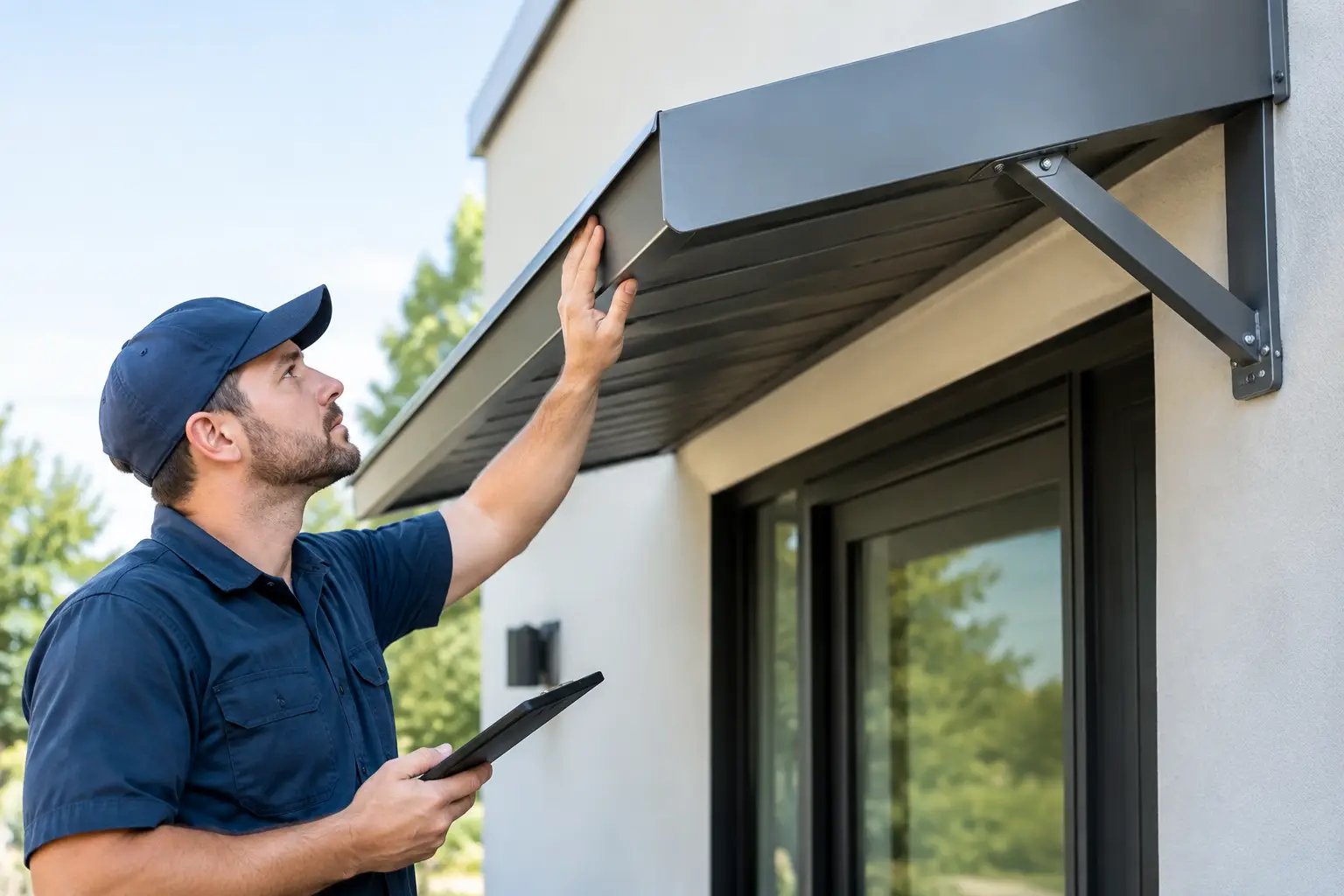
Critical damage is where part of the awning may collapse or fall, wall connections have pulled away, a support has been struck, or material is hanging above a public area. This may require temporary exclusion zones, controlled removal of dangerous sections and an engineer’s input before repair or replacement proceeds.
Photos are useful, provided they are taken safely from the ground. Record the affected area, any water stains inside the premises, the weather conditions and when the issue was first noticed. This gives the contractor a clearer starting point and may assist with landlord, strata or insurance discussions.
Repair, temporary make-safe work or replacement?
Not every emergency calls for a full replacement. The right scope depends on the condition of the structure, the availability of matching materials, the age of the awning and whether the repair will provide a reliable result.
When a targeted repair makes sense
Repair is generally suitable where damage is localised and the primary frame remains sound. This could involve replacing roof sheeting, refixing flashings, renewing sealant, repairing gutters, replacing a damaged fascia section or treating and repainting minor corrosion after the affected material has been properly prepared.
A good repair should address the source of the problem. For example, resealing a joint without correcting a blocked gutter or poorly formed flashing may stop a leak briefly, then send water back into the premises after the next downpour.
When temporary works are the sensible first step
After a storm or impact, a contractor may need to make the awning safe before final repair materials can be measured, fabricated or supplied. Temporary works can include removing loose sheets, securing stable sections, weatherproofing exposed areas and managing water runoff.
This is not cutting corners. It is often the safest way to protect the site while a proper repair is planned. The scope should be clear: what has been made safe, what remains restricted, and what follow-up work is required.
When replacement is the better decision
Replacement is worth considering when corrosion is widespread, the frame has been significantly distorted, repairs would involve repeated patching, or the existing awning no longer meets the practical needs of the premises. A tired awning can also affect the appearance of a retail or hospitality frontage, particularly when mismatched sheets and old repairs have built up over time.
A replacement can allow for improved drainage, new cladding, better integration with signage and a cleaner finish. It does cost more upfront than a limited repair, but repeated emergency call-outs, internal water damage and trading disruption can make the cheaper option costly over several years.
Compliance and public-facing sites
Shop front awnings sit in a sensitive part of a commercial building. They are visible, exposed to weather and often positioned over customers and passers-by. That makes workmanship, safe access and proper fixings essential.
Depending on the extent of the work, the structure and the site conditions, engineering advice or certification may be required. This is particularly relevant after impact damage, when structural members are being replaced, or where the awning design is changing. A contractor should be upfront about what the work involves rather than promising a quick cosmetic fix without checking the underlying structure.
For premises in active trading areas, the work also needs to be organised around pedestrian safety, deliveries, neighbouring tenancies and access to the entry. Controlled demolition of unsafe material is sometimes the right first move. It is not always possible, or responsible, to preserve every part of a damaged awning.
Questions to ask before approving emergency awning work
Before proceeding, ask what caused the damage, whether the frame and wall fixings have been inspected, and whether the quoted work is temporary or permanent. Confirm how the site will be made safe during the job, especially if the awning sits over a footpath or customer entrance.
It is also reasonable to ask what materials will be used, whether colour matching is possible, and whether any engineering or approval requirements apply. The clearest quotes explain the repair scope, exclusions and next steps. They do not hide uncertainty behind vague wording.
For landlords and property managers, establish who is responsible for associated damage inside the tenancy. Water coming through an awning can affect ceilings, lighting, walls, stock and electrical systems. Coordinating the awning repair early helps prevent different trades from working around an unresolved source of water.
Plan the permanent fix before the next storm
Once the immediate danger has been controlled, do not let a temporary patch become the permanent arrangement by default. Arrange a proper inspection, keep records of recurring leaks or movement, and act on defects while access and materials are straightforward. For Sydney commercial premises, a well-built, properly repaired awning protects more than the shop front - it protects the people and business operating beneath it.