Awning Repair Services Sydney Businesses Trust
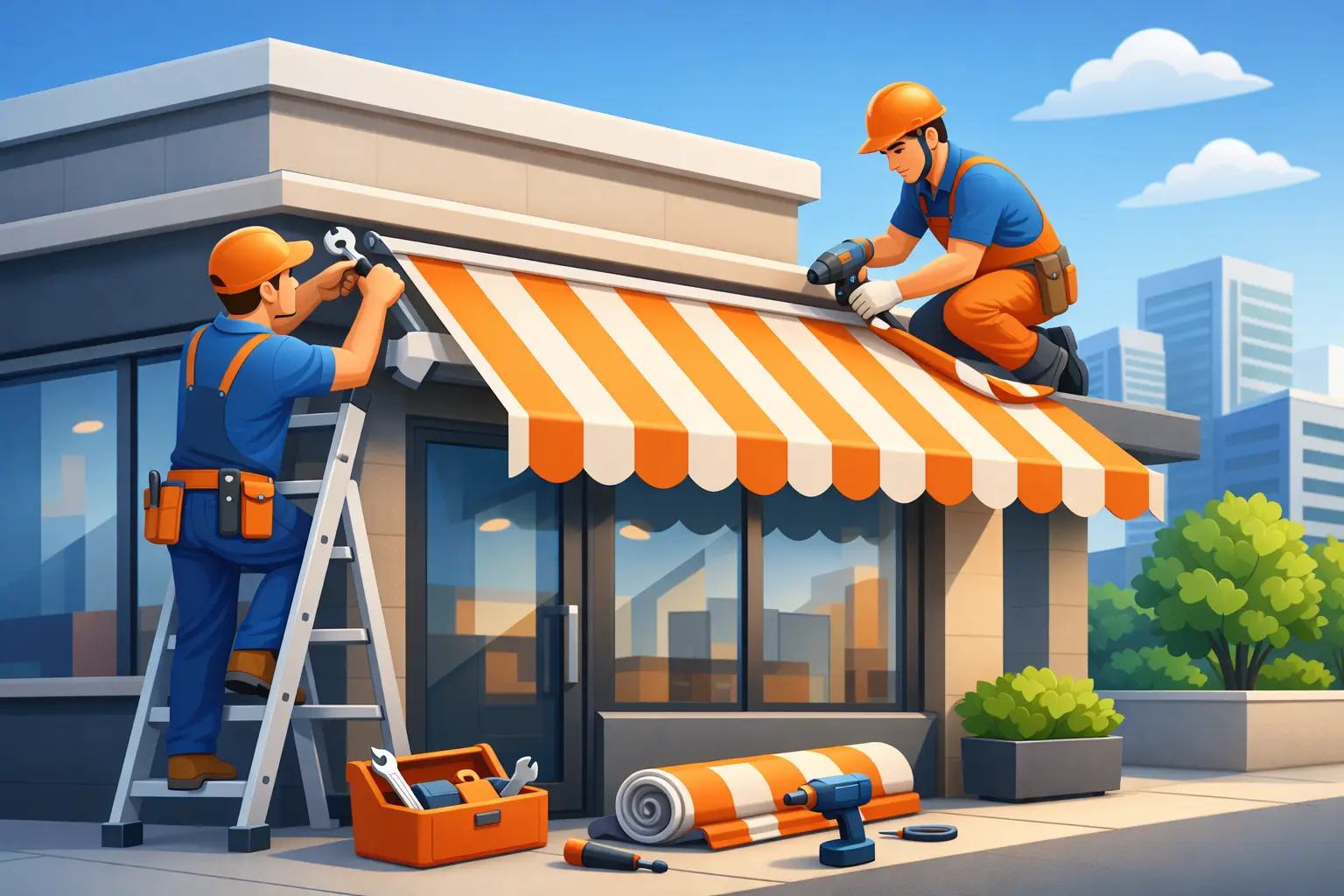
A loose fascia panel over a busy footpath is not something you leave until next week. The same goes for a bent frame after a ute strike, rust showing through old steel, or a torn section that starts flapping in bad weather. When you need awning repair services Sydney businesses can rely on, the job is not just about making the frontage look better. It is about public safety, keeping the site operational, and making sure the repair holds up in real conditions.
Commercial awnings take a beating. Sun, wind, rain, vehicle impact, ageing fixings, water ingress and poor past workmanship all show up eventually. For shop owners, landlords and property managers, the real cost of damage is rarely limited to the awning itself. It can affect presentation, tenant confidence, pedestrian safety and, in some cases, compliance obligations.
What good awning repairs actually involve
A proper repair starts with the structure, not the surface. If an awning is sagging, vibrating, pulling away from the building or showing corrosion around key connection points, covering it up with a cosmetic patch is a short-term fix at best. The right approach is to inspect the frame, fixings, sheet material, drainage points and any signs of movement before deciding what can be repaired and what needs replacement.
That matters most on street-facing commercial sites. A shopfront awning is exposed, visible and often directly above members of the public. If there is deterioration in the frame or cracking around brackets and welds, the repair needs to be handled with the same care you would expect on any other external building element. It is not handyman work.
In some cases, the repair is straightforward. A section of damaged sheet, loose trim, failed sealant or minor water ingress can often be addressed without major disruption. In other cases, the damage tells you there is a bigger problem underneath. Rusted steel, timber decay, failed drainage or impact damage usually needs more than a quick patch.
When to call for awning repair services in Sydney
If the awning has visible movement, water leaks, obvious corrosion or any sign it may have been struck, it is worth getting it looked at early. Delay usually makes the scope worse. Water gets into places it should not, rust keeps spreading, and small issues around the edges can become structural.
The same applies when tenants or staff start reporting changes. A new rattle in wind, ponding water after rain, stains on the underside, fixings working loose, or metal sheeting lifting at the edge are all warning signs. None of those should be ignored on an active commercial frontage.
Awnings also deserve attention after changes on site. New signage, nearby construction, alterations to drainage, or another contractor working around the frontage can all affect performance. What looked sound six months ago may not stay that way once loads, water flow or access conditions change.
Repair or replacement - it depends on the condition
This is where experience matters. Not every damaged awning should be replaced, and not every old awning is worth repairing. The decision comes down to the age of the structure, the extent of deterioration, how the awning was originally built, and whether the repair can be carried out safely and properly.
If the core frame is sound and the issue is localised, repair is often the sensible option. It can restore presentation, extend service life and avoid the cost of a full rebuild. That is usually the best outcome when the damage is limited and the structure remains fit for purpose.
If the frame has widespread corrosion, poor previous modifications, movement at key fixing points or multiple failing elements, replacement may be the better investment. Spending money on repeated patch repairs can cost more over time, especially when access equipment, traffic management or after-hours work is involved. A straight answer at this stage saves clients money and avoids repeat disruption.
Why commercial awning repairs are different from residential work
Commercial sites come with more pressure and more risk. There is public access, brand exposure, neighbouring tenancies, delivery schedules and trading hours to work around. The job has to be organised properly, with safe access, clear communication and work that suits the building and its use.
That is a big reason clients look for specialist awning repair services Sydney operators can trust on shopfront and canopy work. A repair above a suburban patio is one thing. A repair over a busy retail frontage or hospitality venue is another. The standard of planning, site control and workmanship needs to match the environment.
For many jobs, there are practical questions that need to be sorted before tools come out. Can the site keep trading during the works? Does the area need exclusion zones or pedestrian management? Is temporary making-safe required before the full repair? Is engineer input needed based on the damage? These are normal parts of commercial delivery, not extras.
The value of compliant, well-planned repairs
A good repair should leave the awning safer, more stable and better presented than it was before the damage occurred. It should also be documented clearly enough that owners, tenants and managers know what was found and what was done.
That is especially important where damage affects structural elements or where certification may be relevant. Some jobs need more than labour on site. They need proper assessment, clear scope, and coordination with engineers or other trades so the result stands up technically as well as visually.
Workmanship counts here. Poorly aligned sheet replacement, rough joins, mismatched finishes, weak patching and exposed fixings can make a shopfront look second-rate even if the hazard is gone. On a commercial frontage, presentation matters because it is part of how the business is seen. The repair needs to look right and perform properly.
What clients should expect from awning repair services Sydney wide
The process should be clear from the start. First, the damage is inspected and the immediate risks are identified. If the awning is unsafe, making the area safe comes first. After that, the repair scope can be defined properly, including any demolition, fabrication, replacement sections, access needs and finishing work.
Quoting should be practical and direct. Clients do not need vague promises. They need to know what is being repaired, what is not, where the risks sit, and whether there is any chance the scope could change once the damaged area is opened up. On older awnings, that honesty matters. Hidden corrosion and water damage are common, and pretending otherwise helps no one.
Communication during the job is just as important. Property managers and business owners need to know timing, access requirements and how the works will affect the site. Delays can happen, especially with weather or fabrication lead times, but silence is what causes frustration. Straight updates keep projects moving.
For businesses across Greater Sydney, a contractor with proper insurance, commercial site experience and a track record in shopfront awnings is worth more than the cheapest quote. Repairs done badly tend to come back as defects, complaints or fresh safety issues.
Common repair issues on shopfront awnings
Most repair work falls into a few familiar categories. Impact damage is common, especially where delivery vehicles, elevated equipment or signage works are involved. Corrosion is another regular issue, particularly on older steel-framed awnings or where drainage has been poor for years. Water ingress around joints, flashings and penetrations also shows up often and can quietly damage the structure long before the leak is obvious from below.
Fixing failure is another one to watch. If bolts, anchors or brackets are working loose, the problem may be more than age. It can point to movement, poor original installation or substrate deterioration. Then there is plain wear and tear. Sheet materials, trims and finishes do not last forever, especially on exposed frontages that carry signage and cop regular weather.
An experienced contractor will not treat all of these issues the same way. A leak caused by failed sealant is not managed like a leak caused by a rusted frame. A bent awning edge after impact is not the same as ongoing deflection across the whole structure. Good repairs start with getting the diagnosis right.
Choosing a contractor who will do it properly
The safest choice is a contractor who understands commercial awnings as structures, not just cladding. That means knowing how to assess damage, manage demolition where needed, fabricate or replace components properly, and keep the public protected while the work is underway.
It also means being realistic. Some jobs can be turned around quickly. Others need staged work, engineer input or partial replacement to get a sound result. A dependable contractor will tell you that upfront. They will not oversell a patch repair if the awning is at the end of its life, and they will not push a full replacement when a solid repair will do the job.
That practical approach is what many commercial clients are after. Advanced Awnings, for example, works in that space where safety, finish and real site delivery all matter at once. For owners and managers, that kind of specialist experience often makes the difference between a repair that lasts and one that becomes next quarter's problem.
If your awning is showing damage, movement or signs of deterioration, act early. The best repair jobs are usually the ones handled before the issue turns into an emergency over a busy footpath.