Council Orders to Fix or Replace Commercial Awnings
A council notice about your shopfront awning usually lands at the worst possible time - when trade is busy, tenants are already asking questions, and nobody wants a safety issue on display above a public footpath. If you have received council orders to fix or replace commercial awnings, the main thing is not to guess your way through it. You need to know what the order actually requires, what condition the structure is in, and whether a repair is enough or full replacement is the safer and more practical option.
For landlords, property managers and business owners, the pressure is not just about compliance. It is also about risk. A damaged or deteriorated awning can create problems for pedestrians, tenants, neighbouring properties and your own insurance position. Once council has raised the issue, delays can make a bad situation harder to manage.
What council orders usually mean
A council order is generally issued when an awning is considered unsafe, deteriorated, non-compliant or at risk of causing harm. In many cases, the concern is visible from the street - corrosion, sagging, loose sheeting, cracking, water damage, failed fixings or movement in the structure. Sometimes the problem is reported after a storm. Other times it comes up during an inspection or after complaints from the public.
The wording matters. Some orders require repair, some call for structural assessment, and some effectively leave replacement as the only realistic path. That is why the first step is reading the notice closely rather than jumping straight into works. You need to understand whether council is asking for temporary make-safe action, engineering review, demolition, rectification, or complete removal and replacement.
If the awning sits over a public area, the stakes are higher. Councils tend to act firmly where there is any chance of falling material, structural failure or ongoing public exposure.
Council orders to fix or replace commercial awnings - what to do first
Start with the site condition, not assumptions. A shopfront awning can look repairable from the ground and still have hidden steel corrosion, failed connections or water ingress inside the framing. On older commercial buildings, cosmetic patching often hides a bigger problem.
Take clear photos, secure any obviously loose material if it is safe to do so, and arrange a proper inspection by a contractor who works specifically with commercial awnings. If the notice mentions structural concerns, engineer involvement may also be needed early. That gives you a clearer path on whether the awning can be repaired, partly rebuilt, or should be demolished and replaced.
Speed matters, but so does getting the scope right. Quick patch jobs can end up costing more if they do not satisfy council or if the awning fails inspection later.
Check the condition beyond the obvious
The visible issue is not always the main issue. Rusted fascia panels might point to water getting into the frame. Cracked cladding might be the result of movement. Loose signs fixed to an old awning can add load where the structure is already weakened.
A proper assessment should look at the frame, fixings, roof sheeting, drainage, soffit lining and how the awning ties back to the building. If there has been previous alteration work, that should also be checked. Older structures have often been modified over time, and not every change has been done to the same standard.
Understand whether repair is realistic
Repair is not always the cheaper option once labour, access, engineer input and compliance work are added up. If a large section is compromised, replacement can be the cleaner and more dependable result. On the other hand, if the main structure is sound and the damage is localised, a targeted repair may satisfy the order and keep disruption down.
This is where experience matters. The right contractor will tell you plainly if the awning is worth saving or if you are spending good money chasing a short-term fix.
Repair or replacement depends on the structure
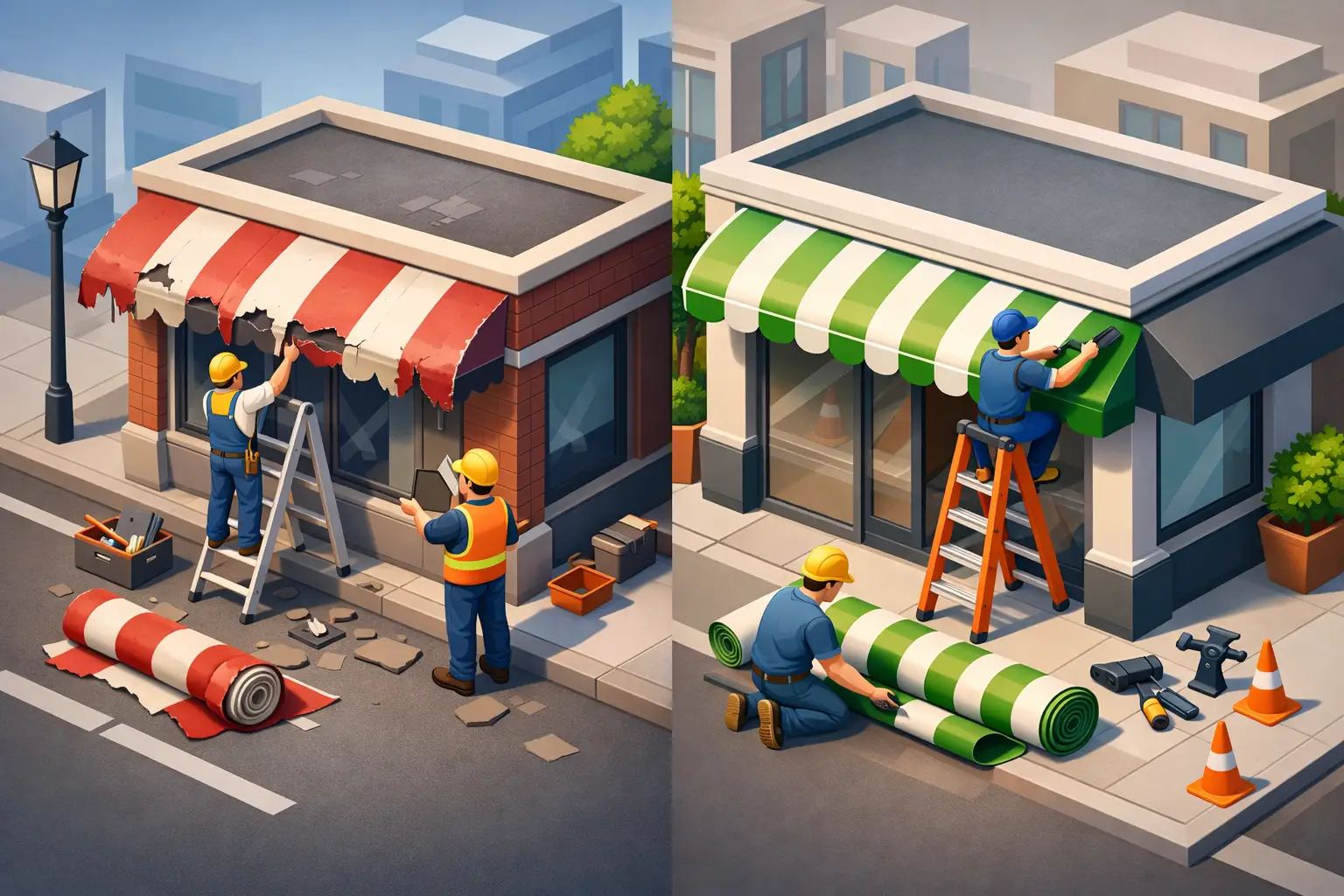
There is no one-size-fits-all answer. Some council orders to fix or replace commercial awnings can be resolved with rectification works such as replacing damaged sheeting, repairing rusted sections, improving drainage, renewing fixings or making the awning safe with structural upgrades. That can be the right path where the framework remains sound and compliant works are achievable.
In other cases, replacement is the safer call. Severe corrosion, long-term water damage, widespread movement, poor original construction or repeated patch repairs usually point that way. If demolition is required, it needs to be done properly, especially over active footpaths or shop entries where public safety controls are non-negotiable.
There is also the question of appearance. For street-facing premises, an awning is not just a weather cover. It is part of how the property presents. A pieced-together repair might pass inspection, but still leave the frontage looking tired. Owners and tenants often weigh that up when deciding whether to invest in a proper replacement.
Compliance is not just about ticking a box
A lot of owners make the mistake of treating the council notice as paperwork only. It is really a construction and risk issue first. If the awning needs structural certification, new fabrication, demolition controls or staged works, you want that handled by people who understand the process from site inspection through to completion.
That includes safe access, pedestrian protection, traffic or footpath management where needed, disposal of old materials, and coordination with engineering requirements. On occupied commercial sites, it also means planning works around trading hours where possible and keeping disruption manageable.
A straightforward quote is important, but so is knowing what is included. You do not want surprises halfway through the job because the scope was based on surface-level observations only.
How to deal with timing and tenant pressure
Once council is involved, deadlines matter. But not every site can be turned around overnight. Fabrication lead times, engineering review, weather and access conditions can affect the program. The best approach is to move quickly on assessment and make-safe work, then lock in a realistic plan for repair or replacement.
For leased properties, communication matters nearly as much as the works themselves. Tenants want to know whether the site will remain open, whether access will change, and how long the frontage will be affected. A clear timeline and a contractor who stays contactable can take a lot of heat out of the process.
If the awning condition is serious, temporary closure of a section may be the right call. That is never convenient, but it is better than pushing on with a known public hazard.
Choosing the right contractor for awning orders
This type of work is not the same as a basic handyman repair. Shopfront awnings sit over public areas, connect into existing commercial buildings, and often need a mix of demolition, fabrication, installation and compliance support. You want a contractor who has done this before and can speak plainly about risk, scope and buildability.
Look for practical experience with commercial frontage work, not just general roofing or residential shade structures. Insurance, safe work methods, engineer coordination and finish quality all matter here. So does the ability to identify when an awning is beyond patching.
In Sydney, where many street-front premises sit in busy pedestrian areas, that experience becomes even more valuable. The work has to be done safely, look right, and hold up over time.
When replacement is the smarter long-term decision
Owners sometimes resist replacement because the upfront cost is higher. Fair enough. But if the existing awning has ongoing corrosion, poor drainage, dated materials or previous repair history, replacement can save repeated call-outs and keep you out of the same compliance trouble later.
A new awning also gives you the chance to improve finish, signage integration and weather protection while meeting current structural expectations. That matters for retail, hospitality and any premises where the frontage affects customer impression.
The key is not overspending for the sake of it. It is making a sensible call based on condition, safety and long-term value.
For any owner or manager dealing with council pressure, the best move is usually the same - get the awning properly assessed, act early, and use a contractor who knows commercial shopfront work from the inside out. A clear scope and honest advice at the start can save a lot of wasted time later.