
Shopfront Canopy Replacement Sydney
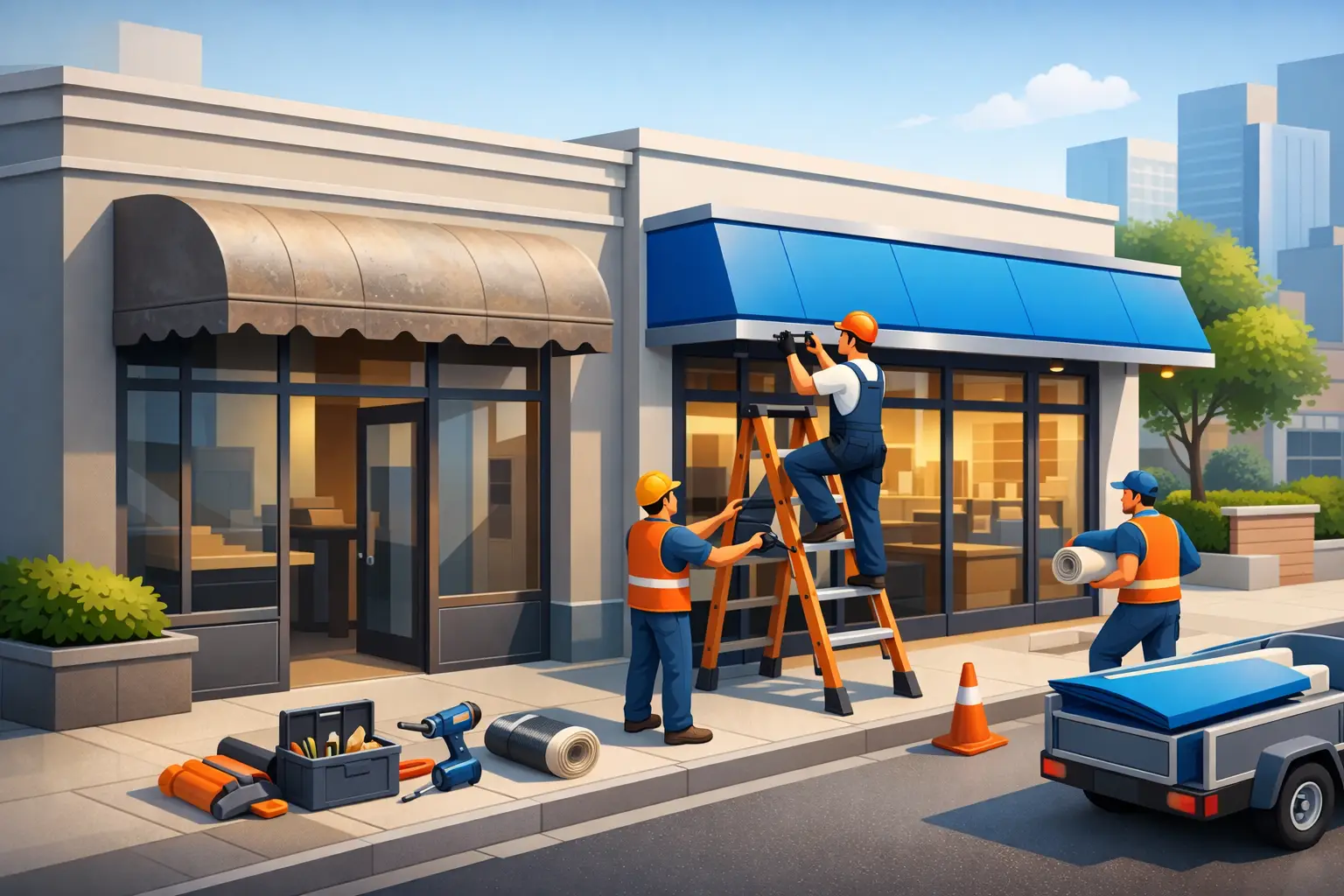
A tired canopy does more than make a shop look rough. It can create real problems - water getting back into the façade, loose sheeting over a public footpath, rusted steel, poor drainage, and a frontage that sends the wrong message before a customer even walks in. If you are looking into shopfront canopy replacement Sydney, chances are the issue is no longer cosmetic. It is now about safety, presentation, and getting the job done properly with minimal disruption to trade.
When replacement is the right call
Not every awning problem needs a full rebuild. Some shopfront canopies can be repaired if the structure is sound and the damage is localised. A torn section of cladding, failed fixings, minor leaks, or isolated sheet damage can often be dealt with without pulling the whole structure down.
The line gets crossed when the canopy has broader structural wear, visible rust through key members, sagging, water ingress that keeps returning, or old materials that are no longer worth patching. In those cases, repairs start becoming repeat costs. You spend money to hold together something that is already at the end of its service life.
Older shopfront canopies also bring compliance issues into the picture. What was installed years ago may not suit the current condition of the building, the current use of the premises, or the level of public exposure around the frontage. A replacement gives you the chance to deal with the whole structure properly rather than keep chasing faults one by one.
What a proper replacement actually involves
A lot of people hear "replacement" and think mainly about the new canopy going up. In practice, the hard part often starts before that. A proper job begins with assessing the existing structure, how it is fixed, what condition the supporting elements are in, and what risks are involved in demolition.
That matters because shopfront awnings sit over active commercial frontages. There may be passing foot traffic, neighbouring tenancies, signage, glazing, lighting, and access constraints. Pulling down an old canopy without a clear method can create more trouble than the original defect.
A complete replacement usually covers safe demolition of the existing awning, disposal of old materials, preparation of the fixing points, fabrication or supply of the new canopy, installation, finishing details, and where needed, engineer certification support. The exact scope depends on the building and the design, but the main point is simple - replacement is not just a roofing job. It is a street-facing construction job that needs to be handled with care.
Demolition is not the part to rush
If the existing canopy is rusted, poorly fixed, or partly failed, demolition needs to be planned around public safety first. Temporary protection, site control, clear sequencing, and experienced handling all matter. This is especially true where the awning is above an entry, over a narrow footpath, or close to glass shopfronts.
A quick cheap strip-out can become expensive fast if it damages the façade or creates shutdowns for the tenant. Getting this stage right protects the site and keeps the rest of the job moving.
Installation needs to suit the building
No two shopfronts are exactly the same. The frontage width, wall construction, drainage needs, signage allowance, and street exposure all affect what should be installed. Some clients want a like-for-like replacement. Others use the opportunity to improve projection, clean up the appearance, or switch materials for better durability and lower upkeep.
There is no one-size-fits-all answer here. The best result is usually the one that suits the premises, the building condition, and the budget without cutting corners on structure or finish.
Signs your current canopy is costing you more than you think
Some failures are obvious. You can see rust stains, bent framing, lifting panels, or water running where it should not. Other costs are quieter and build up over time.
A leaking or deteriorated canopy can stain walls, damage signage, affect lighting, and create a poor first impression on customers. For retail and hospitality sites, frontage presentation matters. People notice when a premises looks neglected, even if they cannot explain why.
There is also the operational side. Ongoing patch repairs mean repeat call-outs, internal coordination, and lost time. Property managers and owners often reach a point where a full replacement is simply the cleaner financial decision. One well-executed project is easier to manage than a string of temporary fixes.
What affects the cost of shopfront canopy replacement Sydney
Cost always depends on the job. Anyone giving a flat figure without looking at the site is guessing. The main factors are the size of the canopy, the condition of the existing structure, access requirements, demolition complexity, material selection, drainage details, and whether engineering input is required.
A straightforward replacement on an accessible frontage will usually cost less than a job over a busy pedestrian area with difficult removal conditions or façade repairs needed underneath. The finish also matters. Basic functional work and high-end presentation work are not priced the same, and they should not be.
The better question is not just "what does it cost?" but "what is included?" A clear quote should set out the scope properly so you know whether demolition, disposal, installation, finishing, and compliance-related items have been accounted for. That avoids the usual problems later when items start being treated as extras.
Compliance, certification and public-facing risk
With shopfront structures, safety is never just about the people on site. It is also about the public moving underneath and around the frontage every day. That is why experience matters. A canopy may look simple from the street, but once you start removing and rebuilding overhead elements on an active premises, risk management becomes a major part of the job.
Depending on the project, engineer certification support may also be part of the process. For owners and managers, this is not paperwork for its own sake. It is part of making sure the finished structure is fit for purpose and defensible if questions come up later.
If you are responsible for a commercial property, it makes sense to choose a contractor who understands this side of the work, not just the visual finish. A neat canopy that has been poorly planned is not a good result.
Choosing a contractor for shopfront canopy replacement Sydney
This kind of work rewards specialists. General builders can do many things well, but shopfront awnings come with their own practical issues - street exposure, demolition risk, fixing methods, weatherproofing, frontage presentation, and the need to keep disruptions under control.
When comparing contractors, look past the sales talk. Ask how they approach demolition, how they manage safety around active premises, what experience they have with commercial street-front structures, and whether they can handle the work from quote through to completion. Clear communication counts too. If the quoting process is vague, the job often follows the same pattern.
It also helps to work with a team that understands long-term ownership. Some clients need a single replacement. Others manage multiple sites and need a reliable contractor who can assess repairs, provide practical advice, and step in when a frontage starts failing. That kind of relationship saves time because you are not re-explaining the basics every time a problem comes up.
Why timing matters more than most owners expect
Waiting too long rarely makes a canopy replacement easier. Water damage spreads. Rust worsens. Fixings deteriorate. What might have been a controlled replacement can turn into urgent make-safe work followed by a rushed project under pressure.
There is also the tenant and customer side to consider. Planned works are easier to schedule around trading hours, deliveries, and access needs. Emergency jobs are not. If the canopy is already showing signs of structural or weather-related failure, acting early usually gives you more options and a better result.
For many commercial owners and operators, the main goal is simple. They want a frontage that looks right, performs properly, and does not create a safety headache. That comes down to honest assessment, proper demolition, solid installation, and workmanship that holds up after the site fences are gone.
If your current canopy is past patching, replacing it properly is usually the cheaper and safer decision in the long run. A good shopfront should protect the premises, present the business well, and stay out of your way once the job is done.