
Best Materials for Shop Awnings
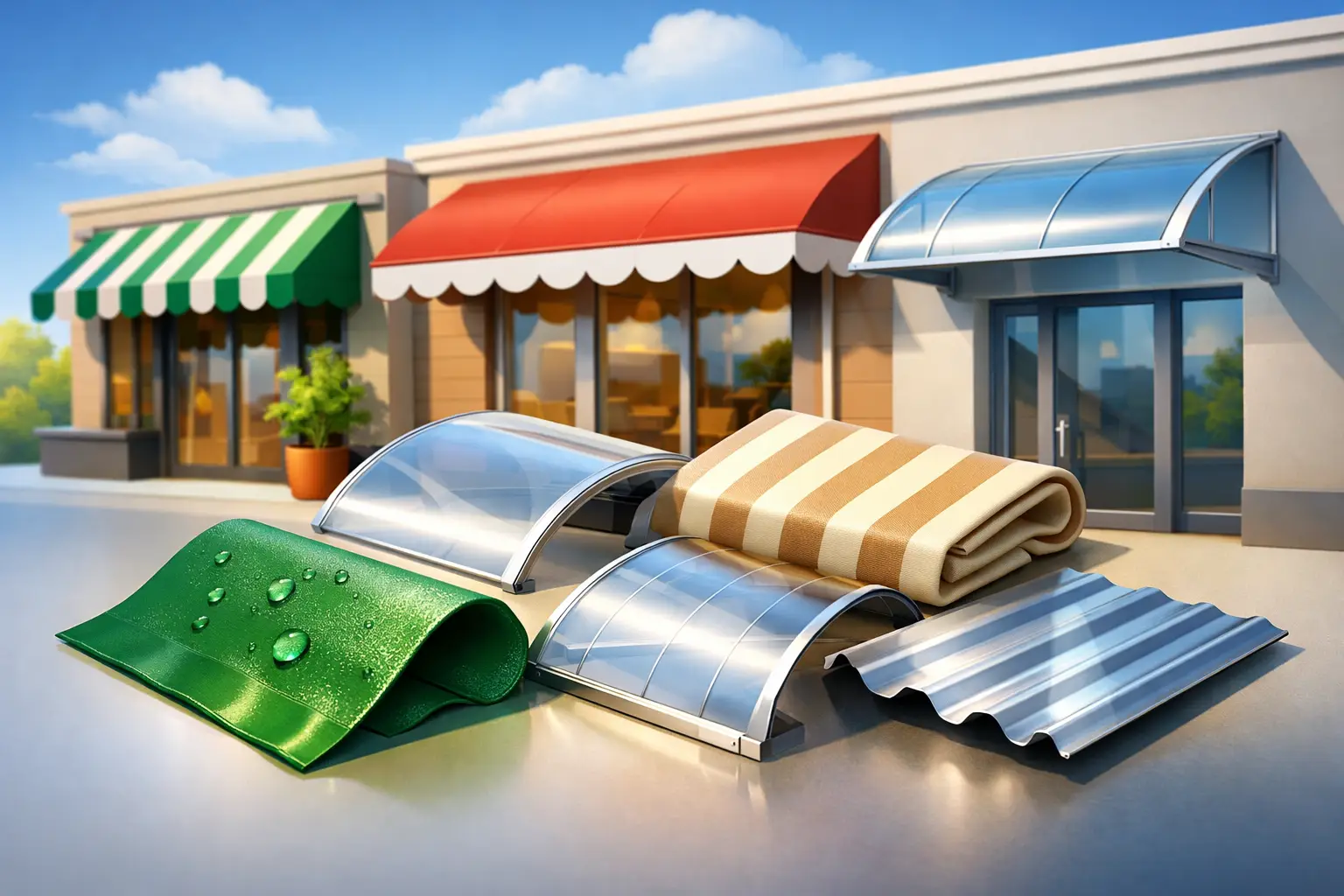
A shop awning can look fine on day one and still be the wrong build for the site. That usually shows up later - faded fabric, rust marks, loose fixings, ponding water, or a frontage that dates far too quickly. If you are weighing up the best materials for shop awnings, the right answer is not just about appearance. It is about span, exposure, maintenance, compliance, and how the awning will perform over years of sun, rain and street use.
For most commercial sites, there is no single material that wins every job. A café on a busy strip, a retail tenancy under strata rules, and a warehouse office with a wide street frontage all ask different things from the structure. The best result usually comes from matching the frame, roof or skin, and finish to the site conditions rather than chasing the cheapest option upfront.
What makes the best materials for shop awnings?
A good shop awning material needs to do three jobs at once. It has to hold up structurally, present well to the public, and stay practical to maintain. If one of those falls over, the whole installation becomes a headache.
In real commercial settings, a material choice should be judged on weather resistance, lifespan, ease of repair, weight, fire performance where relevant, and how it handles signage or lighting attachments. You also need to consider the existing building, council requirements, and whether engineer certification will be needed for the proposed design.
That is why the conversation should never start and end with colour or price per square metre. The more useful question is this: what material suits the frontage, the load requirements, and the level of upkeep the owner is realistically prepared to carry?
Metal frames are the backbone of most commercial awnings
For fixed shop front awnings, the structural frame is commonly steel or aluminium. Both have their place, but they behave differently.
Steel
Steel remains a strong choice for larger awnings, heavier signs, and sites where a more substantial frame is needed. It offers strength across longer spans and handles custom fabrication well. For street-facing commercial work, that matters when the awning is doing more than simply providing shade.
The trade-off is corrosion risk. If steel is not properly protected with the right coating system, rust will show up sooner than it should, particularly in exposed or coastal areas. Steel is also heavier, which can affect installation planning and the loads being transferred back to the building.
Done properly, though, steel gives a solid, durable result. It suits projects where strength, rigidity and long-term stability matter more than shaving weight.
Aluminium
Aluminium is lighter, naturally corrosion resistant, and often a practical option for shop awnings where weight is a concern. It is widely used in modern commercial frontages and works well where a clean finish is the priority.
It does not have the same raw strength as steel for every application, so the design has to suit the material. On the right job, aluminium can reduce maintenance concerns and still deliver a tidy, professional outcome. For some replacements, especially where the existing structure places limits on added load, it can be the smarter call.
Polycarbonate is useful, but only on the right frontage
Polycarbonate sheeting is often chosen when natural light is part of the brief. It can soften the feel of an entry and avoid making a shopfront too dark underneath, which is useful for certain retail or hospitality sites.
There are clear benefits. Polycarbonate is lighter than glass, impact resistant, and available in different tints and profiles. It can suit canopies over entries, walkway covers, and smaller awnings where transparency is desirable.
The downside is that it does not suit every commercial look. Lower-grade products can yellow, become brittle, or show wear faster under harsh UV exposure. It can also look less premium over time if the detailing is poor or the sheet thickness is underspecified. For a shopfront where visual standard matters, product quality and proper installation make all the difference.
Metal cladding is one of the most reliable roofing options
If the goal is a hard-wearing, fixed awning with a crisp commercial finish, metal sheeting or cladding is often one of the best materials for shop awnings. It is practical, durable, and suits a wide range of building styles.
Colourbond-style steel systems are commonly used because they present well and cope with Australian conditions when specified and installed correctly. They also offer consistent colour options, good durability, and straightforward replacement if damage occurs to a section down the track.
For larger shop front awnings, metal roofing gives dependable weather protection and a finish that usually ages better than cheaper fabric systems. It also works well with integrated gutters, fascia details and signage zones.
The main consideration is heat and noise. In heavy rain, metal can be louder than other materials, and without the right detailing it can contribute to heat build-up. Those are manageable issues, but they should be considered at design stage rather than after installation.
Fabric awnings still have a place
Fabric is not automatically the wrong choice for commercial work. In fact, for some shopfronts it is exactly the right one. It can soften the façade, carry branding well, and provide a more traditional street presence for cafés, boutiques and hospitality venues.
Acrylic canvas and PVC-based fabrics are the usual contenders. Acrylic fabrics generally offer a more premium appearance and good colour retention, while PVC systems can provide stronger waterproofing and a more utilitarian finish.
Where fabric falls short is lifespan under constant exposure and the risk of looking tired before the rest of the frontage does. Stitching, tension, edge wear and fading all need to be considered. Retractable systems also add moving parts, which means more maintenance than a fixed awning.
For operators who want a softer visual style and are prepared for periodic recovering or replacement, fabric can still be a sound option. For owners who want the lowest maintenance path over many years, rigid materials often make more sense.
Composite panels and sign-ready finishes
Some commercial awnings are doing double duty as weather cover and branding platform. In those cases, aluminium composite panels and similar sheet finishes can be very effective. They provide a flat, modern surface that works well for signage, lighting integration and a sharp architectural appearance.
These systems are especially useful where the awning fascia is a major part of the business presentation. They can produce a cleaner, more uniform result than piecing signage onto a basic frame after the fact.
That said, panel systems need proper support, careful detailing and attention to compliance. The material itself may look simple, but the build behind it still needs to be right. If the structure, drainage or fixings are poorly handled, the finish will not save the job.
The site usually decides the material
The best material on paper can be the wrong material on the building. A narrow frontage with limited fixing points, a heritage streetscape, a tenancy under body corporate controls, or a highly exposed corner site can all change the recommendation.
In Greater Sydney, sun exposure, wind, salt air in some areas, and heavy rainfall events all need to be factored in. Awnings on active footpaths also need a stronger focus on safety during both installation and long-term use. Materials cannot be chosen in isolation from the way the awning is going to be built, fixed, drained and maintained.
That is why experienced commercial awning contractors will usually ask about the building condition, the awning span, existing signage, intended use and compliance requirements before recommending a finish. It is not overcomplicating the job. It is how you avoid paying twice.
How to choose between the best materials for shop awnings
If you want the short version, steel and metal cladding are often the most dependable combination for fixed commercial awnings that need strength and long-term durability. Aluminium can be a strong alternative where lower weight and corrosion resistance are priorities. Polycarbonate suits jobs that need light transmission, while fabric suits frontages where branding or style matters more than maximum lifespan.
The better decision usually comes from balancing four things: structural need, appearance, maintenance and budget over the full life of the awning. Cheapest to install is rarely cheapest to own.
A landlord may want a harder-wearing material that keeps maintenance calls down. A retailer may care more about presentation and signage. A hospitality operator may need shade, weather cover and a frontage that feels welcoming rather than industrial. All are reasonable priorities, but they point to different material choices.
Before committing, it is worth asking how the material will look in five years, how easy it is to repair, whether it suits the building, and what certifications or approvals may be required. That conversation tends to sort practical options from expensive mistakes pretty quickly.
A shop awning is one of the first things people see from the street. If the material is right, it does its job quietly for years. If it is wrong, the problems are usually public, costly and hard to ignore. A careful material choice at the start is simply part of doing the job properly.