
Awning Demolition Sydney Done Properly
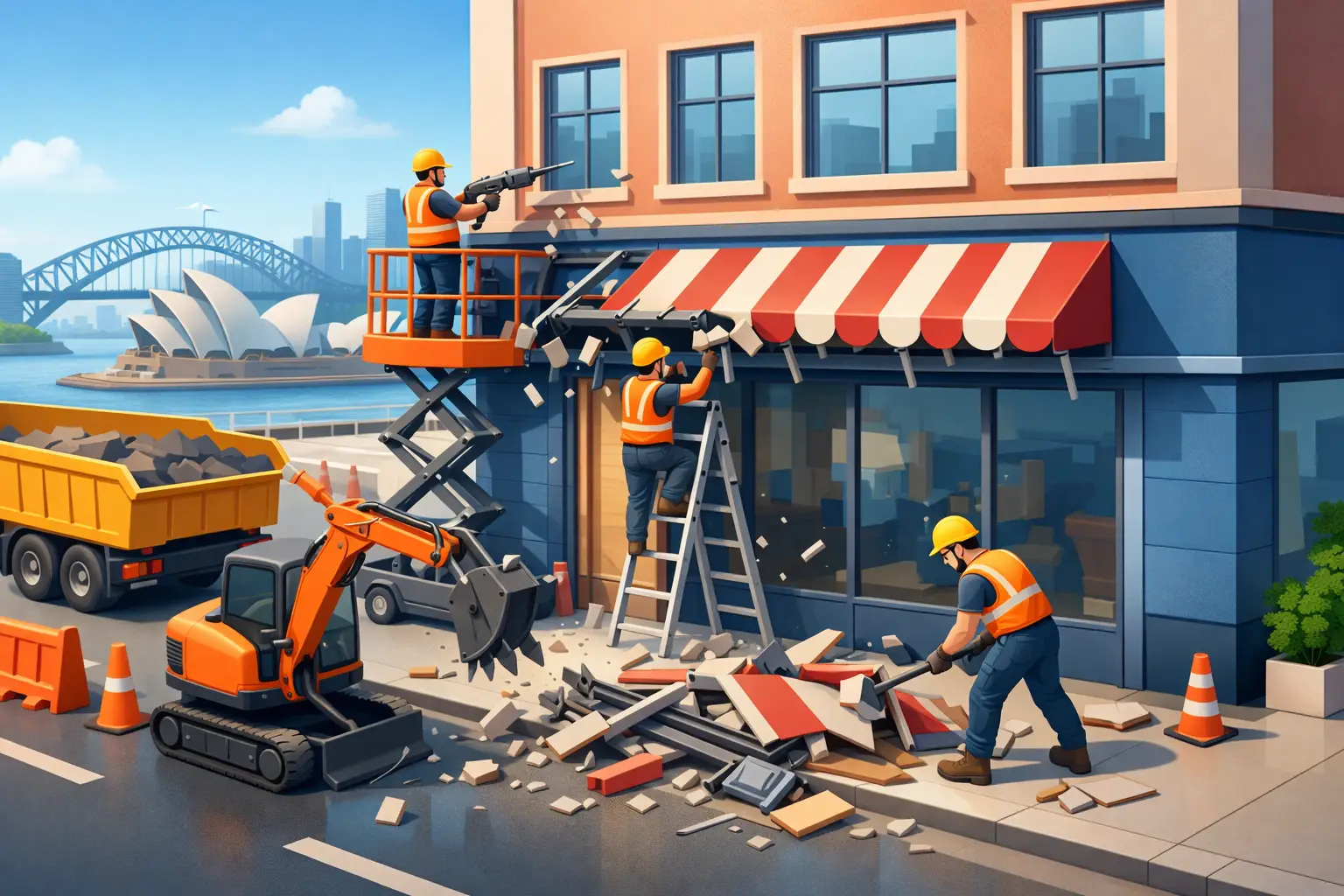
If a shop front awning is rusting through, pulling away from the façade or getting in the way of a refurbishment, leaving it there usually makes the job harder. Awning demolition Sydney projects need more than a bloke with tools and a skip bin. They need planning, safe access, proper site control and a clear idea of what happens to the frontage once the old structure comes down.
For commercial sites, the risk is not just the awning itself. It is the foot traffic underneath, the neighbouring tenancy next door, the signage fixed to the frame, the wiring tucked inside, and the building face you still need in good condition after demolition. That is why experienced awning removal matters.
What awning demolition actually involves
On paper, demolition sounds simple. Remove the old awning, cart it away, move on. In practice, a shop front awning can be tied into more than most owners expect. Steel posts may be fixed into the slab. Wall brackets may be anchored deep into brick or concrete. Lighting, sign panels, stormwater components and electrical runs can all be part of the structure.
A proper demolition scope starts by working out what is structural, what is decorative and what must stay in place. That sounds basic, but it is where plenty of messy jobs go wrong. If someone starts cutting before they understand the load path and fixing points, you can end up with damage to the frontage, unsafe movement in the frame, or delays while other trades step in to sort it out.
For active premises, timing also matters. Some awnings can be removed while the business is closed for a short period. Others need staged works so neighbouring tenancies and pedestrian access are managed properly. There is no one-size-fits-all approach.
Why commercial awning demolition is not a general demo job
Shop front awnings sit in public-facing areas. That changes the whole job. You are often working over a footpath, near glass shop fronts, under live signage or beside parked vehicles. Even a small canopy removal can become high risk if the area is not controlled properly.
This is where specialist experience counts. A contractor who regularly works on commercial awnings understands how to isolate the area, sequence the removal, protect the façade and leave the site ready for repairs or replacement. That is different from general strip-out work inside a tenancy.
There is also the visual side of the job. Once the awning is gone, the old fixings, patched surfaces and exposed sections of wall are on show. Owners, landlords and builders usually want the site left in a presentable state, not with rough cut-offs and a frontage that looks half-finished. Good demolition work is not just about getting the structure down. It is about what the frontage looks like after.
Awning demolition Sydney projects need a safe process
In Sydney shopping strips and busy commercial areas, public safety is not optional. If the awning extends over a pedestrian zone, the work needs proper exclusion controls and a crew that knows how to operate in front of the public. The same goes for café fronts, retail rows and mixed-use buildings where access is tight.
A safe process usually starts with a site inspection and clear quoting. From there, the contractor can assess access, structure type, height, traffic exposure and any services connected to the awning. Once those details are clear, the demolition method becomes more reliable and the chances of surprise costs drop.
It also helps to know what comes next. If the awning is being replaced, demolition should be planned with the new installation in mind. If the site is being made safe before other façade works, the removal needs to leave the structure stable and ready for follow-on trades. The smartest jobs are coordinated from the start rather than treated as separate problems.
Common reasons an awning needs to come down
Some removals are urgent. Corrosion in steel members, cracked fixings, movement in posts or water damage around connections can all turn an ageing awning into a liability. If the structure is no longer sound, patching it may not be worth the money.
Other jobs are part of a wider upgrade. A new tenant might want a cleaner frontage. A landlord may need to remove an old canopy before leasing works begin. A builder may need the existing awning out of the way before a full shop fit-out, façade update or replacement structure is installed.
Then there are compliance and presentation issues. Old awnings often carry layers of previous work - sign changes, rough repairs, added brackets and mismatched panels. At some point, a clean removal and proper rebuild is the better long-term decision.
What clients should ask before approving demolition
The first question is not price. It is scope. Ask what is being removed, what is staying, how access will be managed and what condition the frontage will be left in. A quote that looks cheap can become expensive if patching, disposal, electrical disconnection or traffic control were never included.
It is also worth asking who is coordinating the full process. On commercial sites, delays usually come from handover gaps between trades. If demolition is done without considering replacement works, certification requirements or frontage repairs, the job can stall between stages.
Insurance, safety controls and experience with shop front structures should also be part of the conversation. Commercial owners and property managers are not just buying labour. They are buying risk control and a cleaner outcome.
The trade-off between repair and full removal
Not every damaged awning needs demolition. Sometimes a repair is enough, especially if the main frame is sound and the issue is limited to sheeting, signage, leaks or localised corrosion. In those cases, repair can save money and reduce downtime.
But there is a point where repairing old work turns into throwing good money after bad. If the structure has widespread rust, poor previous modifications or uncertain fixings, a full removal can be the more sensible option. It costs more upfront, but it can save repeat call-outs and avoid the patchwork look that hurts the frontage.
This is where honest advice matters. Clients need to know when repair is practical and when replacement is the better investment. A dependable contractor should be able to explain that plainly, without dressing it up.
What a well-run demolition job looks like
A good job feels controlled from the start. The quote is clear. The scope is easy to understand. Access and timing are discussed early. If engineer input or certification support is needed for the next stage, that is raised before the work begins, not after something has already been pulled apart.
On site, the area is managed properly, the structure comes down in a planned sequence and rubbish is removed without leaving the place looking like a wrecking yard. The frontage is treated with care because that is the part everyone sees.
That standard matters for retailers, landlords and builders alike. Whether the site is heading into a new awning install, a façade upgrade or a tenancy handover, demolition should move the project forward, not create another repair bill.
For many commercial clients, that is the real value in specialist awning work. You want the old structure gone safely, the site left tidy, and the next step made easier. If that is handled properly from day one, the whole project tends to run better.
When an awning has reached the end of its life, the best move is usually the straightforward one - get it assessed properly, understand the scope, and have it removed by people who know shop fronts and public-facing sites inside out.