
Commercial Canopy Installation Done Properly
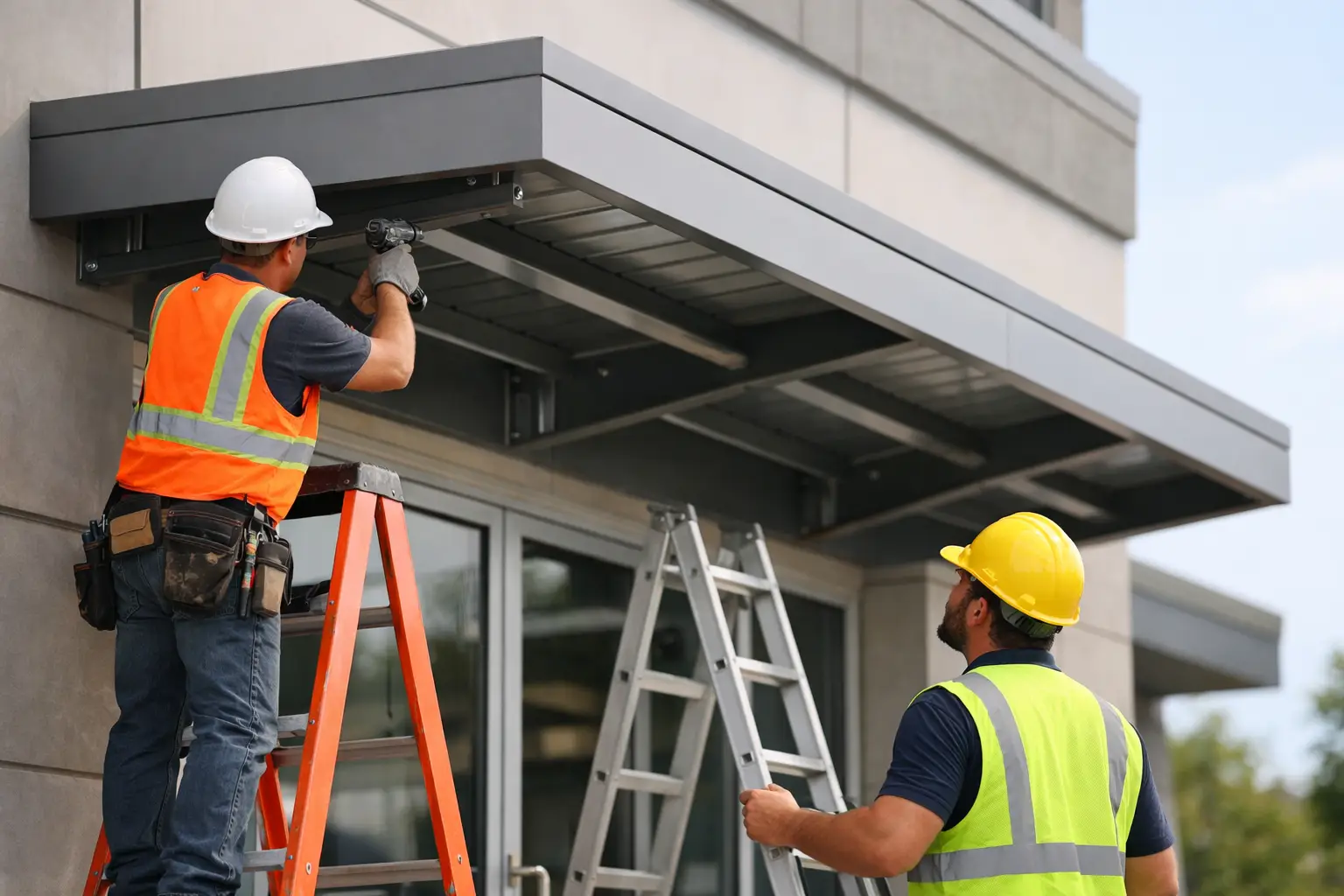
A shop front canopy has to do more than look tidy from across the street. It needs to protect customers at the entrance, stand up to weather, suit the building it is fixed to and remain safe above a public footpath. That is why professional canopy installation starts well before materials arrive on site.
For landlords, shop owners, builders and venue operators, the job is often tied to a refurbishment, new tenancy, damaged existing awning or compliance concern. The right approach is practical: inspect the structure, confirm the scope, plan access and install a canopy that is properly fixed, finished and fit for its location.
What a commercial canopy installation involves
Commercial canopies come in many forms, from a simple entrance cover to a full-width shop front awning. They may include steel framing, aluminium cladding, sheet metal roofing, fascia panels, signage allowance, drainage and lighting provisions. What matters is not just the visible finish, but the structure behind it.
A proper installation considers the building substrate, the canopy size and projection, wind exposure, water run-off, pedestrian traffic below and access for future maintenance. A canopy fixed to sound structural elements is a very different job from one attached to deteriorated masonry, an altered façade or a building with concealed services.
This is where experience saves time and prevents expensive rework. A good contractor will identify concerns before installation, rather than covering them up and hoping they do not become a problem later.
The building condition comes first
Before a new canopy is fitted, the existing façade needs a close look. Cracked brickwork, corroded steel, water damage, loose cladding and previous alterations can all affect how the new structure is fixed.
Sometimes the existing awning can be repaired or reclad. In other cases, removal and replacement is the safer long-term option. Reusing a frame may reduce upfront cost, but only if the structure is in suitable condition and can support the intended finish. It is not worth saving a portion of the budget if the result leaves a known defect overhead.
Where required, engineering input and certification should be organised as part of the project planning. This gives owners and managers confidence that the work has been assessed for the actual site conditions, not treated as a one-size-fits-all installation.
Planning canopy installation around an active site
Most commercial premises cannot simply close for a week while work takes place. Retailers need customer access, cafés need to manage service periods and property managers need to protect tenants and the public. Staging the work properly is as important as the installation itself.
The first priority is safe access. Depending on the site, this may involve scaffolding, elevated work platforms, temporary pedestrian management or controlled work zones. The footpath, entry doors, neighbouring businesses and vehicle access all need consideration before tools are brought out.
For a busy street-facing site, the work sequence should be clear from the start. This includes when the area will be isolated, how demolition material will be removed, whether the entry can remain open and what weather protection is needed while the old canopy is off. Clear communication avoids surprises for tenants, staff and customers.
Demolition needs the same care as installation
Removing an old awning is not a matter of cutting it loose and dropping it down. Existing canopies may contain rusted sections, unstable cladding, damaged fixings or hidden electrical components. Materials can also be heavier than they appear from ground level.
A safe demolition plan accounts for the structure’s condition, controls the area below and removes sections in a managed sequence. It also includes responsible removal of debris, leaving the façade ready for repair or the new installation. Rushing this stage can damage the building face, disrupt the public area and create unnecessary risk.
Materials and finishes that suit the job
The best material is not always the one with the lowest quote. Commercial canopies are exposed to sun, rain, wind, airborne grime and regular visual scrutiny from customers. Materials and finishes should suit the building, the streetscape and the expected level of use.
Steel framing is commonly used where strength and custom sizing are required. Aluminium components can be useful where lower weight and corrosion resistance are priorities. Metal sheeting, composite cladding and fascia finishes each have their place depending on the desired appearance, detailing and budget.
Water management should never be an afterthought. Poor falls, incomplete flashings or badly placed joints can send water back towards the building face. Over time, this may cause staining, leaks and damage behind the cladding. A well-built canopy directs water where it needs to go and provides a clean finish at the wall, roof edge and fascia.
Colour and signage also need thought. A canopy is often one of the first things customers see, so it should complement the tenancy rather than compete with it. At the same time, a dark colour or highly detailed finish may show marks and weathering more quickly than a simpler option. The right choice depends on the location, maintenance expectations and the client’s brand requirements.
Why fixings and flashing matter
From street level, most people notice the fascia, roof line and overall shape. The parts that decide whether the canopy lasts are often hidden: brackets, bolts, welds, sealants, flashings and connections to the building.
Fixings need to match the structural surface they are installed into. A connection suitable for solid masonry may not be suitable for lightweight cladding or a wall with unknown voids behind it. If there is any doubt about what is supporting the canopy, it should be investigated before the work proceeds.
Flashing is equally important. Its job is to stop water entering the gap between the canopy and the building. A neat bead of sealant alone is not a substitute for proper flashing detail. Sealant has a role, but it needs to be used as part of a complete weatherproofing system, not as a quick fix for a poor junction.
Common mistakes that cost more later
The most avoidable canopy problems tend to come from shortcuts at the start. Installing over damaged substrate, relying on inadequate fixings, overlooking drainage and failing to manage access are all issues that can turn a straightforward project into a repair job.
Another common problem is treating a commercial canopy as a cosmetic addition. It is a structural element above an entry and often above public space. That calls for the right assessment, competent installation and a contractor who understands the responsibilities involved.
Price matters, but quotes should be compared on scope, not just the bottom line. Check whether removal of the existing structure is included, how access equipment is handled, whether waste removal is allowed for, what finish is specified and whether certification support is needed. A cheaper figure can quickly change once these essential items are added.
Choosing a canopy contractor
For commercial work, look for a contractor with direct experience in shop front awnings and canopy structures. Ask how they approach access, public safety, demolition and fixing to different building types. A contractor should be able to explain the process plainly, identify likely site constraints and provide a clear scope of work.
It also pays to choose a team that remains contactable through the job. Commercial projects can uncover issues once an old awning is removed, and decisions sometimes need to be made quickly. Straight answers, realistic timeframes and proper site coordination make a real difference.
Advanced Awnings works with commercial clients across Greater Sydney on new installations, replacement awnings, repairs and safe demolition. With more than 20 years in shop front awnings, the focus is on practical workmanship, safe delivery and a finish that holds up after the site has been handed back.
A canopy is a highly visible part of a commercial property, but the job should be judged by more than its first-day appearance. When the planning, structure, drainage and safety controls are handled properly, the finished canopy gives the premises a stronger, safer entry for years to come.