Shop Awning Replacement Bankstown Done Properly
A damaged shop awning is not just a cosmetic problem. It can affect pedestrian safety, expose the shopfront to weather, weaken your signage presence and create a poor first impression before customers even walk through the door. For shop awning replacement Bankstown businesses can depend on, the work needs to be planned around the building, the public footpath and the way your business operates.
Replacing a commercial awning is not a job for guesswork or a quick patch over old problems. It calls for an experienced contractor who can assess the existing structure, remove it safely, build a suitable replacement and leave the site clean and presentable. The right result should look good from the street, stand up to Sydney weather and meet the requirements that apply to the property.
When a Shop Awning Needs Replacement
Some awnings can be repaired. Corroded sections, loose sheeting, damaged flashings or worn paintwork may be able to be addressed without taking down the whole structure. But there comes a point where repairs are no longer the sensible long-term option.
Visible rust around brackets, posts or connection points is a common warning sign, particularly on older steel awnings. Water staining, sagging roof sheets, movement in windy conditions and cracking around fixings should also be taken seriously. These faults can point to issues behind the visible surface, including corrosion within the frame or water getting back into the building façade.
Replacement is often the better call where an awning has reached the end of its service life, has been damaged by impact or storms, no longer suits a new tenancy, or needs to be brought up to a safer standard. Landlords may also choose replacement before leasing a shop, rather than handing an incoming tenant an old structure likely to need attention soon after opening.
The decision depends on the condition of the awning, the building it is fixed to and the cost of making a repair last. A proper site inspection gives you clearer answers than judging the job from a photo or assuming a fresh coat of paint will solve structural issues.
What Proper Shop Awning Replacement in Bankstown Involves
A commercial awning replacement has several moving parts. The visible roof is only one part of the job. The frame, wall connections, drainage, fascia, cladding and interfaces with signage or services all need to work together.
The process normally starts with measuring the existing awning and checking the condition of the supporting wall and connection points. This is where practical experience matters. An older shopfront can have hidden issues such as degraded timber, damaged masonry, previous alterations or poorly placed fixings. If the supporting structure is not sound, installing a new awning over the top simply passes the problem on.
The old awning then needs to be demolished in a controlled manner. On busy Bankstown streets, this means thinking carefully about pedestrian access, overhead hazards, work zones and protecting the shopfront below. Safe removal is not an optional extra. It is a core part of the project, especially where corroded steel, loose sheets or ageing connections are involved.
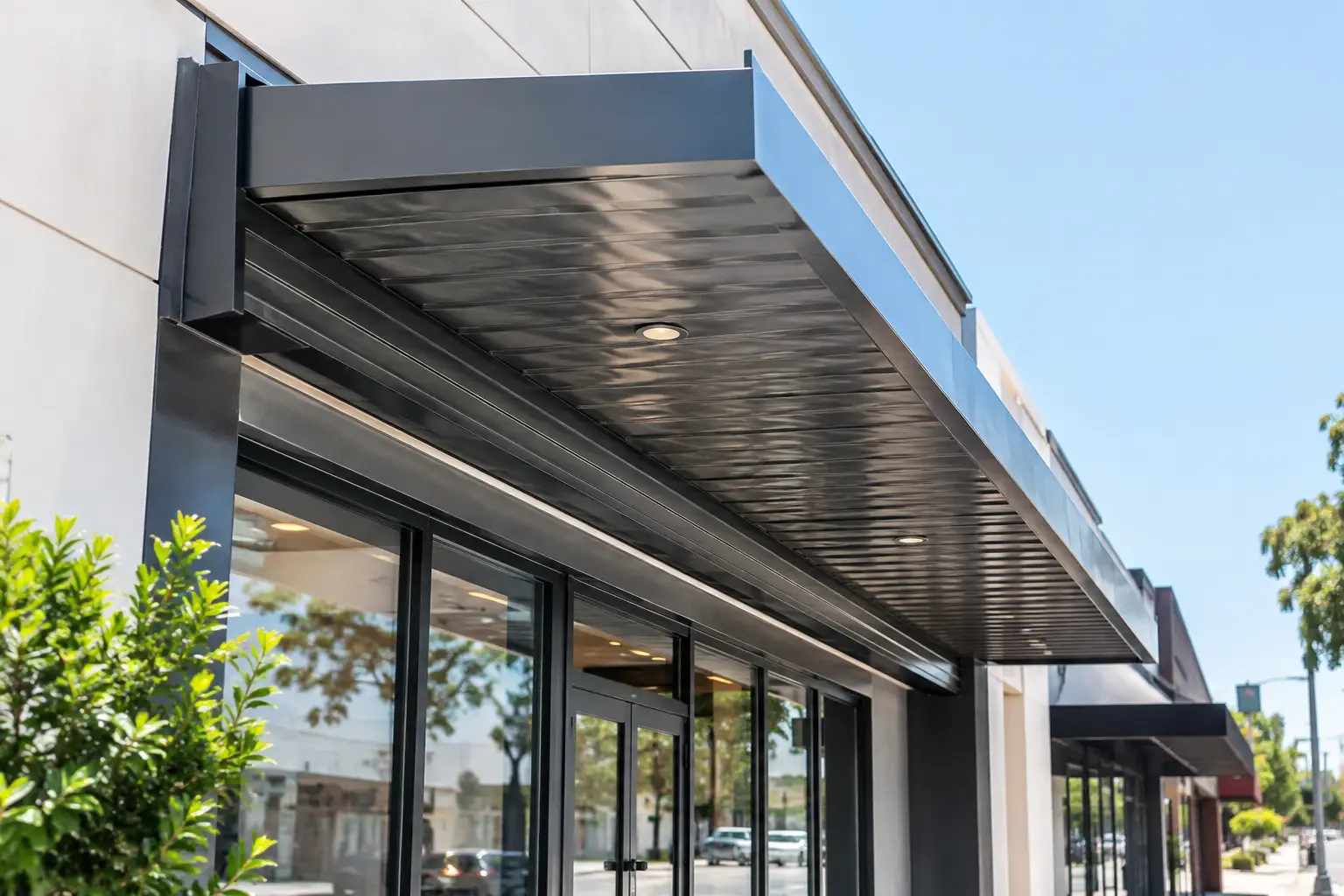
Once the area is prepared, the replacement awning can be fabricated and installed to suit the site. Materials and finishes should be selected for the location, the look of the premises and the amount of weather exposure. A simple, durable metal awning may be the right fit for one tenancy, while another needs a larger canopy designed around signage, outdoor trade or a hospitality frontage.
Where required, engineer’s certification support can form part of the planning. Requirements vary with the design, building and scope of work, so it pays to raise this early rather than discovering it after fabrication has started.
The Details That Make an Awning Last
A well-finished commercial awning should do more than provide shade. It should manage rainwater properly, protect the entrance, sit neatly against the building and create a clean edge for your signs and branding.
Flashing is one of the most important details. If the junction between the awning and wall is not properly sealed, water can travel behind the structure and damage the façade over time. Poor falls can also send water where it does not belong, creating drips at the entry or pooling across the roof. These problems are frustrating for staff and customers, but they can also become costly building maintenance issues.
The frame needs to be strong enough for its size and location, with fixings suited to the substrate. A lightweight-looking canopy still carries wind loads and weather exposure year after year. Good workmanship means paying attention to brackets, welds, fasteners, roof sheets and the finishing work that stops water and debris finding their way into gaps.
Appearance matters too. A replacement should sit square, have straight fascia lines and complement the rest of the frontage. For a retailer, café or takeaway shop, the awning is often one of the largest visual elements on the building. Getting it right can make an older tenancy look looked after and ready for business.
Keeping Your Business Operating During the Work
Most commercial clients want the work completed with as little disruption as possible. That does not mean rushing safety or cutting corners. It means organising the job properly around access, deliveries, customers and trading hours.
Before work starts, discuss practical site conditions. Can customers still enter through another doorway? Are there peak trading times to avoid? Is there signage, outdoor furniture, refrigeration equipment or stock near the work area? Will a footpath management arrangement be needed? These details affect how the replacement is staged.
For some premises, demolition and installation can be scheduled to reduce impact on normal trade. For others, particularly where the awning sits directly over the only entry, a short closure or restricted-access period may be the safest option. A straightforward contractor will explain the likely disruption before the work begins, rather than promising a zero-impact job that is not realistic.
Clear communication also helps property managers and tenants stay on the same page. Everyone should understand what is being replaced, what remains in place, who is responsible for moving items away from the work area and when the site will be safe for normal use again.
Choosing a Contractor for Commercial Awning Work
Price matters, but it should not be the only comparison point. A very low quote can leave out demolition controls, disposal, site protection, certification requirements or finishing details that become variations later. Ask what is included and make sure the scope reflects the actual condition of the job.
For shopfront work, look for a contractor with genuine commercial awning experience, appropriate insurance and a practical understanding of working above public areas. They should be able to discuss the condition of the existing structure, not merely offer a generic new roof. Project photos and examples of completed shopfronts are useful because they show the quality of the finished lines, flashings and fascia work.
It is also worth asking how unexpected site issues are handled. Older properties can reveal problems once the old awning is removed. You want a contractor who raises the issue clearly, explains the options and gets approval before moving ahead. That is better than finding out after the fact that essential work was missed or added without a proper conversation.
Advanced Awnings brings more than 20 years of shopfront awning experience to commercial replacement work across Greater Sydney. The focus is on safe demolition, solid installation and a finished result that suits the building and the business trading from it.
Plan the Replacement Before the Damage Gets Worse
Leaving a failing awning in place can turn a manageable replacement into a more complicated job. Water damage spreads, corrosion progresses and loose material above a public entry creates a risk no business owner or landlord needs. Acting early gives you more time to assess options, coordinate access and choose a replacement that suits the premises.
If your shopfront awning is showing its age, arrange a site assessment and ask for a clear, itemised quote. A properly planned replacement protects the entry, improves the presentation of the property and gives your customers a safer place to walk under every day.