Can Awning Be Repaired? What to Check
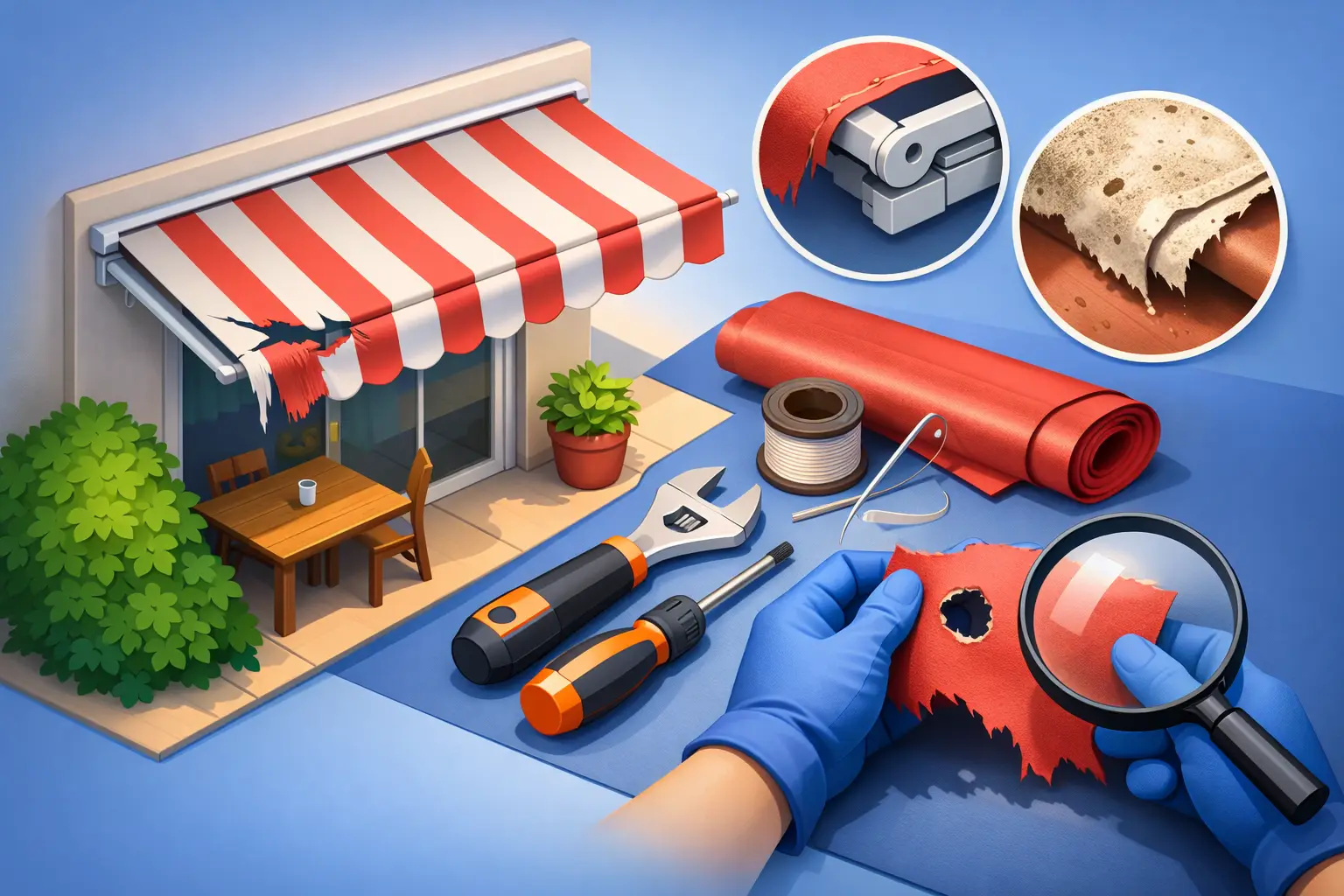
A torn skin, rust around the frame, loose fixings over a busy footpath - this is usually the point where owners and property managers ask the same question: can an awning be repaired, or is it time to replace the whole thing? The honest answer is yes, many awnings can be repaired, but not every repair is worth doing. It depends on the damage, the age of the structure, how the awning was built, and whether it can still be made safe and compliant.
For a commercial site, that decision should never be based on looks alone. A shop front awning is part of the building presentation, but it also sits over staff, customers and the public. If there is movement in the frame, corrosion in key structural points, water damage spreading into adjoining building elements, or signs the awning has been hit, the job needs a proper assessment before anyone talks about patching it up.
When can an awning be repaired?
In practical terms, an awning is often repairable when the damage is localised and the main structure is still sound. That might mean replacing sections of cladding, repairing a torn fabric panel, rectifying water ingress, changing damaged flashings, or tightening and renewing fixings that have worked loose over time. If the framework is stable and the defect has not compromised the awning's load capacity, repair can be a sensible option.
This is common with older shop fronts where the awning still has good bones but has taken a beating from weather, signage changes, poor drainage or minor impact. In those cases, targeted repair work can extend service life without the cost and disruption of a full rebuild.
Where clients get caught out is assuming surface damage is only cosmetic. Bubbling paint may be hiding corrosion. A small sag can point to water pooling and frame deflection. A leak at the front edge can mean failed flashings further back at the wall junction. Good repair work starts with finding the real source of the issue, not just treating the visible symptom.
Signs a repair is worth considering
If the awning has isolated damage, repair usually makes more sense than replacement. A few examples are common across retail and hospitality sites.
A metal awning with rust in non-critical sections may be repairable if the affected steel or sheeting can be cut out and replaced. Damaged soffit linings, fascia panels and box gutters can also often be renewed without disturbing the whole structure. Fabric awnings may be repaired where the frame is sound and only the skin or stitching has failed.
Leaks are another area where repair is often possible. Failed sealants, damaged flashings, blocked drainage points and small roof sheet defects can all be rectified if caught early. The longer they are left, the more likely the moisture gets into structural members, shopfront glazing interfaces, signage electrics or the tenancy fit-out below.
Repairs are also worth considering when the awning still suits the tenancy and streetscape, the original structure was properly built, and there is no reason to redesign the frontage. For landlords and property managers, that can mean less downtime and a lower upfront spend while still presenting the premises properly.
When repair stops making sense
Not every damaged awning should be saved. If the framework is badly corroded, twisted, unstable or has unknown structural integrity, repair can become a short-term fix that costs more in the long run. The same applies when repeated patch jobs have already been done and the problems keep coming back.
If an awning has widespread rust through connection points, major water damage, rotten concealed supports, impact damage from vehicles, or movement where it meets the building, replacement is often the safer call. The reason is simple - once core structural elements are compromised, you are no longer talking about a tidy repair. You are talking about rebuilding strength and compliance into a structure that may have reached the end of its service life.
There is also the issue of code and certification. Older awnings are not always built to current expectations, and sometimes repair work uncovers non-compliant details that need a broader solution. In those cases, replacing the awning can be more practical than trying to piece together old and new components and hoping they perform as one system.
What should be checked before approving repairs?
For commercial awnings, the right starting point is a site inspection by someone who understands shop front structures, not just general handyman work. A proper assessment should look at the condition of the frame, the cladding or fabric, fixings, drainage, flashings, wall connections and any signs of deflection or water ingress.
It should also consider how the site operates. If the awning sits above an active trading frontage, outdoor dining area or pedestrian path, public safety controls matter just as much as the repair itself. Access equipment, overhead protection, exclusion zones and staged works may all need to be factored in. That affects cost, timing and whether the work can be done during trading hours.
If there is any doubt about structural performance, engineering input may be needed. That is especially true where steel members are rusted, supports have shifted, or substantial sections need replacement. A proper commercial repair is not just about making it look straight again. It is about knowing it is safe when the job is finished.
The real trade-off: repair cost versus replacement value
Owners often ask for the cheapest fix first. Fair enough. But the cheapest option on day one is not always the best value over three to five years.
If a repair solves an isolated problem and gives the awning several more years of reliable service, it can be money well spent. If the awning needs constant patching, ongoing leak repairs and repeated access call-outs, replacement may be the better commercial decision. It reduces maintenance risk, lifts presentation and gives you a clean starting point with current materials and proper documentation.
There is also disruption to consider. Some repairs are quick and low impact. Others become fiddly because old components are hard to match, hidden damage appears once coverings come off, or sections need to be temporarily made safe before the final works proceed. Replacement is a bigger upfront project, but it can sometimes be more predictable.
Can an awning be repaired after storm or impact damage?
Sometimes yes, but this is one of the clearest cases where inspection matters. Storm damage can loosen fixings, bend sheeting, tear fabric and allow water into concealed areas. Impact damage from a truck, forklift or failed signage can be even more serious because the visible dent is not always the full story.
Where the damage is limited to replaceable outer elements, repair may be straightforward. Where impact has transferred load into brackets, posts or the building connection, the awning needs to be treated as potentially unsafe until assessed. On a public-facing commercial site, that is not something to guess your way through.
If temporary make-safe work is required, it should be done properly and followed by either a clear repair scope or a recommendation to replace. Half measures around overhead structures are a poor gamble.
Why commercial awning repairs are not a DIY job
For a small residential shade cover, people may be tempted to patch things themselves. For a shop front or commercial canopy, that approach can create more problems than it solves. Height access, public exposure, structural loading, water management and compliance all come into play.
Even simple-looking work such as replacing a fascia section or patching a leak can involve removing components that help brace the awning or protect fixings from water entry. If the repair is done badly, the site may end up less safe and more expensive to sort out later.
This is why experienced commercial awning contractors approach repairs like building work, not odd-job maintenance. The goal is a finished result that is safe, presentable and properly integrated with the existing structure.
Making the right call for your site
If you manage a retail strip property, hospitality venue or street-facing tenancy, the question is not just can an awning be repaired. The better question is whether repair will give you a safe, durable and commercially sensible result.
A good contractor will tell you when a repair is worthwhile and when it is throwing money at a structure that should be replaced. That straight answer matters. You want the awning to look right, but more importantly, you want it to perform properly above a live public frontage.
For many sites, repair is absolutely possible. For others, replacement is the more responsible option. The difference comes down to condition, safety and whether the work is being assessed by people who understand commercial awnings in the real world.
If your awning is leaking, rusting, sagging or showing signs of damage, getting it checked early usually gives you more options. Leave it too long, and a manageable repair can turn into a much bigger job than it needed to be.