
Shop Awning Replacement Case Study in Sydney
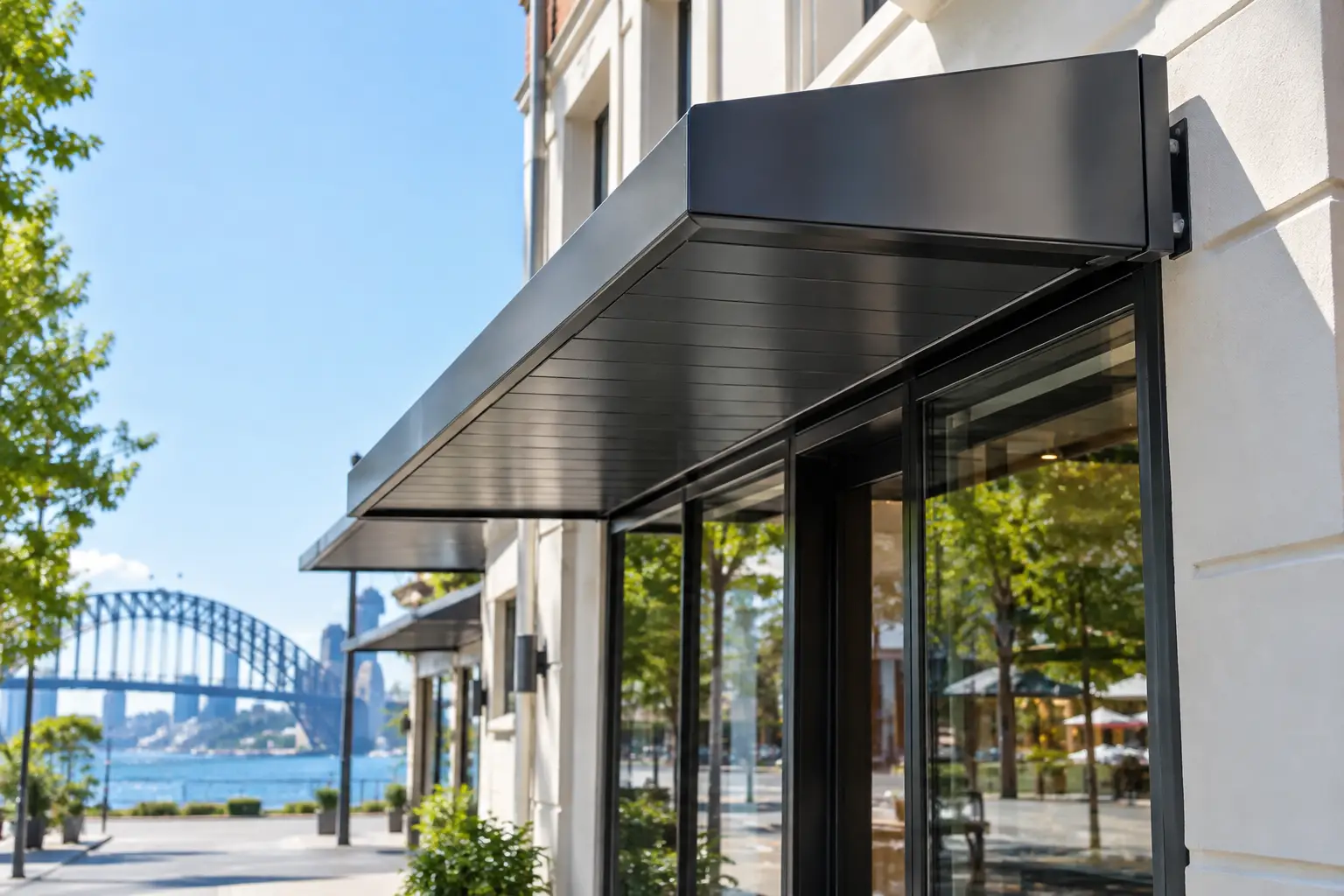
A tired shop awning can become a problem long before it fails completely. In this shop awning replacement case study, a street-facing retail premises needed more than a cosmetic update. The existing awning was visibly worn, had ageing fixings and water staining, and no longer gave the owner confidence that it was safe above a busy footpath.
This is a representative project scenario based on the type of replacement work commonly required across Sydney shopfronts. The job shows why proper planning matters when an awning sits over customers, staff and passing pedestrians, and why the cheapest patch-up is not always the sensible long-term option.
The problem: an awning at the end of its working life
The premises had an older metal-framed awning extending over the shop entrance and display windows. From the street, it still looked serviceable at a glance. Closer inspection told a different story. The roof sheeting had deteriorated around several penetrations, water had marked the underside lining, and sections of the fascia were beginning to look uneven.
The bigger concern was not appearance. Awning structures are exposed to wind, rain, vibration and years of movement. When corrosion develops around connections or water finds its way into vulnerable areas, the condition can worsen without being obvious from ground level. For a landlord or shop operator, waiting for visible movement or material to come loose is not a maintenance plan.
The client wanted a replacement that would improve the presentation of the tenancy, protect the entry from weather and provide confidence that the structure had been properly assessed. They also needed the work organised around normal trading hours as far as practical.
Assessing the replacement scope before work starts
A shopfront awning replacement starts with the building, not the new sheet metal or fascia colour. The existing structure needs to be inspected to understand what is staying, what must be removed and whether the supporting wall or fixing points are suitable for the proposed awning.
In this case, the first step was to assess the existing canopy, its connections to the building and the condition of the surrounding façade. The scope also considered footpath access, overhead risks, delivery access and the safest way to isolate the work area. A busy retail strip creates different challenges from an isolated warehouse site. Public safety has to be built into the job from the first site measure.
The owner was given a clear quote covering demolition, disposal, fabrication and installation rather than an unclear allowance that could grow once work had started. Where required, engineer’s certification support was included in the planning process. This is particularly important where a new awning design, structural changes or council requirements need to be addressed.
Repair or replacement?
There is no single answer for every shop awning. Minor leaks, damaged flashing, small areas of rust or loose lining can often be repaired where the frame remains sound. Repair work can be the right call when it extends the useful life of a structure without creating a bigger problem later.
Replacement becomes the better option when deterioration is widespread, corrosion affects structural components, repeated repairs have not solved water ingress, or the frontage no longer meets the standard expected for the premises. If demolition is needed for safety reasons, it is usually more cost-effective to plan the replacement properly than to install a short-term fix and revisit the site again soon after.
Safe demolition around an active shopfront
Demolishing an old awning is not simply a matter of cutting it down and loading it into a ute. Sections must be removed in a controlled sequence so the structure remains stable throughout the process. The public area below must also be protected before any work begins.
For this project, the work zone was set out to keep pedestrians away from the removal area and allow the crew to manage materials safely. Timing was discussed with the operator to reduce disruption to customers, and the entry was kept accessible whenever it was safe to do so. Some short interruptions are unavoidable during structural work, but good coordination keeps them to a minimum.
The old sheeting, lining and deteriorated components were removed progressively. This approach reduces the risk of uncontrolled falling material and gives the team a clear view of the structure behind the finishes. Once the awning was stripped back, the supporting areas could be checked again before the new work proceeded.
Rubbish removal matters on a commercial site too. Leaving offcuts, damaged sheeting or old frame sections behind a shop is not acceptable. A proper replacement job includes a clean handover, not just a new canopy overhead.
Installing a new awning built for the frontage
The replacement awning was planned to suit the width of the tenancy, the existing building lines and the practical requirements of the business. The goal was not an overdesigned feature. It was a neat, durable commercial awning that provided shelter, improved the street presentation and looked right as part of the building.
The installation included a new frame arrangement, roof cladding, appropriate flashing and a finished fascia line. Careful attention was paid to junctions where water can enter, particularly where the awning meets the existing façade. These details are easy to overlook, but they affect how the awning performs through heavy rain and over many years of use.
Colour and finish were selected to work with the shop signage and surrounding tenancy presentation. For some sites, matching an existing building colour is the priority. On others, a refreshed fascia and clean underside lining can make an older shopfront look significantly more maintained without changing the character of the building.
Advanced Awnings approaches this type of work as a complete site task: assess the condition, remove unsafe or worn components carefully, install the replacement to suit the premises, and leave the frontage clean and ready for trade.
The result: a safer, cleaner street presence
Once complete, the shop had a straight, clean awning line over the entry and front windows. The replacement improved weather protection for customers arriving at the premises and removed the concern around the ageing structure. Just as importantly, it gave the owner a frontage that looked maintained and professional from the footpath.
The result of a project like this is not measured only by how the new awning looks on handover day. The value is in the confidence that the work has been planned around safe demolition, suitable materials, proper installation and the requirements of an active commercial site.
For landlords and property managers, that can also reduce the risk of reactive maintenance calls. For retailers and hospitality operators, it helps protect the first impression customers form before they walk through the door.
What this shop awning replacement case study shows
The main lesson is simple: do not wait for a shop awning to become an urgent public safety issue before acting. Water marks, rust, loose fascia, sagging sections and recurring leaks are all reasons to arrange an inspection. They do not always mean full replacement is necessary, but they deserve an experienced assessment.
A good contractor will explain the condition of the existing awning in plain terms, identify whether repair or replacement is the better path, and provide a scope that accounts for demolition, access, safety and finishing details. That makes it easier to budget for the work and avoid surprises once the project is underway.
If your shopfront awning is showing its age, organise a site inspection and clear quote before small defects turn into a larger disruption. The right replacement can protect the public, lift the appearance of the premises and keep your business looking open for trade.