Shopfront Sunshade Options That Work Harder
A west-facing shopfront can turn a bright afternoon into a hot, uncomfortable space within an hour. Glare hits displays, customers avoid the window side of the premises, and heat builds up behind the glass. The right shopfront sunshade options solve more than a comfort problem. They protect the frontage, make the business easier to see from the street, and give customers a better reason to stop.
For commercial premises, the best answer is rarely the cheapest cover or the one that simply looks good in a catalogue. The sunshade needs to suit the building, the footpath, the local conditions and the daily operation of the business. It also needs to be properly fixed, safe above the public and built to last.
Start with the site, not the product
Before choosing a shade style, look at what the site is dealing with. Sun direction is the obvious starting point, but it is only one part of the job. A shopfront facing west in Sydney may need stronger late-day protection than one facing south, while a café with outdoor tables will have different requirements to a retail tenancy that wants clear window displays.
Measure the available projection from the building and check what is happening below it. Footpath clearances, neighbouring awnings, street trees, signs, lighting, loading access and upper-level windows can all affect the design. Older buildings may also have existing steelwork, hidden damage or unsuitable fixing points that need to be addressed before new work begins.
Landlords and property managers should also consider responsibility over time. A larger shade structure can reduce heat and improve presentation, but it needs a practical maintenance plan. Choosing a structure that can be inspected, repaired and cleaned safely will save headaches later.
Fixed shopfront sunshade options
Fixed awnings are the most common choice for busy commercial frontages because they provide permanent shade and a strong visual finish. They work particularly well where the business trades regular hours and needs dependable weather cover every day.
Metal and steel-framed awnings
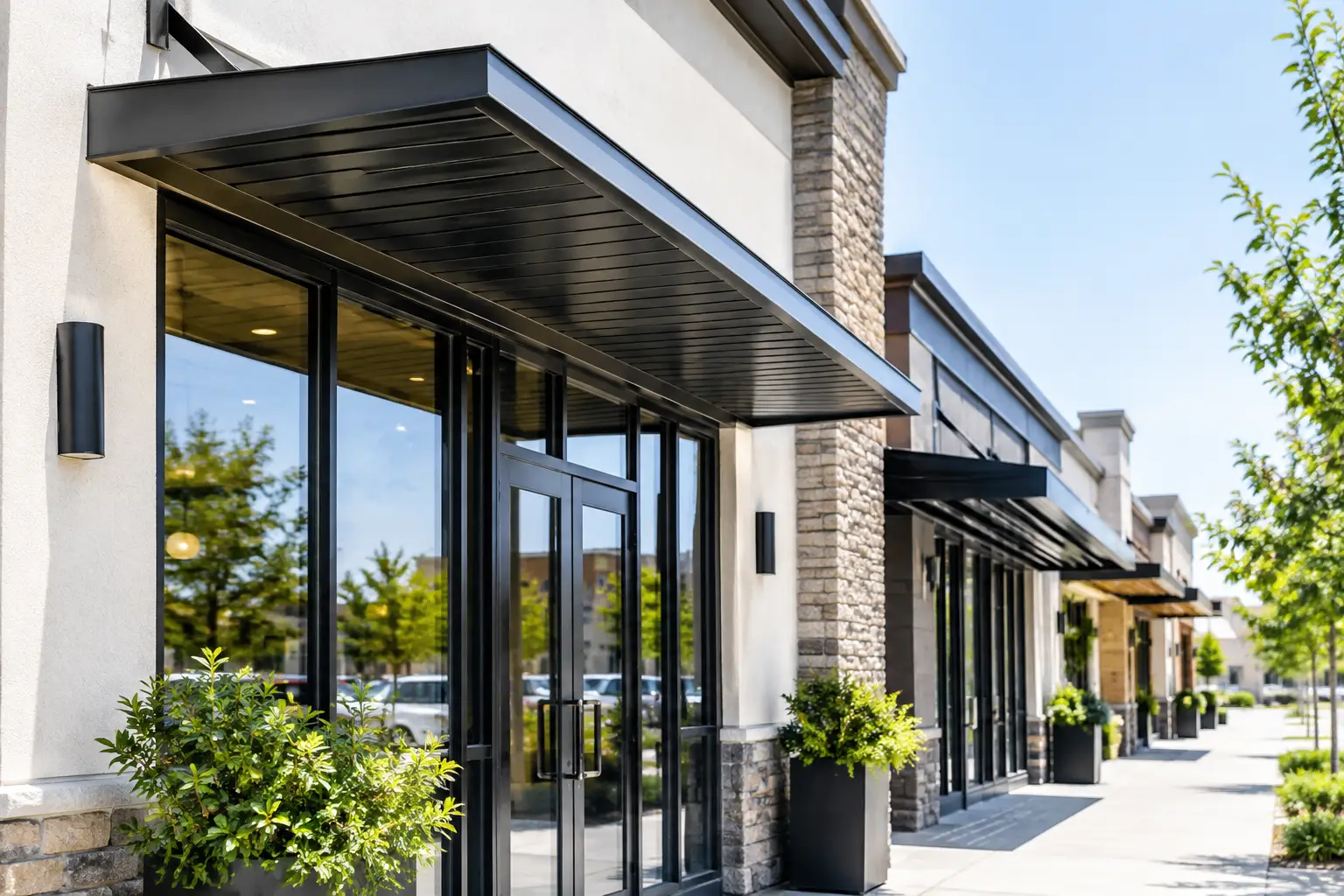
A steel-framed awning with metal cladding is a hard-wearing option for retail strips, hospitality venues and commercial buildings. It can be designed around the width of the tenancy, matched to the facade and finished with guttering, fascia panels, lighting provisions or signage areas where required.
This type of awning is generally a good fit where durability matters more than flexibility. It handles daily exposure well when properly fabricated, coated and installed, and it gives the shopfront a solid, established look. The trade-off is that it is a permanent structure. Design, engineering and approvals need to be considered early, particularly where it projects over a public area.
Aluminium awnings
Aluminium awnings are lighter than many steel-framed alternatives and can suit contemporary facades or sites where reducing structural load is useful. They offer good corrosion resistance, which matters in coastal and high-exposure areas, and can be finished in colours that work with existing branding.
They are not automatically the right answer for every site. The size of the projection, wind exposure and the condition of the building all affect what framing and support are needed. A light-looking awning still requires sound fixing and proper detailing around water runoff.
Fabric fixed awnings and canopies
Fabric canopies offer a softer look and can bring colour, stripes or branding into the frontage. They are often popular for cafés, bakeries, boutiques and hospitality venues where street appeal is part of the experience.
Quality fabric systems can provide effective shade, but fabric has a different maintenance profile to sheet metal. It can fade, collect dirt and eventually need replacement, especially on exposed sites. Drainage, tensioning and the frame beneath the fabric all need to be right from day one. A poorly detailed fabric canopy can sag, hold water or look tired far sooner than it should.
Retractable systems offer flexibility, with limits
Retractable awnings suit businesses that want to control shade throughout the day. They can be extended during hot periods, pulled back to expose the frontage, and used to create a more adaptable outdoor trading area. For a café or restaurant, that flexibility can be valuable.
However, a retractable system is not a substitute for a properly engineered fixed canopy where substantial all-weather protection is required. Most retractable awnings have wind limitations and need to be retracted in poor conditions. Motors, arms, fabric and controls also introduce more moving parts that need regular servicing.
Manual systems may suit smaller spans or lower-use applications, while motorised systems are convenient for larger commercial areas. Either way, staff need to know when the awning should be operated and when it should be put away. Leaving it out during unsuitable wind conditions is a common and avoidable cause of damage.
Shade sails and lightweight covers
Shade sails can work well over courtyard seating, narrow side areas and informal outdoor spaces. They are generally not the first choice for a main shopfront where a crisp architectural finish, signage space and permanent weather protection are needed.
Their success comes down to tension, fixing points and drainage. A sail that is too flat may pond water, while an inadequate fixing point can place stress on the building or nearby structure. On a commercial site, the installation needs to account for public safety as carefully as any other overhead cover.
Lightweight polycarbonate roofing is another option for areas where daylight is useful but direct sun and rain need to be reduced. It can suit walkways and some entry areas, although heat, glare, noise in heavy rain and long-term appearance should be considered before selecting it for a prominent street-facing facade.
Do not overlook water, wind and footpath safety
The visible surface of a sunshade is only part of the build. The frame, wall fixings, flashing, gutters and downpipes determine whether the structure performs properly through changing weather.
Water should be directed away from entrances, windows and pedestrian areas. Overflowing gutters or poorly placed downpipes can create slippery conditions at the front door, damage the facade and frustrate tenants. On a busy street, that is not just inconvenient - it is a safety issue.
Wind loading also matters. A wide awning can act like a sail, particularly on exposed corners or taller buildings where wind behaves differently from ground level. The structure must suit the site conditions and the building it is attached to. Where required, engineering input and certification should be organised as part of the project rather than treated as an afterthought.
If an existing awning is rusted, sagging, leaking or showing movement at its connections, replacement may be safer and more cost-effective than repeated patch repairs. Any demolition work needs to be planned carefully, with the area below managed to protect staff, customers and passing pedestrians.
Match the shade to the way the business trades
A takeaway shop may benefit most from a fixed awning that keeps queues and the entrance dry. A fashion retailer may want a neat, shallow projection that reduces glare without hiding the windows. A restaurant with outdoor tables may need a combination of fixed cover and a retractable section to manage changing conditions.
Signage should be part of the conversation early. The fascia of a fixed awning can be valuable branding space, but only if its height, finish and lighting are planned properly. Adding signs after installation can lead to awkward fixings, clutter or extra cost.
It is also worth thinking about access. Can electricians reach lights under the awning? Can the gutters be cleaned? Will future shop signage, painting or facade repairs require removal of part of the structure? Practical questions like these separate a tidy short-term installation from a shopfront that remains easy to manage.
Get clear advice before work starts
The right option depends on the frontage, the building condition, the desired level of weather protection and the approvals that may apply. A proper site assessment should identify the suitable fixing method, likely drainage requirements, public safety controls and whether engineering certification is needed.
Advanced Awnings works with commercial clients who need that process handled properly, from removal of unsafe existing structures through to replacement and new installation. Clear scope, sound workmanship and direct communication matter when the work is happening above a live shopfront.
Before committing to a design, arrange a site inspection and compare the options against how the premises actually operates. A sunshade that suits the building, protects the public and holds its finish will keep working long after the first impression has passed.