When to Replace Damaged Shop Awning
A bent frame, torn skin or rusted fixings on a street-facing awning is not just a cosmetic problem. If you need to replace damaged shop awning structures, timing matters. Leave it too long and a small defect can turn into a safety issue, a compliance headache or a poor first impression for every customer walking past your frontage.
For most commercial sites, the real question is not whether the awning looks rough. It is whether it is still safe, serviceable and worth spending money on. Some awnings can be repaired properly and kept in use. Others are at the point where replacement is the smarter job, especially when age, corrosion, impact damage or water ingress have already affected the structure.
When a damaged awning stops being a repair job
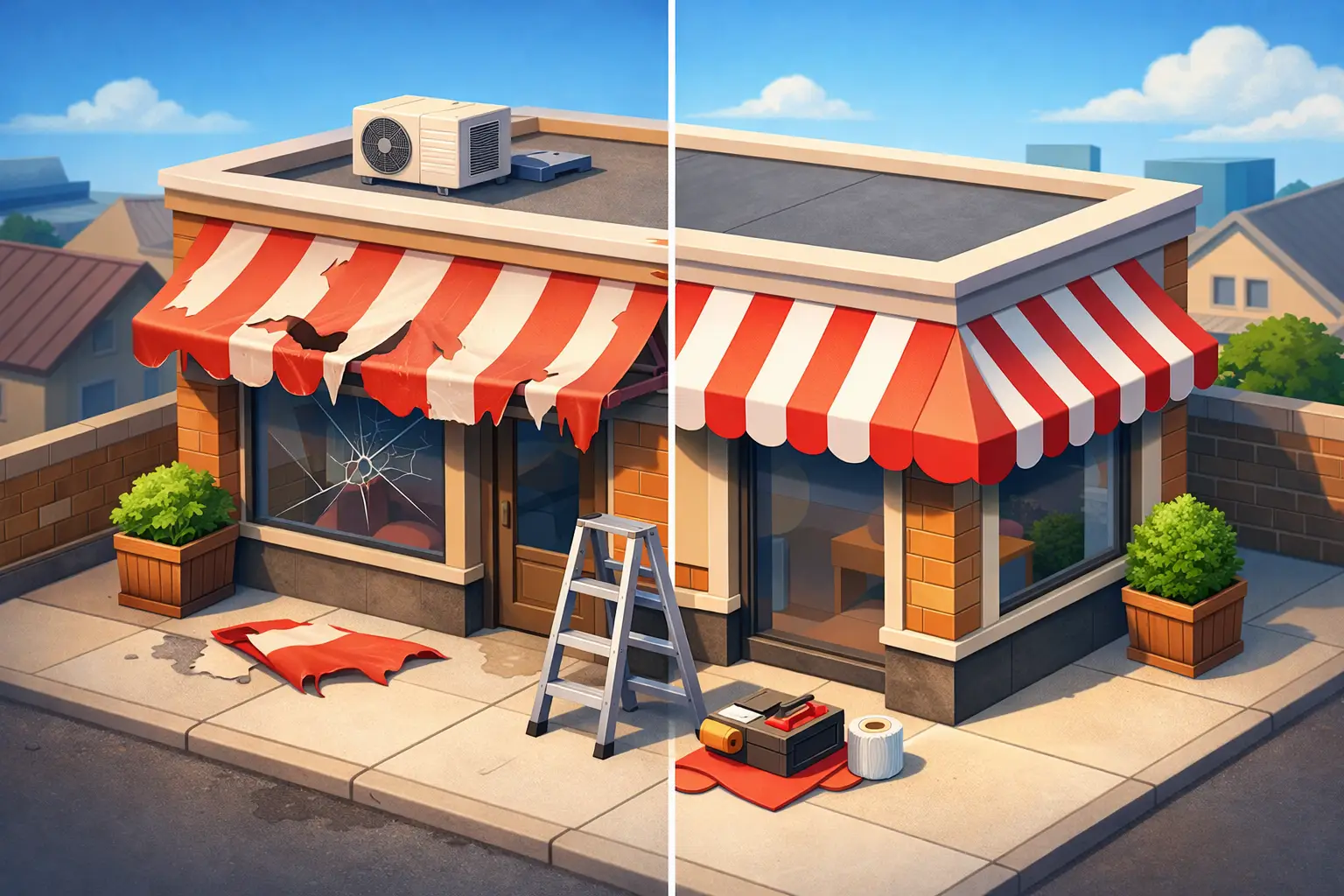
There is no point patching over a bigger structural problem. A torn fabric panel or minor sheet damage may be straightforward to fix if the frame behind it is still sound. Once the support members, brackets, welds or connections start failing, the job changes quickly.
A full replacement is usually worth serious consideration when the awning has visible corrosion through key steel sections, movement in the frame, storm damage that has twisted the structure, or repeated leaking that has been ignored for too long. The same applies when sections have already been repaired more than once and the finish still looks tired or mismatched from the street.
For landlords and property managers, appearance matters, but public safety matters more. If loose cladding, damaged sheeting or unstable framing sits over a footpath or shop entry, you are dealing with risk exposure, not just maintenance. That is why a proper inspection is the first step before anyone promises a quick fix.
Replace damaged shop awning or repair it?
It depends on the age of the awning, how the damage happened, and whether the structure still has reliable life left in it. A newer awning with localised damage from impact or weather can often be repaired if the supporting frame remains straight and secure. In that case, a targeted repair may be the best value outcome.
Older shop front awnings are different. Corrosion often starts where water has been sitting for years, especially around joints, fixings and undersides that are out of sight from the ground. By the time staining, bubbling paint or sheet distortion becomes obvious, the deterioration underneath may already be advanced. Repairing one section can expose weakness in another, which is why partial work on an ageing awning sometimes ends up costing more over time.
There is also the issue of matching. If the existing finish, sheeting profile or framework is dated, patch repairs can leave the frontage looking pieced together. For retail and hospitality venues, that matters. A complete replacement may cost more upfront, but it often gives a better visual result and a cleaner long-term maintenance position.
What usually causes shop awning replacement
Storms and impact are the obvious ones, but they are not the only causes. Water gets into failed joints, flashing and roof sheets, then corrosion does the rest. In older commercial strips, it is common to see awnings that have been carrying hidden damage for years because the underside still looked acceptable from the shop entrance.
Poor past workmanship also catches up. Undersized members, rough patching, low-grade materials or makeshift repairs can shorten the life of the whole structure. If the awning was never built or altered properly, replacement is often the safer and more economical path than trying to rescue a bad job.
Business changes can also drive replacement. A new fit-out, updated signage, altered façade works or tenancy upgrade may mean the existing awning no longer suits the frontage. In those cases, replacement is not only about damage. It is about bringing the structure back into line with the building, branding and day-to-day use of the site.
What to expect when you replace damaged shop awning structures
The best commercial awning jobs are planned around risk, access and trading conditions from day one. Before work starts, the condition of the existing awning needs to be assessed properly. That means looking at the frame, the skin, the fixings, the wall connection points and any signs of movement or water damage.
If demolition is required, it needs to be handled as a controlled part of the project, not treated as a side task. On active shopfronts, public protection, exclusion zones and safe removal methods are critical. That is especially true where the awning projects over pedestrian areas or where neighbouring tenancies are operating as normal.
Once the old structure is removed, replacement work should be built around the actual conditions on site. No two frontages are exactly the same. Wall condition, access, services, drainage and signage all affect how the new awning is detailed and installed. This is where experience matters. A contractor who works on commercial awnings regularly will know how to spot issues early instead of finding them halfway through the job.
Compliance, certification and site safety
Commercial awning work is not just about putting up new sheeting and calling it done. Depending on the site and scope, certification and engineering input may be required. That is not red tape for the sake of it. It is part of making sure the finished structure is fit for purpose and properly documented.
This is particularly important for property owners, builders and managers who need confidence that the installation has been handled correctly. If the awning sits over a public area, fronts a busy strip or forms part of a broader commercial upgrade, compliance and documentation should be treated as standard project requirements.
Insurance also matters more than many clients realise until something goes wrong. A contractor working over entrances, glazing, footpaths and occupied premises needs to be properly covered and properly set up for that kind of work. Cheap pricing means very little if the site is left exposed during demolition or if shortcuts create problems later.
The cost question most clients actually care about
Most clients are not chasing the cheapest number. They want to know whether the job will hold up, whether the frontage will look right, and whether the work will be completed without unnecessary drama.
Replacement cost depends on size, access, materials, design, demolition requirements and structural condition behind the existing awning. If there is hidden deterioration at fixing points or façade interfaces, that can affect the scope. If access equipment, traffic control or after-hours work is needed, that can also change the price.
That is why a proper site-based quote matters. Ballpark figures are fine for a rough conversation, but they do not replace a real inspection. A good quote should reflect what is actually required to remove the damaged structure safely and install a durable replacement that suits the building.
Choosing the right contractor for the job
If you need to replace damaged shop awning components on a live commercial site, look for a contractor who does this type of work routinely, not occasionally. Shopfront awnings sit in public view and over active entries, so there is very little room for guesswork.
Ask practical questions. Who handles demolition? How is the site made safe during works? Can the contractor coordinate engineer certification if needed? Have they done similar commercial frontage jobs before? Clear answers matter more than polished sales talk.
Advanced Awnings works with the kind of clients who need the job done properly the first time - landlords, builders, retail operators and property managers who cannot afford sloppy finishes or avoidable safety issues. That is the standard any commercial awning contractor should be held to.
Why acting early usually saves money
A damaged awning rarely gets cheaper by waiting. Corrosion spreads, leaks worsen, fixings loosen and visual presentation drops off. By the time a tenant complains or a panel comes loose in bad weather, the job is usually bigger than it would have been six months earlier.
There is also the operational side to think about. If a frontage has to be made safe urgently, you may be forced into temporary measures, restricted access or rushed replacement timing. Planned work is almost always easier to manage than reactive work on a problem that has already escalated.
If your awning is showing signs of age, movement, water damage or visible deterioration, get it looked at before it becomes an emergency. A straightforward assessment now can save a far more expensive disruption later, and it keeps your frontage safe, presentable and fit for business.