Awning Repair or Replacement Guide
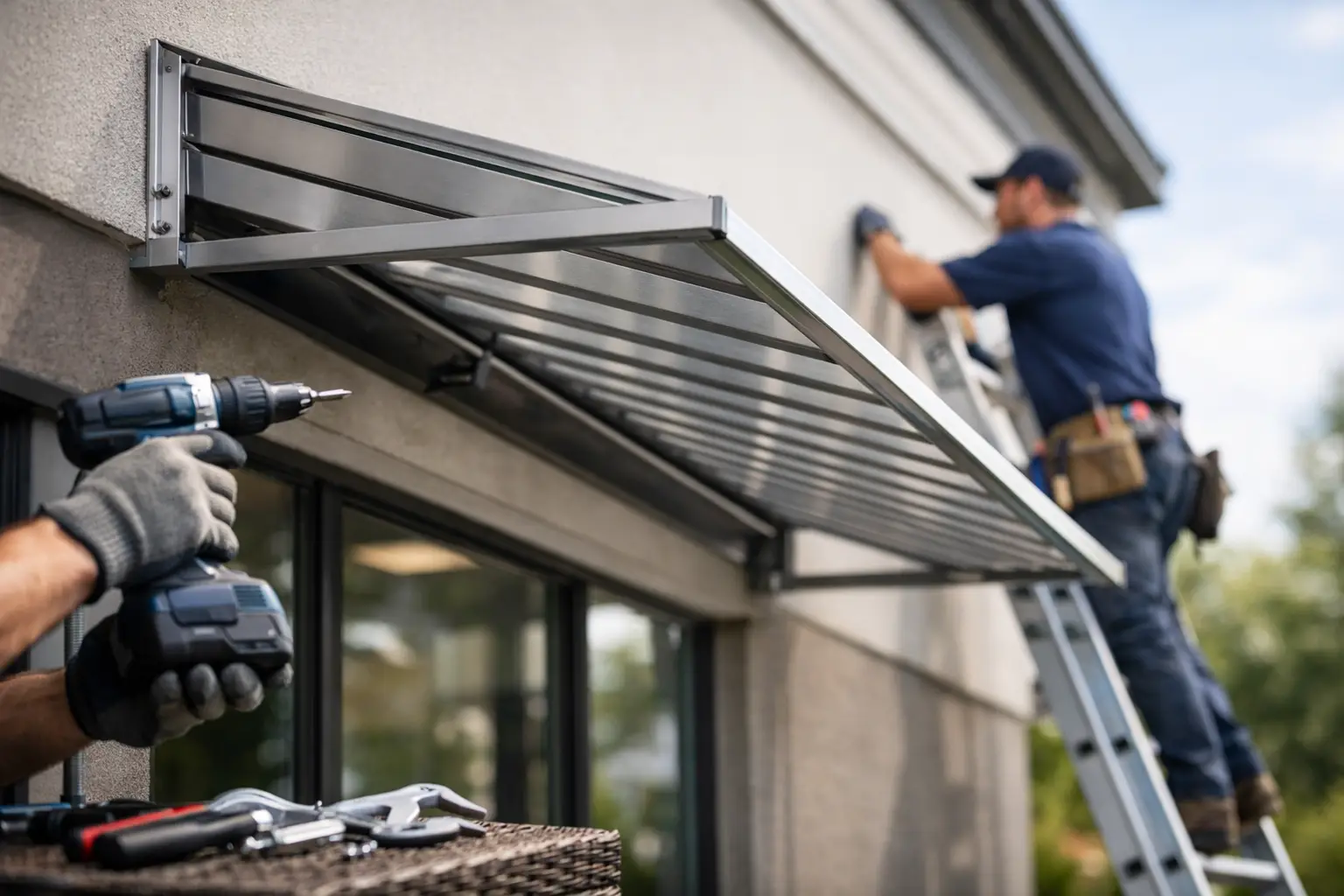
A loose fascia panel or rusted frame over a busy shopfront is not a small issue. It affects presentation, public safety and, in some cases, whether the site is still compliant. This awning repair or replacement guide is written for commercial owners and operators who need a practical way to judge what should be fixed, what should be rebuilt and when replacement is the safer call.
Most awning problems do not start with a dramatic failure. They show up as minor movement in wind, staining around fixings, corrosion at joints, ponding water, cracked sheeting or old patch jobs that never really solved the problem. Left too long, those smaller defects turn into larger structural, waterproofing or liability issues. The right decision is not always the cheapest one upfront. It is the option that keeps the site safe, protects the frontage and avoids doing the same job twice.
How to use this awning repair or replacement guide
The first question is simple: are you dealing with a local defect or a system-wide problem? If the issue is limited to a few sheets, a damaged sign panel, isolated rust or a small leak around penetrations, repair may be the sensible path. If corrosion is widespread, the frame has lost integrity, fixings are failing across the structure or the awning no longer suits the current tenancy, replacement usually makes more sense.
Commercial awnings are rarely just about appearance. On active street front sites, any decision has to account for pedestrian exposure, surrounding businesses, access equipment, traffic management if needed, and the condition of the existing structure behind the cladding. A tidy-looking awning can still have serious concealed issues. That is why a proper site inspection matters before anyone promises a quick fix.
When repair is the right call
Repair is usually worth considering when the structure is fundamentally sound and the damaged area is clearly defined. A common example is isolated corrosion at a gutter edge or a few deteriorated sheets caused by long-term water entry at one point. In that case, targeted removal, steel treatment or local replacement of cladding can extend the life of the awning without forcing a full rebuild.
Repairs can also suit sites where the original frame is solid but the external finish has taken a hit from age, weather or impact. Re-sheeting sections, replacing flashings, upgrading fascia panels and rectifying leaks can improve both performance and street presentation. For retailers and hospitality venues, this can be enough to lift the frontage without the cost and disruption of complete replacement.
That said, repair only works when the remaining structure can be trusted. If one section is repaired while adjoining members are already badly rusted or distorted, the problem has only been delayed. A good contractor will say that plainly.
Signs a repair may be enough
You are generally in repair territory if the damage is localised, water ingress has a clear source, the frame remains straight and stable, and the awning still suits the tenancy and façade. It also helps if previous repairs have not been stacked on top of each other for years. Once a structure has a long history of patching, each new repair tends to uncover the next weak point.
When replacement is the better investment
Replacement becomes the stronger option when safety, compliance or long-term value are on the line. Extensive rust, failed connections, sagging members, movement under load and repeated leak issues are all signs that patching may no longer be responsible. The same applies where the awning has been altered over time without a clear structural strategy.
For many commercial sites, replacement is not just about fixing deterioration. It is also a chance to bring the frontage up to a better standard. New cladding, improved drainage, cleaner lines and properly planned signage zones can change how a premises presents to the street. If the existing awning is tired, oversized, undersized or poorly detailed, a new build may solve several problems at once.
There is also the matter of compliance and certification. Older awnings do not always line up neatly with current expectations around engineering, fixing methods or site safety during works. If the structure is suspect and public exposure is high, replacement with proper engineering input can reduce risk and provide a clearer paper trail for owners, landlords and managers.
Red flags that point to replacement
If corrosion is widespread rather than isolated, if structural steel has section loss, if multiple leaks keep returning, or if demolition of parts of the awning is needed just to reach the damaged areas, replacement is often the cleaner path. The same goes for awnings that have reached the point where repairs cost a lot but still leave you with an old structure.
The real cost question
A lot of clients start with one thought: can we get away with a repair? Fair enough. But cost has to be judged over the next few years, not just this month.
A cheaper repair can become expensive if it needs follow-up works, causes trading disruption later, or leaves the site looking tired while neighbouring tenancies are upgraded. On the other hand, full replacement is not automatically the smart move either. If the defect is genuinely local and the structure is otherwise serviceable, rebuilding the whole awning may be unnecessary spend.
The practical way to assess cost is to compare scope against remaining life. If a repair gives you solid service for several years and addresses the real defect, it can be good value. If it buys only a short reprieve before major works become unavoidable, the money may be better put towards replacement now.
What a proper inspection should cover
A useful inspection does more than point at rust spots. It should look at the structural frame, cladding condition, drainage, fixings, fascia, connections to the building and signs of movement or previous temporary repairs. Access matters too. Some defects cannot be assessed properly from ground level.
For commercial premises, the inspection should also consider how works would be staged. Can the business keep trading? Is there a footpath protection issue? Will neighbouring tenancies be affected? Does the site need demolition controls before anything else happens? These are not side issues. They affect program, safety and cost.
Where required, engineering input should be brought in early. That is especially relevant when structural deterioration is visible, replacement is being considered, or certification will be needed for the proposed works.
Awning repair or replacement guide for active commercial sites
Street-facing jobs have their own pressures. You are not working in a vacant paddock. You are dealing with customers walking under the awning, deliveries arriving, neighbouring operators trading and, often, limited room for plant and materials. That changes how repair and replacement should be planned.
On some sites, a staged repair can minimise disruption and keep a tenancy operational. On others, repeated small works create more hassle than one well-managed replacement. There is no universal rule. The right answer depends on access, risk, tenancy needs and the true condition of the awning once opened up.
This is where experience counts. A contractor who regularly handles shopfront awnings understands that demolition, disposal, installation sequencing and public protection are all part of the same job. Good workmanship is not only about the finished look. It is about how safely and cleanly the work gets done from start to finish.
Common mistakes owners make
The biggest mistake is delaying action because the awning still looks mostly intact from the street. Corrosion often develops from the inside out, especially where water sits unnoticed. By the time external damage is obvious, the repair options may be narrower.
Another mistake is asking for a like-for-like patch without checking whether the base structure is worth saving. It can feel efficient in the short term, but it often leads to repeated call-backs. There is also a risk in choosing purely on price when the work involves demolition over public areas or structural elements. Cheap pricing does not help if the site is left exposed, unfinished or non-compliant.
Making the call with confidence
If you are weighing up repair versus replacement, the best starting point is a clear inspection and an honest scope. You need to know what is damaged, what remains sound, what safety measures the site requires and how long the proposed solution is likely to last. From there, the decision gets easier.
For some shopfronts, a targeted repair is exactly the right job. For others, replacement is the more responsible option because it removes risk, improves presentation and gives the property a longer service life. A dependable contractor will tell you which camp your awning sits in, even if that answer is not the one you expected.
If there is one rule worth keeping, it is this: treat awning issues early and treat them properly. On a commercial frontage, small defects have a habit of becoming public problems.