
Awning Maintenance for Shops That Last
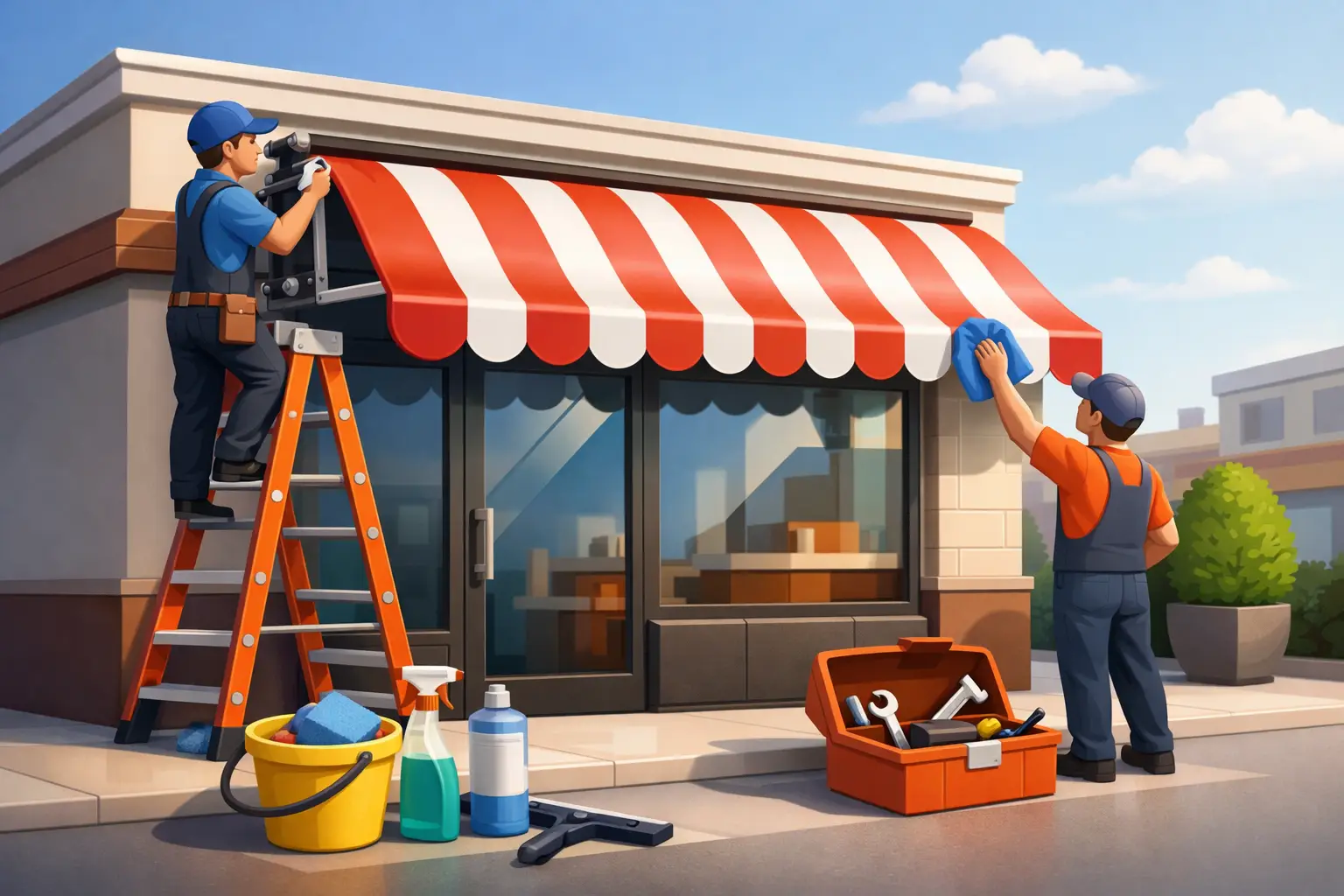
A shopfront awning usually starts getting attention only when something goes wrong - a drip over the entry, a loose panel rattling in wind, faded fabric, rust staining the fascia, or a sign that suddenly looks tired. That is the expensive way to handle awning maintenance for shops. The better approach is to treat the awning like any other external building asset. It needs regular checks, timely repairs and a realistic view of wear, weather and public safety.
For shop owners, landlords and property managers, the awning does more than provide cover. It protects customers at the entry, frames the business visually and sits out in the weather every day. If it starts to fail, the problem is not only cosmetic. It can affect drainage, branding, compliance and the safe use of the footpath outside your premises.
Why awning maintenance for shops matters
A neglected awning rarely fails all at once. More often, it deteriorates in stages. Sealants dry out. Fixings loosen. Water starts tracking into joints. Paint systems break down. Fabric stretches or tears. Aluminium components corrode less dramatically than steel, but they still show age in coastal or high-exposure areas. By the time the issue is obvious from the street, the repair can be broader than it needed to be.
There is also the question of liability. Shopfront awnings sit above public areas, entries and glazing. If a panel loosens, a bracket corrodes through, or water starts dripping where people walk, the risks are immediate. For commercial properties, maintenance is not just a matter of presentation. It is part of responsible site management.
The practical value is simple. Regular inspection and minor works usually cost less than reactive emergency work, and they reduce the chance of needing partial demolition or full replacement before the structure has reached the end of its useful life.
What to check during routine inspections
A proper inspection is not about overcomplicating things. It is about catching changes early. Start with the obvious signs from ground level. Look for sagging, ponding water marks, peeling finishes, rust spots, staining around joints, loose signage, cracked sheeting, and any movement in the frame during wind.
Then pay attention to how water behaves. Overflowing gutters, blocked downpipes and poor fall are common causes of awning trouble. Water that sits where it should drain away will eventually find a weak point. Once moisture gets into fixings or behind cladding, the repair scope can grow quickly.
Fixings and connection points deserve close attention as well. Bolts, anchors, welded joins and mounting brackets carry the structural load. If there is visible corrosion, movement, cracking or deformation, that is not a watch-and-wait issue. It needs a closer assessment by someone who understands commercial awning construction.
If your awning carries lighting, signage or electrical components, inspection should also include covers, penetrations and mounting stability. Secondary trades often install into existing awnings, and poor penetrations are a common source of leaks.
Fabric, metal and polycarbonate all age differently
Not all shop awnings fail the same way. Fabric awnings tend to show UV fatigue, mildew, seam stress and tension loss. They can often be cleaned and repaired if the frame is sound, but badly degraded fabric may be false economy to patch repeatedly.
Metal awnings usually last longer structurally, but they are not maintenance free. Corrosion around edges, laps and fixings is common, especially where water is trapped. Paint breakdown often starts small and then spreads. If left too long, the issue moves from surface treatment to section replacement.
Polycarbonate and similar sheet materials can become brittle, discoloured or loose over time. Hail, heat and UV exposure all play a part. Once cracking starts around fasteners, replacement is often more sensible than piecemeal repairs.
Cleaning is part of maintenance, but not the whole job
A clean awning presents better, but cleaning alone will not solve structural or drainage problems. Still, regular washing helps you spot issues early. Dirt build-up can hide hairline cracks, corrosion and sealant failure. Organic matter in gutters and box sections holds moisture where it should not be.
Use methods that suit the material. Aggressive pressure cleaning can damage coatings, force water into joints and shorten the life of fabric or sealants. In many cases, a controlled clean with the right detergent and low-pressure rinse is the safer option. It depends on the age of the awning, the finish and how accessible the surface is.
For active commercial sites, access matters too. Cleaning above entries and footpaths needs to be planned properly. Safety barriers, timing and site control are part of the job, especially where pedestrian traffic is constant.
The repairs that should not be delayed
Some maintenance items can wait for scheduled works. Others should be actioned quickly. Leaks at wall junctions, loose fascia panels, rusted brackets, failed fixings, damaged sheeting and unstable signage all fall into the second category.
The reason is straightforward. Small defects in exposed structures rarely stay small. A minor leak can lead to internal damage, staining, electrical issues or corrosion behind finishes. A loose panel may only rattle at first, but movement puts stress on the next fixing point. Once one component starts failing, adjoining parts often carry loads they were not meant to carry.
There is a trade-off here. Some older awnings can be repaired effectively in stages. Others reach a point where repeated patching costs more over twelve months than a planned replacement. The right decision depends on structural condition, presentation requirements, tenancy expectations and whether the existing installation still meets current needs.
When maintenance becomes replacement
Good maintenance extends service life, but it does not stop time. If the frame is compromised, drainage design is poor, or the awning has been altered too many times, replacement may be the better commercial call. That is especially true when a site also needs updated signage integration, improved street presentation or engineering review.
Replacement is not always about complete failure. Sometimes it is about reducing ongoing cost and risk. A tired awning that needs constant leak repairs, repainting and reactive patch work can drain time and budget. A new, properly detailed installation may cost more upfront but provide a cleaner result, stronger compliance confidence and less disruption over the next several years.
For landlords and property managers, this is where specialist advice matters. You want a contractor who can tell you honestly whether the job needs a repair, a partial rebuild or a full replacement - not one who treats every defect the same way.
A practical maintenance schedule for commercial sites
Most shops do not need complicated maintenance plans. They need consistency. A visual check every few months, a closer inspection after major weather, routine cleaning, and prompt attention to drainage or fixing issues will cover a lot of ground.
For older awnings or high-exposure sites, more frequent review makes sense. Hospitality venues, corner sites and locations exposed to traffic grime or coastal air usually wear faster. Buildings with multiple tenancies also benefit from documented inspections so issues can be tracked before they turn into disputes about responsibility.
If works are carried out, keep records. Note what was repaired, what products were used, and whether any areas were flagged for follow-up. That helps with budgeting and gives a clearer picture of whether the awning is stabilising or slowly heading towards replacement.
Choosing the right contractor
Shopfront awning work is not general handyman work. It involves public-facing structures, safe access, material compatibility, waterproofing and, in some cases, engineering input. A quick patch that looks fine from the road can still be the wrong fix if the substrate is failing or the load path has changed.
The right contractor should be clear about scope, realistic about risks and able to work around live commercial environments. If demolition, replacement or structural repair is involved, safety planning and proper site control matter just as much as the finish. That is one reason many commercial clients prefer working with specialists such as Advanced Awnings rather than trying to piece the job together across several trades.
A well-maintained awning does not call attention to itself. It keeps the frontage tidy, protects the entry, supports the look of the business and stays out of your problem list. If yours is starting to show age, the best time to act is before the next leak, storm or complaint makes the decision for you.