
Best Shopfront Weather Protection Options
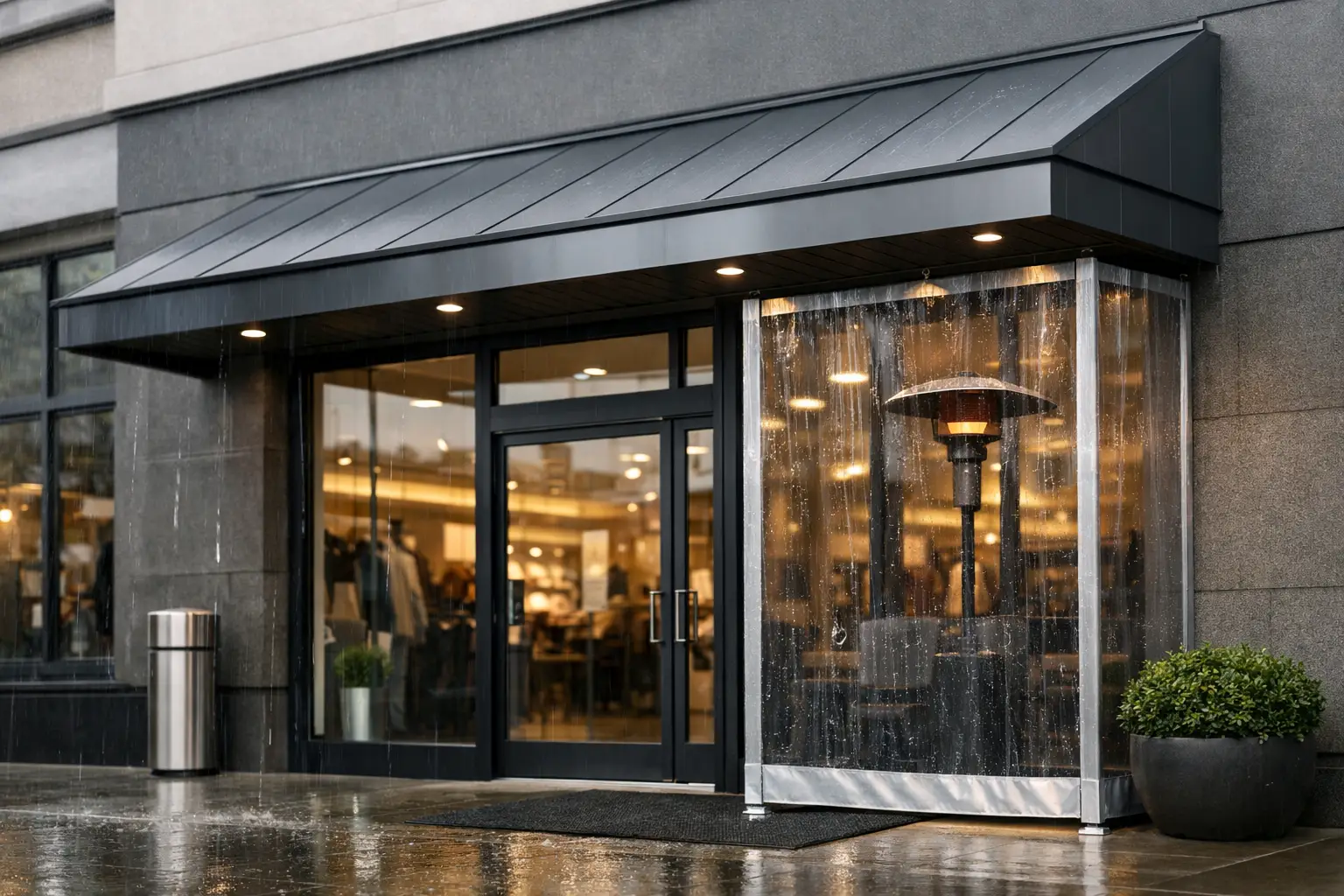
A wet footpath, harsh afternoon sun and wind-driven rain can quickly make a shop entrance uncomfortable and less inviting. The best shopfront weather protection options do more than keep customers dry. They protect doors, glazing, outdoor seating and displays, improve the look of the premises, and help keep the entry safer during poor weather.
For commercial properties, the right answer is rarely the cheapest cover available. It needs to suit the building, the width of the frontage, pedestrian traffic, exposure to wind and rain, and the way the business operates each day. A café with tables near the kerb has different requirements from a retail tenancy in a busy arcade or a warehouse showroom with a wide loading-side entrance.
What good shopfront protection needs to do
A shopfront awning should provide useful coverage without becoming a maintenance problem or a safety risk. That means looking beyond the fabric or roof material. The supporting structure, wall fixings, drainage, clearance over the footpath and condition of the existing façade all matter.
Sydney weather can test a poorly planned installation. Strong sun fades materials and heats up glass fronts. Heavy rain exposes inadequate falls and gutters. Gusty conditions put pressure on frames, brackets and fixings. A structure that looks fine on day one can become noisy, leak-prone or unsafe if it has not been properly designed and installed.
For landlords and property managers, durability is often the main concern. For shop owners, presentation and daily usability may come first. A practical solution should cover both. It should give the business a clean, professional frontage while being built to handle the conditions it will actually face.
Best shopfront weather protection options for commercial sites
Fixed metal awnings
A fixed metal awning is one of the most dependable options for permanent street-facing protection. It is suited to retail shops, medical practices, takeaway venues, commercial buildings and hospitality premises that need reliable cover every day of the year.
Metal awnings can be made to suit the frontage rather than forced into a standard size. They can incorporate a simple flat profile, a skillion roof, fascia detailing, gutters and downpipes, depending on the building and drainage requirements. The finish can also be selected to complement existing cladding, signage and shopfront colours.
The main advantage is strength and long-term value. Unlike a retractable system, there are no moving arms or mechanisms to operate. The trade-off is that the coverage is permanent. If a tenant wants the ability to open up the façade fully on clear days, a fixed awning may feel less flexible.
Cantilevered shopfront awnings
Cantilevered awnings create a clean, open area beneath the canopy because they are supported from the building rather than with posts at the front edge. This is often a strong choice where footpath space is tight or where posts could interrupt pedestrian movement, wheelchair access, tables or shop displays.
They are commonly used above standard shopfront windows and entry doors, particularly where the owner wants a modern commercial finish. Because the load is carried back to the building, the existing wall and structural support need to be assessed properly. The bigger the projection and the more exposed the location, the more critical the engineering and fixing details become.
This is not a job for light brackets and guesswork. Proper fabrication, sound wall connections and safe installation are what make a cantilevered awning work over the long term.
Folding-arm and retractable awnings
Retractable awnings are useful where flexibility is more valuable than permanent all-weather coverage. Cafés, restaurants, boutiques and venues with outdoor dining often choose them because they can extend shade during hot periods and retract when the weather is calm or the business wants more open sky.
They can improve comfort quickly, especially on western-facing frontages that receive intense late-day sun. However, they are generally better suited to shade and light rain than severe weather. In strong winds or heavy rain, many retractable systems need to be brought in to prevent damage or water pooling.
They also require regular attention. Fabric condition, arm tension, motor operation, fixings and drainage should be checked as part of ongoing maintenance. For an exposed commercial site that needs constant protection, a fixed awning is usually the safer long-term choice. For a sheltered outdoor dining area, a retractable system can be the right fit.
Polycarbonate canopies
Polycarbonate canopies are often considered when natural light is a priority. A clear or tinted roof panel can cover an entry while allowing more daylight into the shopfront below. This can work well for narrow entrances, side access doors and locations where a solid canopy would make the interior feel darker.
The material selection and support system matter. Lower-grade sheeting can discolour, become brittle or look tired sooner than expected under strong UV exposure. It also needs enough fall for drainage and suitable framing to prevent movement and water collection.
A polycarbonate canopy may suit a specific entrance, but it is not always the best choice for a broad, highly visible retail frontage. If the goal is a more substantial look, better sun control and a longer-lasting commercial finish, metal cladding is often more suitable.
Fabric awnings and fixed canvas canopies
Fabric canopies offer a softer appearance and can be effective for hospitality venues, specialty retail and heritage-style streetscapes. They can provide good shade and give the frontage a distinct visual identity, particularly when colour and signage are part of the design.
The key consideration is maintenance. Fabric can collect dirt, hold moisture in poorly drained areas and fade over time. It needs to be properly tensioned and fitted to a frame that is suitable for the site. In exposed locations, fabric systems need careful assessment because wind loading can be a limiting factor.
For businesses that want a particular look, fabric can be a good option. It should be chosen with realistic expectations about cleaning, replacement cycles and weather exposure.
Start with the site, not the product
The right system starts with a site inspection. Measure the available projection, check where water currently runs, look for services or signage, and consider how customers approach the entrance. On a busy footpath, head clearance and public safety are not minor details. They are part of the job.
It is also worth checking the existing awning or façade before planning a replacement. Rusted steel, damaged timber, loose cladding and water-affected wall areas can compromise a new installation if they are left untreated. Sometimes demolition and make-safe work are needed before a replacement awning can be installed properly.
For larger structures, older buildings or sites with higher wind exposure, engineering input and certification may be required. Approval requirements can vary based on the property, council area and scope of work. An experienced commercial awning contractor can identify these issues early, rather than finding them after fabrication has started.
Drainage, lighting and signage are part of the build
A weather cover that sends rain straight over the entrance is not doing its job. Falls, gutters, downpipes and discharge points should be planned so water is moved away from doorways and pedestrian areas. This is especially important for shopfronts with tiled entries, smooth concrete or outdoor dining, where water can create a slip hazard.
Lighting and signage should also be considered before the frame is built. A canopy may need space for downlights, electrical conduits, illuminated signage or security cameras. Trying to add these items later can lead to visible patchwork, unnecessary drilling and added cost.
A well-planned awning looks simple because the practical details have been handled behind the scenes. The finished structure should sit neatly with the building, provide clear cover where it is needed and avoid creating future access issues.
Repair or replace an existing shopfront awning?
Not every damaged awning needs full replacement. Localised rust, leaking joints, loose sheets, gutter damage or worn fabric may be repairable if the main structure remains sound. Timely repairs can prevent water damage to the shopfront and reduce the chance of a minor defect becoming a public safety issue.
Replacement is usually the better option when the frame has widespread corrosion, the structure is visibly sagging, fixings are failing, or the design no longer provides enough coverage. It can also make sense when a tenancy is being refurbished and the old awning no longer matches the new frontage.
The decision should be based on condition, not appearance alone. A fresh coat of paint may improve the look temporarily, but it will not solve structural deterioration or poor drainage.
Choose a contractor who understands commercial work
Shopfront awning work often happens above active entrances and public footpaths. The contractor needs to manage access, demolition, lifting, site protection and installation without creating unnecessary disruption for customers, staff or neighbouring businesses.
Ask how the existing structure will be assessed, how the site will be kept safe, what materials and finishes are proposed, and whether engineering or certification support is needed. Clear quoting matters too. The scope should identify what is being removed, supplied, installed and made good.
Advanced Awnings approaches shopfront work with the practical detail commercial sites require: safe removal where needed, tailored replacement solutions and workmanship built for daily use. The best result is not the flashiest awning on paper. It is the one that keeps the entrance protected, suits the building and remains dependable long after the installers have left.