Weather Damaged Awning Recovery Example
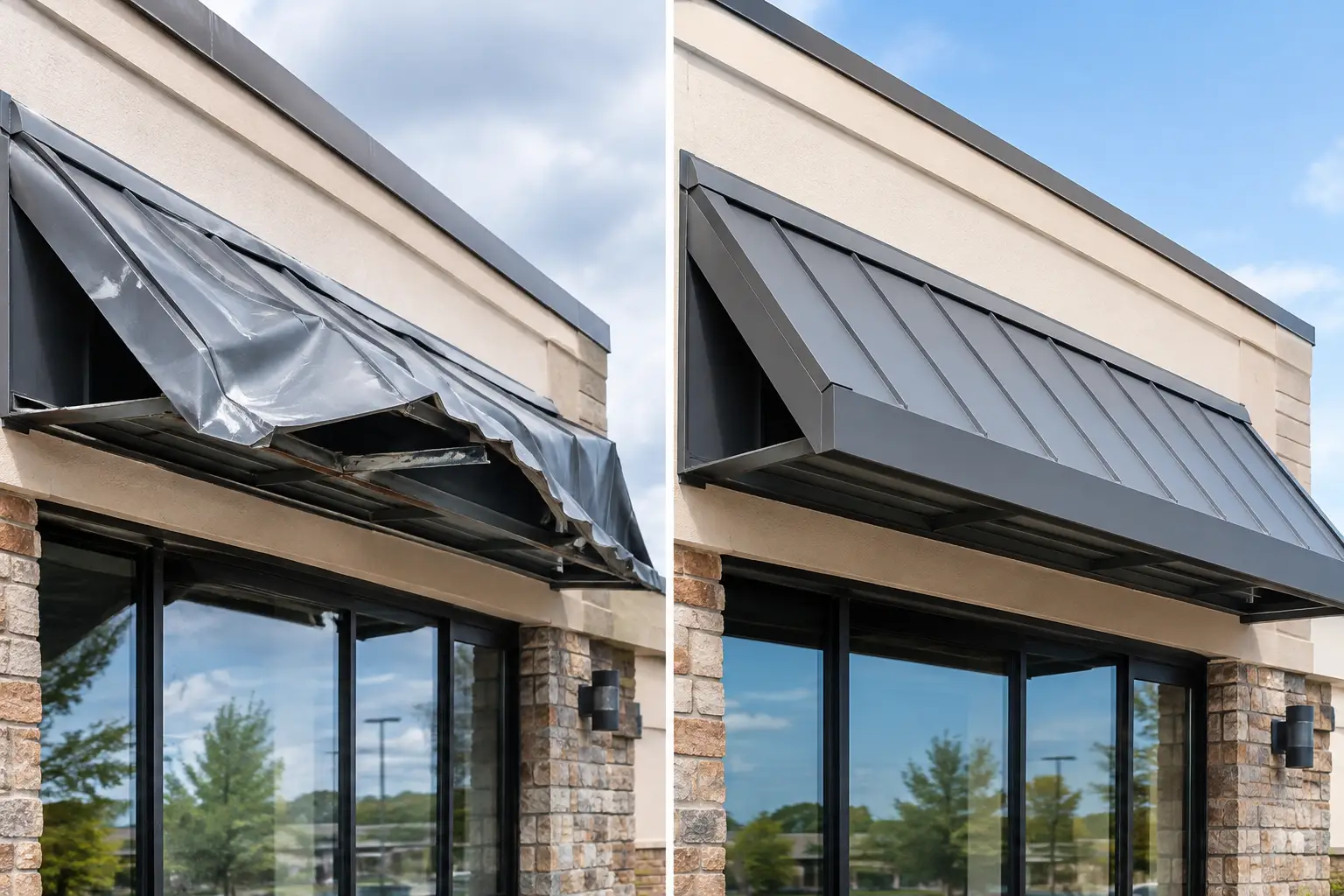
A weather damaged awning recovery example is rarely just about replacing bent sheet metal. When a shop front awning is hit by high wind, driving rain, falling branches or loose signage, the immediate issue is public safety. The longer-term issue is getting the premises protected, compliant and presentable again without creating further disruption for tenants, customers or neighbouring businesses.
For a commercial property, a damaged awning can affect footpath access, expose the entry to water, damage signage and create a real risk from loose cladding or compromised framing. A proper recovery job starts with making the area safe, then works through inspection, demolition where needed, structural advice and a clean replacement or repair.
The situation: storm damage over a busy shop front
Consider a typical street-facing tenancy after a severe Sydney storm. Strong gusts have lifted the front edge of an older metal awning. Water has entered through failed flashings, the fascia is hanging unevenly and one support connection has visibly shifted. The shop can still trade through a side entrance, but pedestrians are walking directly below the damaged section.
This is not the time for a quick patch from a ladder. Even when the awning appears mostly intact, the loads may have transferred into brackets, fixings or the building face in ways that are not obvious from the ground. Water can also sit inside boxed sections or behind wall flashings, accelerating corrosion and weakening components that were already near the end of their service life.
The first decision is whether the structure can be safely repaired in place or whether sections need to be removed before a full assessment. That decision depends on the extent of movement, the condition of the steelwork, the original construction, access to the site and the risk to people below.
Weather damaged awning recovery example: the first 24 hours
In this example, the priority is to isolate the affected frontage. The tenant and property manager arrange temporary exclusion of the area below the awning, with clear barriers and signage to keep customers away from the risk zone. If loose material is moving in the wind, emergency make-safe work may be required before a detailed inspection can take place.
The contractor then checks the visible condition of the awning roof, fascia, brackets, posts where fitted, connection points and adjoining building surfaces. The inspection also looks for water ingress around the wall, damaged electrical items, unstable signs and any material that could fall onto the footpath.
A practical assessment does not assume the visible damage is the full story. A twisted fascia may be cosmetic, but it can also point to rafter movement behind it. A torn roof sheet may be replaceable on its own, or it may indicate that the framing has lifted and pulled against the building. The condition of the original fixings matters just as much as the condition of the sheet metal.
Where structural movement is suspected, engineer input may be needed before the repair scope is set. This is particularly relevant for larger shop front canopies, older awnings with uncertain original details, or structures that carry signage, lighting or additional loads.
Making the site safe before work starts
Commercial awning work is often carried out in public-facing locations, so the work area needs to be planned properly. The footpath may need to remain clear, adjacent shop entrances may need controlled access, and overhead work must be managed to prevent falling materials.
For this recovery, the damaged cladding and unstable fascia are removed in controlled sections rather than pulled down all at once. Depending on access and the awning layout, this can involve elevated work platforms, scaffold or other suitable access equipment. The point is not to make the job look complicated. It is to avoid turning storm damage into a larger incident.
The team also protects the shop front below. Glazing, doors, signage and outdoor furniture can all be damaged during demolition if the work is rushed. Good site management keeps the tenant informed about noisy work, access changes and the expected timeframe, particularly if trading is continuing during the repair.
Finding the real repair scope
Once damaged coverings are removed, the frame can be inspected properly. In our example, the front fascia and several roof sheets are beyond repair, while part of the main steel frame has surface corrosion and one connection point requires rectification. The wall flashing has failed, allowing rainwater to track behind the awning line.
At this stage, there are two possible paths. If the primary frame is sound and can be repaired to an acceptable standard, a targeted repair may be the sensible option. If the frame has widespread corrosion, distorted members or unreliable connections, replacement can offer better value and a safer long-term result.
There is a cost trade-off here. Repairing only the visible damage can be cheaper upfront, but it may leave ageing materials and unresolved water-entry points in place. Replacing the awning costs more initially, yet it can provide a cleaner finish, new compliant materials and fewer maintenance issues over the years ahead. The right option depends on the condition of the structure, the lease situation, the building owner’s plans and the importance of the street presentation.
Rebuilding for weather resistance, not just appearance
For this example, the owner chooses a partial rebuild. Damaged framing is removed and replaced, the existing sound structure is treated and prepared where required, and new roof sheeting, flashings and fascia are installed. The awning is rebuilt with attention to falls, drainage and the junction where it meets the building.
That wall junction is critical. Water management is often where older awnings fail. If flashings are poorly detailed or fixings create gaps, rain can enter behind the metalwork and affect the wall, ceiling or shop front below. A neat-looking awning is not enough if it channels water into the building.
The new materials also need to suit the commercial setting. Colour, profile and fascia detail should work with the building frontage and existing signage, but durability comes first. A busy retail or hospitality site needs a finish that handles weather exposure and can be maintained without constant patching.
If signage, lighting or services are attached to the awning, these items should be considered as part of the scope rather than treated as an afterthought. Their weight, fixings and access requirements can affect the final construction details.
Certification, approvals and clear records
Not every awning recovery requires the same approvals or engineering process. It depends on the awning size, structural changes, building type, heritage considerations and local requirements. Where engineer certification is required, it should be addressed early rather than after the work has been designed or installed.
For owners and property managers, clear records matter. A proper quote should describe what is being removed, repaired or replaced, along with access requirements, site controls and any exclusions. Photographs of the damage and completed work are also useful for maintenance files, insurance discussions and future tenancy changes.
This is especially valuable after a weather event, when several trades may be involved. Roofers, electricians, shopfitters, signwriters and building managers can all have work around the same frontage. A contractor experienced in commercial awnings can help keep the awning scope clear and avoid clashes between trades.
What a good recovery looks like
A successful result is not simply an awning that looks straight again. The site is safe during the work, the structure has been assessed honestly, water-entry points have been addressed and the finished awning suits the building and its daily use. The tenant can trade with confidence, customers can use the entrance safely and the property presents properly from the street.
Advanced Awnings approaches recovery work with that practical mindset. After more than 20 years working on commercial shop front awnings, the focus remains on safe demolition, sound installation and clear communication from quote through to completion.
If a storm has damaged your shop front awning, do not rely on appearances alone. Secure the area, document the damage and arrange a proper assessment before small defects become a safety issue or a larger building repair.