Commercial Awning Installation Done Properly
A bent fascia, water-stained soffit and loose fixings over a busy footpath are not small issues. They are the sort of problems that turn into safety risks, tenant complaints and expensive rework. That is why commercial awning installation needs to be treated as proper construction work, not a quick add-on for the front of a building.
For shop owners, landlords, builders and property managers, the awning is doing more than providing cover. It shapes how the premises presents to the street, protects customers and staff at the entry, and has to stand up to weather, use and public exposure. If the job is rushed, under-engineered or poorly finished, it shows straight away.
What commercial awning installation really involves
A good awning job starts well before anything is fixed to the building. The existing structure has to be checked, measurements need to be right, and the design has to suit both the frontage and the way the site operates. On some projects, there is an old awning to remove first. On others, the challenge is fitting a new structure to an older façade without creating load issues or drainage problems.
This is where experience matters. Commercial awning installation is rarely a one-size-fits-all job. A narrow shop front in a busy retail strip has different demands from a hospitality venue with outdoor trade, and both differ again from a tenancy in a commercial complex. Access, visibility, tenancy requirements, engineer input and public safety all affect how the work should be planned.
The practical side is just as important as the finished look. Materials need to suit the location and exposure. Fixings have to be appropriate for the substrate. Water runoff needs to be considered early, not after the first heavy rain. If there is signage involved, that also needs to be allowed for in the build rather than patched in later.
Why poor awning work costs more later
A lot of problems come from jobs that were priced to look cheap at the start. The awning might go up quickly, but if details are missed, the savings disappear fast. Water can track back into the shop front, steel can corrode where it should have been protected, and movement in the frame can start showing through cracked joints and uneven lines.
There is also the public-facing side of it. A commercial awning sits over entrances, glazing, trading areas and pedestrian access. If demolition is handled badly, if loose material is left overhead, or if the installation process is not controlled properly, the risk is not just damage to the building. It is risk to people using the site.
For owners and managers, that is where the real value of a specialist contractor shows up. You are not just paying for labour. You are paying for a job that is assessed properly, installed safely and finished to a standard that does not come back to bite you six months later.
The stages of a proper commercial awning installation
The first stage is usually site inspection and quoting. That should include clear measurements, a realistic look at the existing conditions and honest advice about what can stay, what has to go and what needs engineering review. If there is damage in the current awning or supporting structure, it should be identified upfront.
The next part is planning the build. Depending on the project, this may involve fabrication, demolition sequencing, access equipment, traffic or pedestrian management, and coordination with other trades. On an active premises, timing matters. A good installer works around business operations where possible and is upfront when disruptions cannot be avoided.
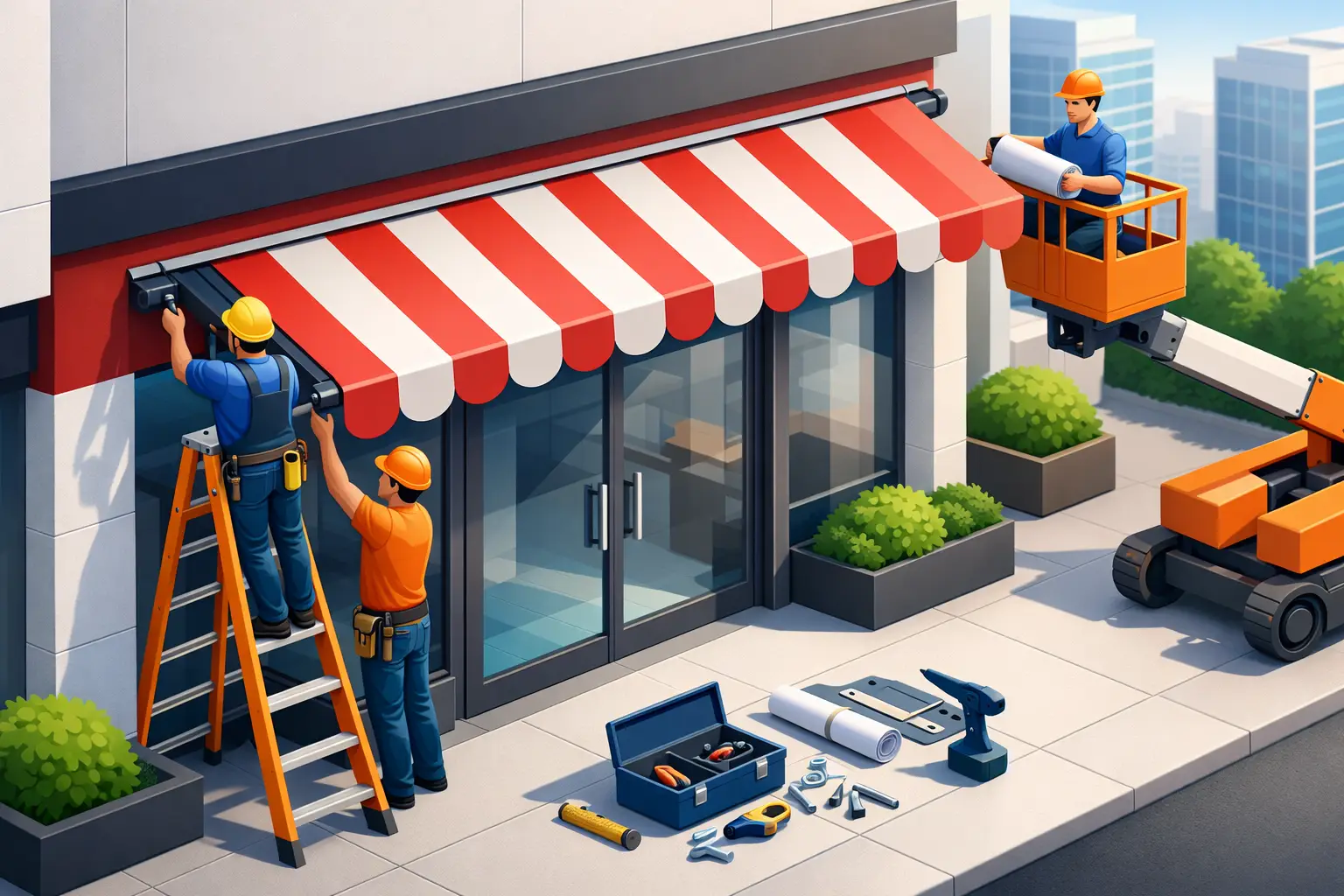
Installation itself should be methodical. Structural members need to be set out correctly, fixings installed to suit the base material, and the finished structure checked for line, drainage and weather performance. The visual finish matters, but it should never come at the expense of structural soundness.
The last stage is handover. That means the site is left clean, the awning is finished properly, and any required documentation such as engineer certification support is dealt with where applicable. Clients should not be left chasing answers once the tools are packed up.
Commercial awning installation and compliance
Compliance is one of those areas where people only focus when something goes wrong. By then, it is usually costly. Commercial awnings are exposed structures attached to buildings and positioned over public or customer areas, so they need to be treated accordingly.
What is required can vary depending on the site, the size of the structure and the existing building conditions. In some cases, engineer involvement is straightforward. In others, the existing façade or awning frame may raise questions that need to be resolved before new work begins. The right approach is not to guess and hope for the best. It is to identify what the project requires and deal with it properly.
This matters even more in older shop fronts, where previous alterations may not be documented clearly or where materials have deteriorated over time. A tidy-looking frontage can still hide corrosion, failed fixings or weak substrate behind the cladding. That is why experienced site assessment is worth having before committing to a build.
Choosing the right awning for the site
Not every commercial awning should be built the same way. The right solution depends on how the frontage is used, what the building can support and what sort of finish the business needs. A retail tenancy might prioritise clean presentation and signage integration. A café or takeaway shop might need stronger weather protection over a customer waiting area. A landlord preparing a tenancy for lease may be more focused on durability and low maintenance.
There are trade-offs in every job. Heavier-duty structures can offer longevity, but they may require more involved support and certification. Lightweight options can suit some façades, but only if they are appropriate for the site conditions. The best result usually comes from matching the awning to the actual use of the premises, not choosing purely on price or appearance.
When replacement makes more sense than repair
Some awnings can be repaired and brought back to a safe, presentable standard. Others are past that point. If the frame is compromised, the sheeting is failing in multiple areas, or there has been repeated patching over the years, full replacement is often the better long-term decision.
That does not mean every damaged awning needs to be demolished. A proper inspection can separate cosmetic issues from structural ones. But where safety, compliance or ongoing reliability are in question, replacement can save money over time and avoid the cycle of temporary fixes.
This is especially relevant for properties that need to maintain a professional street presence. A patched-up awning with visible wear, sagging lines or mismatched repairs can drag down the appearance of the whole frontage. For many commercial sites, presentation has a direct impact on customer confidence.
What clients should expect from the contractor
A commercial awning contractor should be easy to deal with, but more importantly, they should be clear and accountable. That means straightforward quoting, realistic timeframes and honest answers about site conditions. If there are risks, delays or limits to what can be done, those should be raised early.
Insurance, safety controls and site discipline also matter. These jobs are often carried out in live environments with neighbouring businesses, passing foot traffic and trading constraints. A contractor who understands shop front work knows how to manage the site without creating unnecessary exposure for the client.
Workmanship is the other big one. Good commercial awning installation should look right from the street and hold up over time. Straight lines, neat finishes and solid construction are not extras. They are the standard the job should meet.
For businesses across Greater Sydney, that practical approach is what separates a specialist from a general operator having a crack at it. Advanced Awnings has built its name on that kind of work - proper planning, safe delivery and finishes that are built to last.
If you are pricing an awning project, replacing an ageing structure or dealing with a damaged shop front canopy, the smartest move is usually the simplest one. Get the site looked at properly, get clear advice, and make sure the job is built for the real conditions it has to face.