Commercial Awning Repairs Done Properly
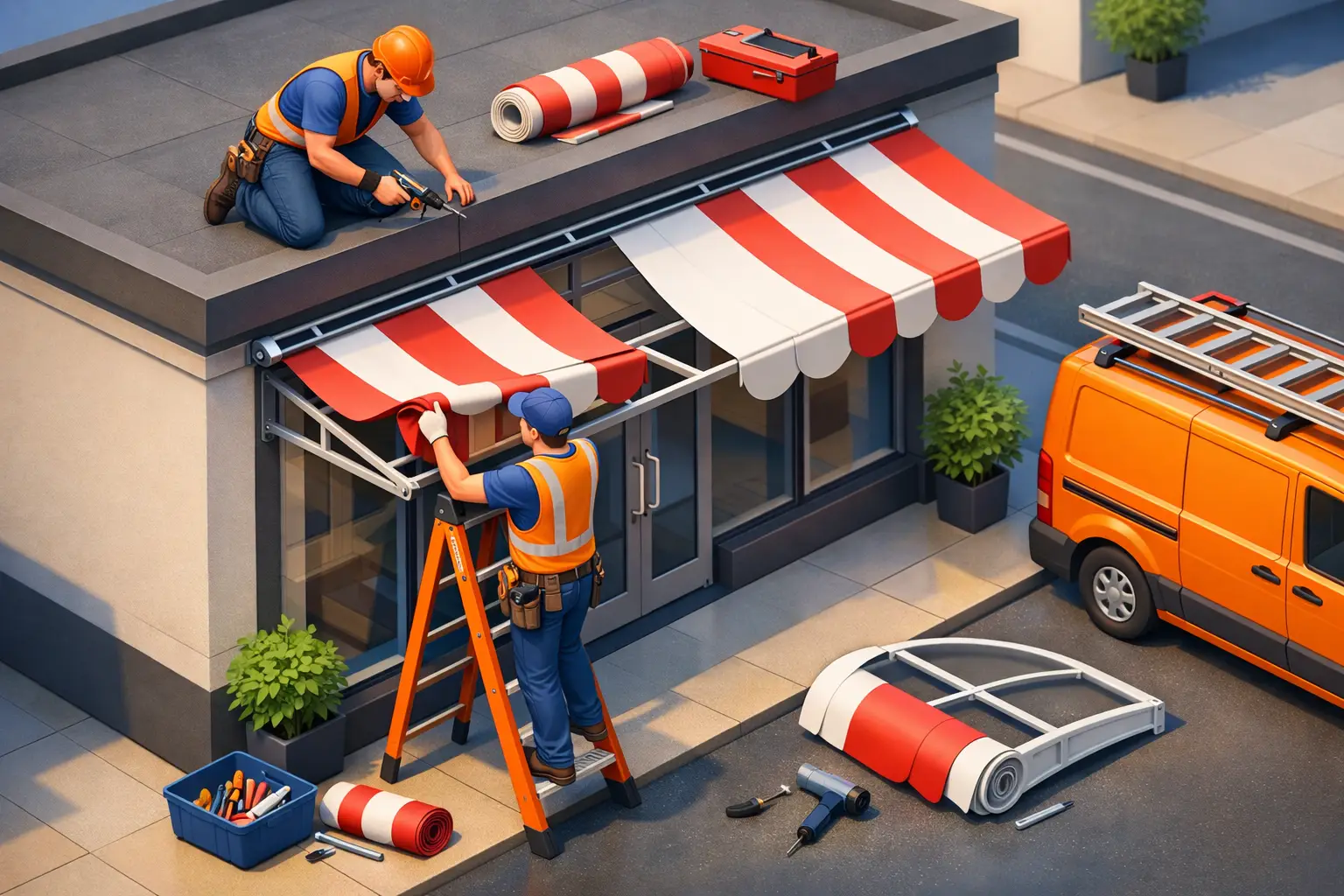
A loose awning panel over a busy shopfront is not just an eyesore. It is a risk to customers, staff and anyone passing underneath. That is why commercial awning repairs need to be treated as building work, not a quick patch-up job.
For most owners and managers, the real issue is not whether an awning looks tired. It is whether the structure is still safe, weatherworthy and worth repairing. A minor tear in fabric is one thing. Corrosion in steel framing, failed fixings, water ingress or impact damage is another. The right response depends on the age of the awning, how it was built in the first place, and what condition the supporting structure is in now.
When commercial awning repairs make sense
Repairs are often the right call when the main structure is still sound and the problem is isolated. That might mean replacing damaged sheeting, fixing fascia panels, rectifying leaks, repairing sections affected by rust, or dealing with localised storm damage. In those cases, good repair work can extend the life of the awning without the cost and disruption of a full replacement.
This matters for active commercial sites. A retailer, cafe or hospitality venue usually wants the frontage made safe and presentable with as little downtime as possible. If the awning can be restored properly, that can be the most practical option.
The key words there are properly and safely. Commercial awnings sit above entries, windows, footpaths and public areas. Even a straightforward repair needs to account for access, pedestrian safety, the condition of fixings, and the way water moves through the structure. If one section has failed, it is worth checking whether nearby sections are under the same stress.
Signs your awning needs attention now
Some faults are obvious. Panels may come loose, brackets may shift, paint may blister, or water may start tracking where it should not. Other problems build slowly and get missed until the repair bill gets bigger.
If you are responsible for a commercial frontage, look closely at rust staining, sagging, movement in windy conditions, cracked welds, lifted flashing, pooling water and recurring leaks near the shopfront. Rotten substrate behind cladding and failed sealant around junctions can also point to a deeper issue. So can damage caused by vehicles, signage changes or previous poor-quality repair work.
A faded or dated finish is not always urgent on its own, but visible wear often goes hand in hand with structural deterioration. Presentation matters, especially on a street-facing premises, but safety comes first. If there is any doubt about integrity, the area should be assessed before the problem worsens.
What proper commercial awning repairs should include
A decent repair job starts with inspection, not guesswork. Before any contractor starts cutting out sections or replacing panels, they should understand how the awning is fixed, where loads are transferring, what water is doing, and whether the visible damage tells the full story.
Structure before surface
This is where some jobs go wrong. A fresh sheet or new fascia can make an awning look better from the street, but if the framing behind it is corroded or the fixings are compromised, the problem has only been covered up. On commercial sites, that is not good enough.
The structure should be checked first. That includes steel members, brackets, connection points, welds and attachment to the building. If those elements are sound, surface repairs can be carried out with confidence. If they are not, the repair scope may need to expand or shift toward replacement.
Weatherproofing and drainage
Leaks around awnings are often treated as a sealing issue, but water problems usually have a cause. Incorrect falls, blocked drainage paths, poor flashing details or movement in the frame can all let water back into the building line. A proper repair deals with the cause rather than adding more sealant and hoping for the best.
This is especially relevant for older shopfront awnings, where multiple repairs over time can create weak points. One patch over another tends to fail again.
Safe access and public protection
Awning work happens above entrances, glazing and public walkways. That means the repair process matters as much as the repair itself. Safe access, traffic control where needed, site protection and controlled work methods are part of doing the job properly. For landlords and property managers, this is not a side issue. It is part of managing risk on a live site.
Repair or replace - how to make the call
Not every damaged awning should be repaired. Sometimes replacement is the smarter investment, especially when repair costs start stacking up against a structure nearing the end of its life.
A repair is usually the better option when damage is localised, the main frame remains serviceable, and the awning still suits the building and tenancy. It can also make sense when timing matters and the site needs a quicker solution to restore safety and presentation.
Replacement is often worth considering when corrosion is widespread, structural members are failing, compliance is unclear, or the awning has been altered so many times that repairs are becoming piecemeal and unreliable. The same applies where the frontage needs a full upgrade to align with a refurbishment, new tenancy or building works.
There is also the compliance question. Some older awnings were built under very different standards or have undocumented changes. If engineer input is needed, that should be factored in early. Spending money on repeated repairs for a structure that will still need major works later is rarely the best commercial decision.
Why experience matters on shopfront awnings
Commercial awnings are not generic. Shopfront canopies, suspended awnings, blade signs integrated into awning lines, steel-framed sheeted awnings and custom frontage structures all behave differently. Materials age differently too. Metal sheeting, aluminium trims, steel supports, polycarbonate sections and older mixed-material assemblies each bring their own repair issues.
That is why specialist experience matters. A contractor used to domestic shade products may not be the right fit for a street-facing commercial structure with public exposure, signage integration and compliance considerations. Repairing a shopfront awning often involves more than replacing a damaged piece. It takes practical understanding of demolition, rebuilding, matching finishes, fixing methods and site safety.
For commercial clients, communication matters as well. You need a clear scope, honest advice on whether a repair is worthwhile, and a contractor who turns up ready to deal with the real condition on site. That straightforward approach is one reason businesses across Sydney continue to rely on specialists such as Advanced Awnings for repair and replacement work on visible public-facing structures.
Getting value from the repair, not just a lower quote
The cheapest quote can become the expensive one if the repair fails early or leaves liability sitting with the property owner. Good commercial awning repairs should improve safety, extend service life and leave the frontage looking properly finished. If the work only addresses the symptom, you will likely be paying twice.
It is worth asking what is actually included. Is the contractor checking the frame or only changing the outer skin? Are damaged fixings being replaced? Will water entry points be rectified? Is there a plan for safe access and making the area secure during works? If engineering or certification support may be required, can that be coordinated?
These are practical questions, not technical extras. They help separate a proper repair from a cosmetic patch.
A good repair should leave you with confidence
When a commercial awning is repaired well, it should do three things. It should be safe overhead, it should hold up in the weather, and it should present the premises properly from the street. That applies whether the job is a targeted repair after damage or part of a broader frontage refresh.
If your awning is showing signs of movement, corrosion, leaks or impact damage, leaving it for later usually does not make the job simpler. A prompt inspection gives you options. And in this line of work, having options early is usually what keeps the job smaller, safer and easier to manage.