
Commercial Patios That Hold Up
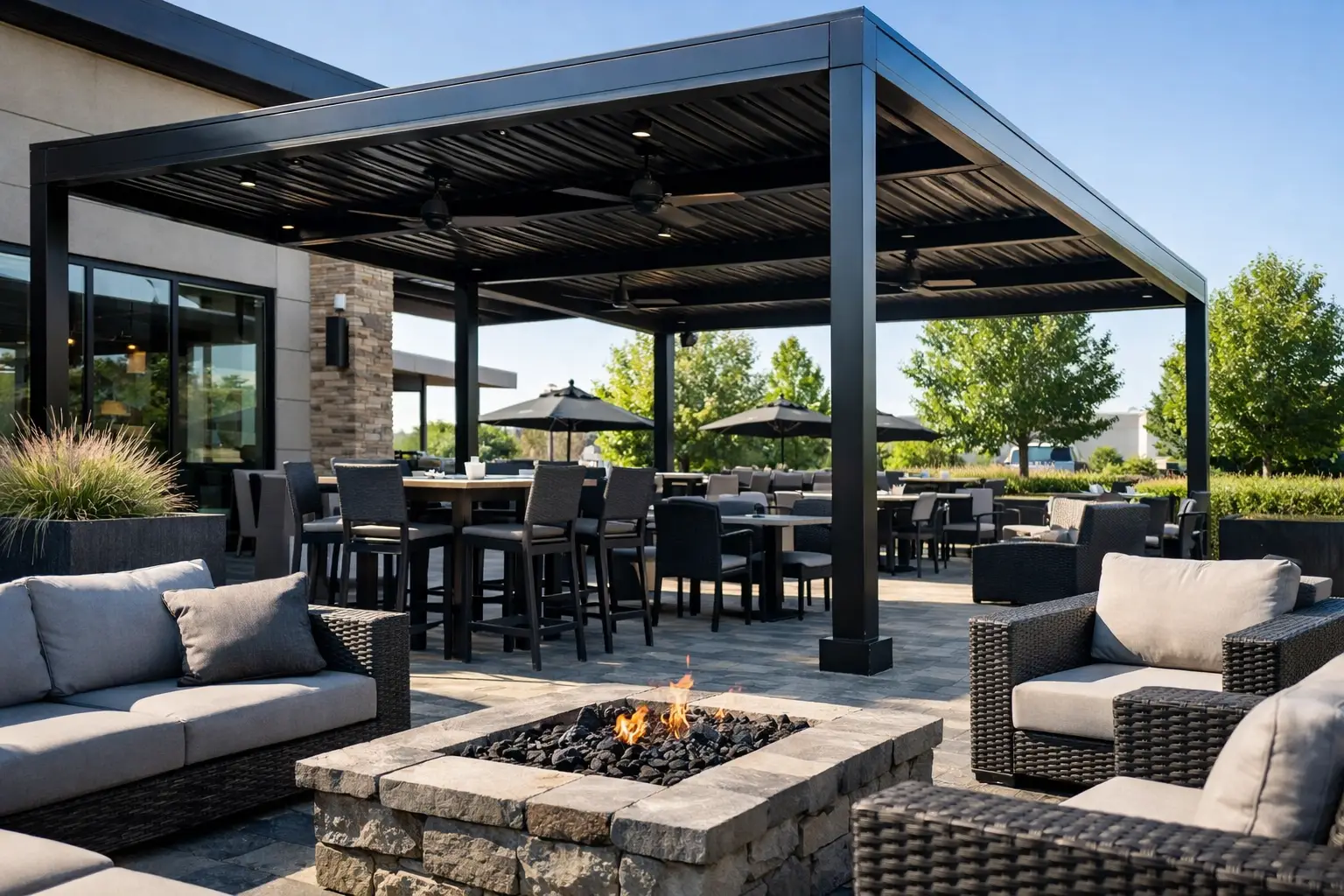
A patio can look simple from the street - a few tables, some shade, clean lines, good exposure. But anyone responsible for a commercial site knows there is a lot riding on that space. If the patio is out the front of a cafe, restaurant, shop or mixed-use property, it has to do more than look presentable. It needs to handle weather, foot traffic, council expectations, public safety and day-to-day wear without becoming a problem job six months later.
That is where plenty of commercial patios go wrong. The focus ends up on appearance first, while drainage, fixings, engineering, access and long-term maintenance get pushed down the list. For a business owner or property manager, that usually means higher costs later - repairs, water issues, damaged finishes, or a structure that never really performed the way it should have.
What commercial patios actually need to do
For a residential property, a patio is often about lifestyle. In a commercial setting, it is about function as much as presentation. It may need to create usable dining space, protect customers at the entry, improve the shopfront, or make an awkward frontage more workable. Sometimes it is there to support trade. Sometimes it is there to protect an asset.
That changes the brief straight away. A commercial patio has to suit the building, the way the site operates and the amount of public exposure it gets. A quiet courtyard gives you one set of options. A busy street-facing frontage with constant pedestrian traffic gives you another.
The right solution depends on how the space is used. Hospitality venues often need weather protection that still feels open and inviting. Retail sites may need stronger visual consistency with existing awnings or signage. Landlords and strata managers tend to prioritise durability, safety and low ongoing maintenance. Builders usually need a contractor who can deliver the job properly, keep the site controlled and work within a broader programme.
Patios and street-facing exposure
If your patio sits near a public footpath or open customer access point, the stakes are higher. The structure has to be safe, sound and suited to a live environment. That includes the obvious things such as strength and stability, but also the less visible details like edge conditions, water run-off, clearance, and how the installation affects people moving through the area.
This is why commercial patios should never be treated as a lightweight add-on. Once a structure is exposed to the public, poor workmanship becomes a liability, not just an eyesore. Loose sheeting, rusted brackets, undersized posts or patch-up repairs can quickly become a safety issue.
For older sites, there is often another layer to deal with. Existing awnings, patio covers or framing may have been modified over time by different trades. What looks serviceable from the ground can be hiding corrosion, weak fixing points or drainage failures. Before any replacement or upgrade starts, the existing structure needs a proper look.
Design matters, but build quality matters more
Most clients already know what they want the patio to achieve. They want cover, a tidy finish and something that complements the frontage. That part is fair enough. But in commercial work, nice drawings are only one part of the equation.
The build has to stack up in real conditions. Materials need to suit the site. Connections need to be sound. The patio should shed water properly, cope with wind exposure and hold its finish over time. If the structure ties into an existing building, that connection point needs special attention. A weak join between old and new work is where plenty of issues begin.
There is also the matter of maintenance. Some patio designs look sharp when they are brand new but become expensive to keep clean, repaint or repair. On a busy venue, that matters. The more exposed the structure, the more value there is in choosing finishes and details that are practical to maintain.
Repairs versus replacement
Not every patio needs to be torn out and rebuilt. In some cases, targeted repairs are enough - replacing damaged sheets, addressing rust, rectifying fixings, repainting steel or making good around deteriorated sections. If the main structure is still sound, repairs can extend the life of the patio without the cost of a full replacement.
But there is a point where repair work stops being sensible. If the patio has widespread corrosion, water damage, movement, or a history of repeated patch jobs, full replacement is usually the cleaner and safer option. Spending money over and over on short-term fixes can end up costing more than doing the job once and doing it properly.
A straight answer matters here. Clients do not need sales talk. They need to know whether the structure is worth saving, what the risks are, and what the likely outcome will be if they keep repairing it.
Compliance is not a box-ticking exercise
Commercial patios are part of the built environment. That means compliance, approvals and engineering are not optional side issues. They are part of getting the work right.
Depending on the site, there may be requirements around structural certification, council approvals, building integration or public safety controls during demolition and installation. The exact pathway varies, but the point stays the same - if the patio is being installed, altered or replaced on a commercial property, the work needs to be approached with proper documentation and practical site management.
This matters most on active premises. You may have staff, customers, neighbouring tenancies and pedestrians moving through the area while work is underway. Good planning is not just about getting the structure built. It is about keeping the site safe and reducing disruption while the job is carried out.
The cost question clients really ask
When people ask what patios cost, they are rarely asking for a generic square metre rate. What they really want to know is why one quote is higher than another, and whether they are paying for something they actually need.
The honest answer is that price shifts with access, structural requirements, materials, finishes, demolition needs and the condition of the existing site. A clean new install on an easy-access frontage is one thing. Replacing an ageing patio attached to a live commercial site is another.
Cheaper quotes can leave out important parts of the work - proper demolition, site protection, engineer input, drainage rectification or finish quality. That does not mean every expensive quote is justified, but it does mean price alone is a poor filter. If the patio sits on a public-facing site, workmanship and site control are part of the value.
Why experience shows up in the finished result
Commercial patio work is rarely just about one trade turning up and bolting a frame together. It involves judgement - what to retain, what to replace, how to tie into the building, how to keep the frontage usable, and how to finish the job so it looks sharp and holds up.
That is where experience makes a visible difference. Contractors who regularly work on street-front structures understand the practical details that affect outcome. They know where older shopfronts tend to fail. They know how to stage demolition safely. They know the difference between a patio that looks good on handover day and one that still performs after years of weather and use.
For businesses, that matters more than flashy language. You want a contractor who turns up, gives a clear quote, explains the scope, and carries the job through properly. Advanced Awnings works in that space because commercial frontage work demands exactly that kind of follow-through.
Choosing the right patio approach
The best patio is not always the biggest or most elaborate one. It is the one that suits the building, supports the way the site operates and does not create future headaches.
If your frontage needs stronger weather protection, the structure should be designed around that. If visual presentation is the priority, it still has to be backed by sound construction. If the existing patio is becoming a maintenance problem, the decision should be based on condition and risk, not just whether it can be patched again.
Good commercial work is usually straightforward in principle. Understand the site. Be honest about the structure. Build for safety, durability and use. Finish it properly.
A patio should make the front of a business work harder, not give the owner one more thing to chase up next season.