
What Good Shopfront Canopy Builders Do
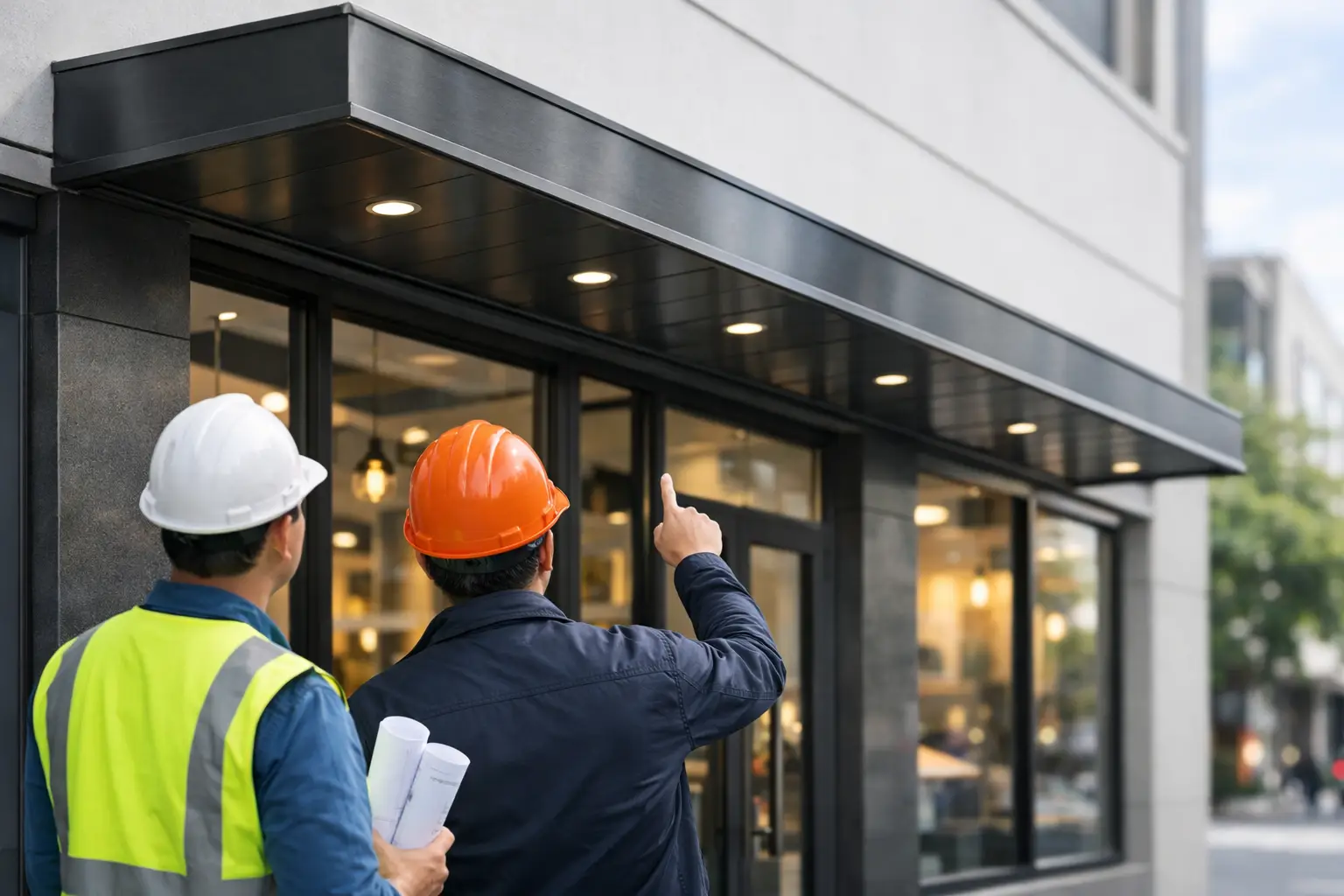
A shopfront canopy has to do more than look tidy above a tenancy. It has to handle weather, suit the building, protect the public below and stand up to daily use without becoming a maintenance headache. That is why choosing the right shopfront canopy builders matters from the start.
For most owners, landlords and project managers, the problem is not finding someone who says they can build a canopy. The real job is finding a contractor who understands commercial frontage work properly - access, public safety, existing structures, demolition risk, finishing detail and compliance. A neat rendering means very little if the build causes delays, leaves defects behind or creates trouble with certification.
Why shopfront canopy builders need more than basic metalwork skills
A street-facing canopy is not a simple add-on. It sits in a public environment where pedestrians, neighbouring tenancies, traffic movement and trading hours all affect how the work gets done. Builders working on these projects need practical experience in live commercial conditions, not just workshop fabrication.
That affects everything from how a site is set up to how old awnings are removed. If there is an existing structure, its condition has to be assessed properly before any replacement starts. Corrosion, water damage, loose fixings and movement in the supporting points can change the scope quickly. A builder who has done this work before will usually spot the risks early and allow for them, rather than acting surprised once the job is underway.
There is also the finishing standard. A shopfront canopy is one of the first things people see from the street. Even when the brief is practical, not architectural, poor alignment, rough joins and lazy detailing stand out straight away. Good work looks clean because it has been measured, fabricated and installed by people who care about the end result, not because someone covered mistakes with trim.
What commercial clients should look for first
Price matters, but on canopy work it should not be the first filter. The better question is whether the builder can manage the whole job safely and properly.
Insurance and experience are the obvious starting points, especially on sites with public exposure. If demolition or replacement is involved, the risks go up. Old awnings can hide structural issues, unstable sections or water damage that is not visible until removal starts. A contractor needs safe systems, a controlled work area and the ability to respond if the existing condition is worse than expected.
Engineer involvement is another point that separates genuine specialists from general trades. Not every canopy job is the same, and some require formal engineering input or certification support depending on the structure and scope. Clients do not need a lecture on engineering theory. They need to know the builder understands when certification is required and can help move that process along instead of leaving it as the client’s problem.
Communication is just as important. Commercial clients want clear quoting, realistic timeframes and direct answers. If a contractor is vague before the job starts, that usually does not improve once the work begins. The right builder gives straight advice, explains what is included, and flags likely site issues early.
The difference between a straightforward install and a harder job
Some canopy installations are clean runs. The old structure is sound or already removed, access is simple, fixing points are known and the shop can keep trading around the works with minimal disruption. In that case, good planning and tidy execution go a long way.
Other jobs are far less forgiving. A replacement on an older frontage can involve hidden deterioration, awkward access, tenant coordination, weather exposure and stricter control measures around pedestrian areas. Hospitality sites add another layer because they often need presentation, weather protection and trading continuity all working together.
This is where experienced shopfront canopy builders earn their keep. They know when a job is likely to shift once the frontage is opened up. They allow for site realities instead of pretending every project is identical. That does not mean every difficult job becomes a problem. It means the builder approaches it with the right level of caution and planning.
Repairs, replacement or full demolition
Not every canopy needs a full rebuild. In some cases, repairs will extend the life of the structure and restore its appearance without the cost of replacement. Loose panels, damaged sheeting, leaking sections, worn flashings and minor structural issues can often be addressed if the underlying frame is still sound.
The trade-off is that repair work only makes sense when the structure is worth saving. If the canopy has widespread corrosion, poor original construction or long-term water damage, patching it may only delay the bigger spend. Clients are usually better served by honest advice here. A cheaper repair quote can look attractive on paper but cost more over time if the structure is already at the end of its service life.
Demolition needs the same level of judgement. Removing a street-front awning is not just a matter of cutting it down and loading a truck. The sequence matters. The site controls matter. Public protection matters. Once demolition starts, the builder needs a clear method for dealing with whatever is found behind or above the existing structure.
Compliance is not a box-ticking exercise
Commercial property owners have enough on their plate without chasing avoidable compliance issues after the fact. A canopy that looks fine but has not been built or documented properly can become a serious problem later, especially during lease changes, property upgrades or insurance discussions.
That is why proper contractors take compliance seriously from the start. They understand the difference between a fast job and a finished job. Depending on the project, that can include engineering support, suitable materials, correct fixings, safe demolition methods and a build process that reflects the actual conditions on site.
For clients, the practical takeaway is simple. Ask how the builder handles certification and site safety, not just what the canopy will look like when finished. The answer tells you a lot about how the rest of the job will be run.
Why workmanship still matters after handover
A shopfront canopy is exposed every day. Sun, rain, wind, grime and general street activity all test the build quality over time. If corners were cut during fabrication or installation, the defects usually show up sooner rather than later - leaks, movement, rust, staining or tired presentation.
That is why workmanship is not just about appearance on completion day. It affects maintenance, lifespan and how the premises present six months or three years later. For retailers and hospitality operators in particular, that matters. The canopy is part of the frontage customers see before they step inside.
Well-built structures tend to be quieter to own. They need less remedial attention, present better for longer and create fewer disputes about what should have been done properly the first time. That is usually where experienced specialists justify their value.
A practical way to assess builders before you commit
When comparing contractors, it helps to look beyond the quote total and ask a few plain questions. Have they handled demolition, replacement and repairs on active commercial sites before? Do they understand public safety requirements? Can they explain how certification is dealt with if needed? Are they speaking clearly about materials, scope and likely site constraints?
Past work matters too, especially visible commercial projects rather than generic fabrication jobs. A builder who regularly works on shop fronts tends to understand the practical pressures better - presentation, trading disruption, access, timeframes and the need to leave the site clean and professional.
This is also where local experience can help. In Greater Sydney, site conditions vary a lot between busy retail strips, standalone premises and mixed-use buildings. A contractor with real runs on these types of sites usually manages the process with fewer surprises. That practical track record is one reason businesses such as Advanced Awnings are brought in for end-to-end canopy work rather than just installation alone.
The right builder makes the whole job easier
Good canopy work is not flashy. It is measured, safe, properly finished and built to suit the site. The best builders are usually the ones who stay steady right through the job - clear quote, controlled site, solid workmanship and no nonsense when issues need to be handled.
If you are weighing up shopfront canopy builders, look for the contractor who treats the project like a commercial responsibility, not a quick fabrication exercise. That choice usually shows in the result long after the tools are packed away.