
How to Choose Commercial Awning Materials
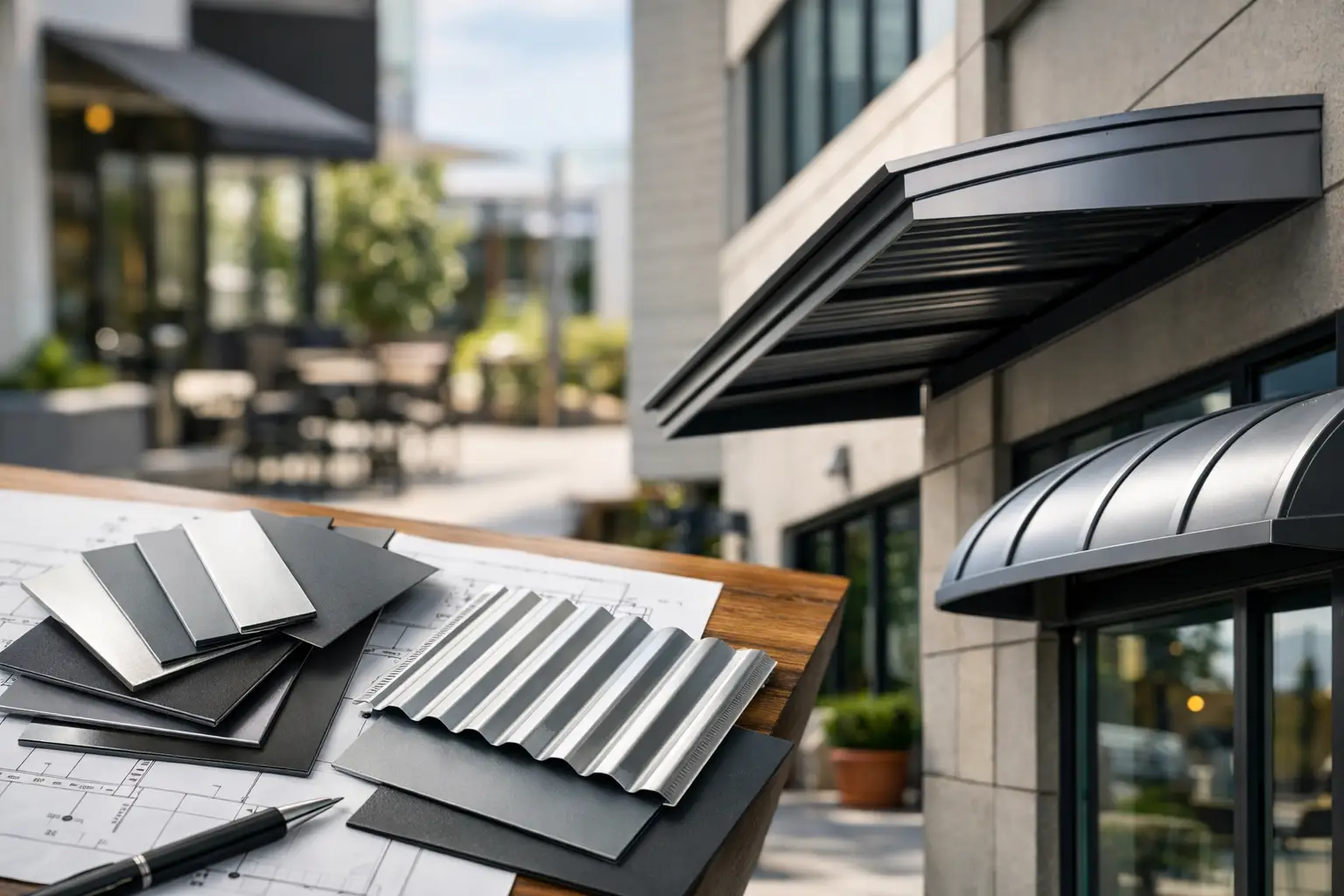
A shopfront awning has to do more than look tidy from the street. It has to handle sun, wind, rain, public exposure, signage demands and day-to-day wear without becoming a maintenance problem six months later. If you are working out how to choose commercial awning materials, the right answer usually comes down to where the awning sits, what the site has to cope with, and how long you need the result to last.
For most commercial clients, material choice is not really about picking what looks best in a brochure. It is about balancing appearance, structural performance, compliance, cleaning, repairability and budget. A café on a busy strip, a retail tenancy in a shopping village and a landlord replacing an ageing street-front awning may all need very different solutions, even if the frontage size is similar.
How to choose commercial awning materials for the real site
The first thing to look at is the environment around the awning, not the awning itself. A sheltered frontage under surrounding buildings has different demands from an exposed corner shop that cops full afternoon sun and strong weather. If your site deals with wind tunnels, coastal air, heavy tree debris or constant pedestrian traffic underneath, those conditions should drive the material decision early.
This is also where many cheap choices start to come undone. A material that works on a small low-risk frontage may not suit a larger span, a highly visible tenancy or a site where failure creates a public safety issue. On commercial work, especially over footpaths and active entries, you cannot separate materials from structural requirements and safe installation.
Start with function before finish
Most owners and managers naturally begin with how they want the awning to look. That matters, but function has to come first. Ask what the awning is meant to do.
Is it mainly for weather cover over a customer entry? Is it providing shade to reduce heat load through front glazing? Does it need to carry signage or lighting? Is it fixed permanently, or does the business want some flexibility? Those answers narrow the material options quickly.
A rigid metal awning may suit a long-term retail fit-out where durability and signage integration matter. A fabric system can suit hospitality spaces where appearance and softness are part of the frontage, provided the fabric grade and frame system are chosen properly. Polycarbonate may work where light penetration is useful, but it is not the right fit for every exposure level or every visual style.
The most common commercial awning material types
When clients ask how to choose commercial awning materials, the conversation usually comes back to three broad categories: metal sheeting and cladding, fabric membranes, and translucent sheeting such as polycarbonate. Each has strengths, and each comes with trade-offs.
Metal awning materials
Metal is often the practical choice for fixed commercial awnings because it is tough, low maintenance and well suited to custom fabrication. It can give a clean, professional finish and usually holds up well on busy shopfronts. It also works well where guttering, flashings and fascia details need to be integrated properly.
The trade-off is weight, heat and presentation. Some metal systems can transfer more heat than clients expect if insulation or lining is not considered. They can also look harsh on some hospitality frontages if the design is not handled well. The finish quality matters too. A poorly detailed metal awning will show every shortcut.
Fabric awning materials
Commercial-grade fabric can be a strong option where branding, street appeal and shade are key. It often suits cafés, restaurants and selected retail frontages where the awning is part of the customer impression. Good fabric systems can perform well, but the fabric needs to be commercial grade and suited to UV exposure, moisture and long-term tensioning.
The trade-off is lifespan and maintenance. Fabric generally needs more care than metal, and lower-grade products can fade, stretch or deteriorate faster under Australian sun. If the site gets dirty runoff, bird activity or constant grime from traffic, cleaning frequency becomes part of the real cost.
Polycarbonate and translucent sheets
These materials are used where natural light is helpful and full solid cover is not essential. They can be useful over entries or walkways where darkening the frontage would be a drawback. Some operators like the lighter visual feel compared with a fully sheeted structure.
The trade-off is that not every translucent product ages gracefully. Depending on grade, fixing method and exposure, some can discolour, mark or show wear more obviously over time. They also need proper structural support and detailing, especially on commercial sites where longevity and safety matter.
Durability is not just about the material itself
A lot of people focus on the face material and overlook the frame, fixings and detailing. That is a mistake. The life of a commercial awning depends on the full system. You can specify a good skin material and still end up with problems if the support steel, brackets, drainage or edge finishing are not right.
For example, corrosion resistance matters heavily in some areas. So does the way water is directed off the awning. Ponding, poor falls and badly handled joins can shorten the life of an otherwise solid installation. In older buildings, the condition of the mounting surface also affects what materials are practical and safe.
That is why experienced site assessment matters. On replacement work, you are often not choosing materials in a vacuum. You are choosing materials that have to work with an existing façade, structure, access limitations and compliance requirements.
Compliance, engineering and public safety
This part is not glamorous, but it matters more than colour charts. Commercial awnings sit over entrances, shopfronts and pedestrian areas. Material choice affects weight, structural load, fixing methods and certification requirements. If the awning is being replaced, demolished or substantially altered, there may be engineering considerations that rule certain options in or out.
Lighter does not always mean better, and heavier does not always mean stronger in practice. The right material has to suit the structure that carries it. On public-facing sites, the cost of getting that wrong can be serious.
If you are comparing options, ask how the material choice affects engineering, installation method and long-term safety. A contractor who understands shopfront awnings will usually talk about more than appearance and price. They will look at how the whole job is delivered safely and properly, especially if demolition or replacement is part of the scope.
Appearance still matters, especially on street-front premises
A commercial awning is part of the frontage. It shapes how the tenancy reads from the street and whether the business looks maintained or neglected. The right material should suit the building, the brand and the type of trade.
A polished retail fit-out may suit a crisp metal finish with strong signage integration. A casual hospitality venue may benefit from fabric or a softer profile. For older buildings, the best result is often the one that respects the façade instead of fighting it.
The key is to think beyond first impression. Ask how the awning will look after a year of weather, dust and regular use. Some finishes hide wear better than others. Some materials are easier to patch or replace in sections if they are damaged.
Budget should include the full life of the awning
The cheapest material on quote day is not always the lowest-cost option over time. If a lower-priced material fades early, needs frequent cleaning, or is difficult to repair, the savings disappear fast. On commercial premises, disruption also costs money. If an awning needs premature replacement or major remedial work, that affects trade and tenancy presentation.
A better way to compare options is to look at total value. Consider expected lifespan, maintenance demands, ease of repair, visual longevity and whether the material is fit for the site. Sometimes paying more upfront saves money. Sometimes a mid-range option is perfectly suitable. It depends on the exposure, the use and how permanent the fit-out needs to be.
A practical way to make the decision
If you need a straightforward process for how to choose commercial awning materials, start by narrowing the job to five things: site exposure, awning function, appearance, compliance needs and maintenance expectations. Once those are clear, the material options become much easier to judge.
Then look at real project examples, not just samples. A small offcut will not show how a material performs across a full frontage. Ask how it handles weather, how it is fixed, what can be repaired if damaged, and what kind of upkeep it needs. If the answer is vague, keep asking.
For many shopfront and canopy jobs, the best outcome comes from treating material selection as part of the build, not a separate design exercise. That is usually where experience pays off. A contractor who works regularly on commercial awnings will know which materials perform well on active public-facing sites and which ones cause headaches later.
Advanced Awnings works with clients who need that practical approach because the right material is only right if it can be installed safely, finished properly and trusted to hold up in service.
The best awning material is rarely the flashiest or the cheapest. It is the one that suits the site, does the job properly and still looks like a good decision after the weather has had a fair crack at it.