
Custom Shop Awnings That Work Hard
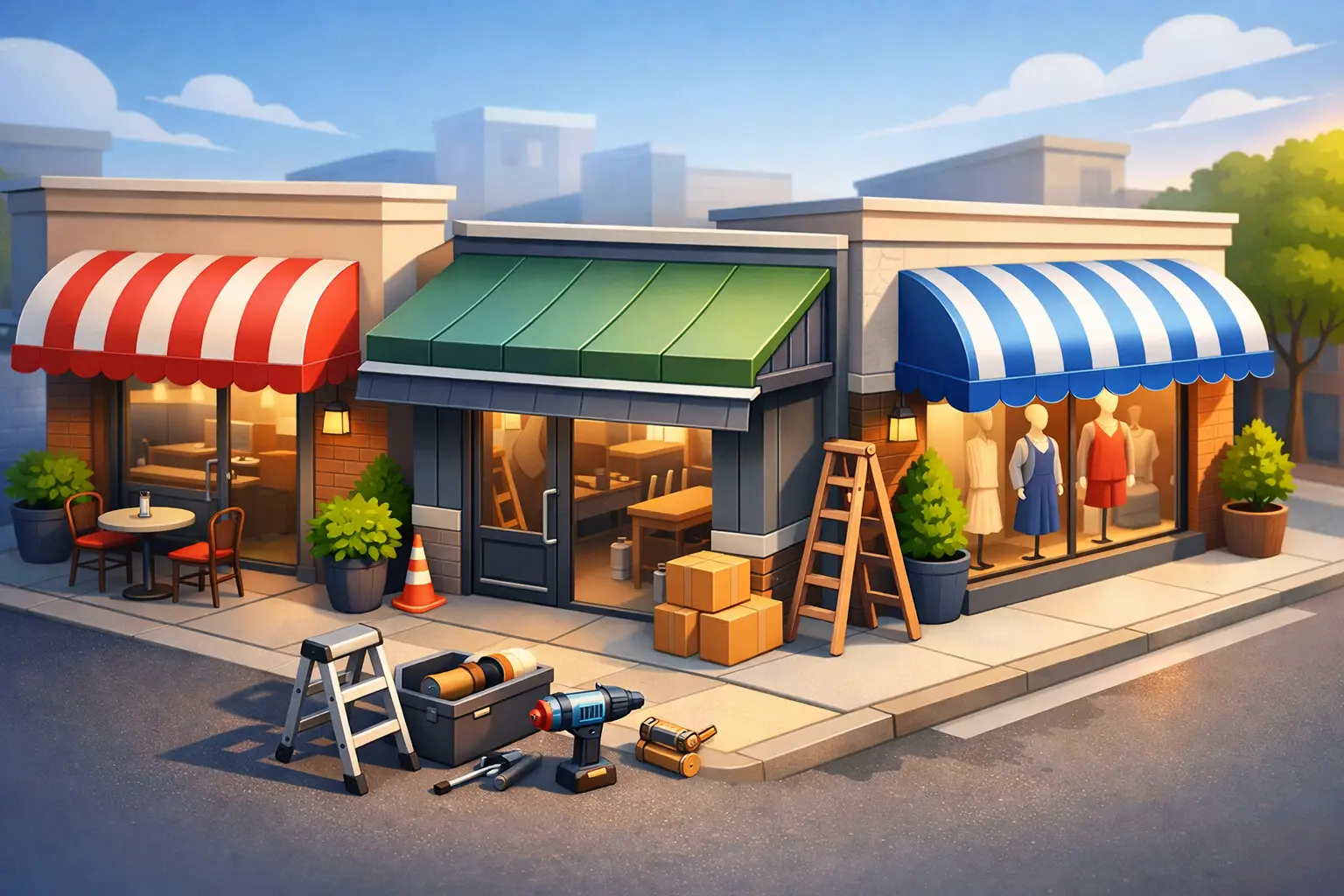
A shopfront gets judged in seconds. Before anyone reads your sign, checks your menu or walks through the door, they see the frontage and how it presents to the street. That is where custom shop awnings earn their keep. Done properly, they do more than provide cover. They sharpen the look of the premises, protect pedestrians and stock from weather, and give the business a cleaner, more established presence.
For owners, landlords and builders, the real question is not whether an awning looks good on paper. It is whether it suits the building, handles the weather, meets compliance requirements and stands up over time. A cheap or poorly planned job can create more trouble than value. A properly built awning should look right, drain properly, sit clean on the facade and perform safely in a live commercial environment.
Why custom shop awnings make more sense
Off-the-shelf options have their place, but most street-facing commercial sites are not standard. Shop widths vary. Fascias sit at different heights. Existing structures can be out of square. Signage needs differ from one tenant to the next. Add council requirements, pedestrian traffic and neighbouring tenancies, and a generic solution starts to fall short pretty quickly.
Custom shop awnings are built around the actual site, not a catalogue dimension. That matters because fit and finish are what people notice first. If the pitch is wrong, the water runs badly. If the projection is too shallow, there is little practical weather cover. If the structure is oversized or poorly supported, it can become a compliance issue rather than an asset.
A custom build also gives you control over the final result. That includes the profile, materials, drainage, signage integration and how the awning ties into the rest of the frontage. For a retail strip, hospitality venue or managed commercial property, those details affect both presentation and maintenance.
What a good awning needs to do
A shop awning has a straightforward job, but it needs to do that job well. It should provide usable cover at the entry, improve the visual line of the frontage and cope with day-to-day exposure without constant patching or repainting.
It also has to work with the building. Some premises need a full replacement because the existing awning is tired, unsafe or no longer fit for purpose. Others only need a partial rebuild, repair or re-sheet. The right approach depends on the condition of the current structure, the intended use of the site and whether the awning has to support signage or lighting.
There is always a balance between appearance and practicality. Slim, sharp-looking designs can suit modern shopfronts, but only if the structure is engineered correctly. Larger projections can improve weather cover and street presence, but they place more demand on framing and fixings. A decent contractor will tell you where that balance sits instead of simply agreeing to whatever looks cheapest or quickest.
Design, compliance and site realities
This is where plenty of projects go off track. A shopfront awning is not just a cosmetic add-on. It is a structure attached to a commercial building, usually over an area used by the public. That changes the standard. Safety, fixing method, existing building condition and certification all matter.
If demolition is involved, the work has to be planned properly. Old awnings can hide corrosion, failed connections or makeshift repairs from earlier jobs. Pulling one down without proper controls is asking for trouble, especially over a footpath or active tenancy. The same goes for replacement work where access is tight, neighbouring traders are operating and the public still needs safe passage.
For new installations, support details and load requirements should be sorted before the build starts, not guessed on the day. Engineer input may be required depending on the structure, and that is not something to treat as a box-ticking exercise. Certification support matters because owners and managers need confidence that the completed awning is backed by proper documentation, not just verbal assurance.
In Sydney especially, shopfront conditions vary from older strip retail to newer mixed-use buildings. No two jobs are exactly the same. That is why experience on live commercial sites counts. A team that understands staging, access and public safety is usually the difference between a smooth job and a painful one.
Materials and finish matter more than people think
The average person may not know the framing detail, but they notice when an awning looks tired six months after install. Material choice has a direct effect on lifespan, maintenance and presentation.
Metal-clad awnings remain a popular choice for commercial premises because they offer a clean finish and solid durability when fabricated and installed properly. The gauge, support spacing and finishing details all affect how the awning performs over time. If corners are cut, you often see the result in drumming, movement, poor runoff or visible wear around joints and edges.
The finish matters as much as the frame. Flashings should sit neatly. Sheeting lines should be straight. Water should move where it is supposed to move. Signage areas should be planned, not squeezed in later. These are practical details, but they directly affect how professional the frontage looks.
Repairs need the same level of care. A patch-up job can be worth doing if the structure is fundamentally sound. If the frame has serious issues or the awning is at the end of its life, repeated repair bills often stop making sense. Good advice here is simple and honest. Fix what is worth fixing. Replace what is no longer doing the job safely.
Choosing the right contractor for custom shop awnings
Price always matters, but on commercial awning work, it should not be the only filter. The cheapest quote can become expensive if the finish is poor, the site is left unsafe or the work drags on because planning was weak from the start.
A reliable contractor should be able to speak plainly about the condition of the existing awning, the scope of work, likely risks and how the job will be carried out. They should understand demolition where needed, not just installation. They should also be able to explain what level of certification or engineering support is required for the project.
Insurance, workmanship and communication are not extras on this type of work. They are part of the job. If your premises are street-facing and trading, you need a contractor who respects the fact that customers, staff and the public are moving through that area every day. Site control, tidy work and realistic scheduling matter.
This is one reason many commercial clients prefer specialists rather than general trades taking a crack at awnings now and then. Shopfront structures sit in full view and cop constant use. Mistakes are hard to hide and even harder to fix cheaply later.
When to repair and when to replace
There is no one-rule answer here. A repair can be the right call if the damage is localised, the structure is still sound and the awning remains compliant. Re-sheeting, fixing isolated corrosion, replacing flashings or addressing minor impact damage can all extend service life if the bones of the awning are still good.
Replacement makes more sense when the problems are structural, widespread or recurring. If water issues keep returning, the frame has deteriorated, the frontage needs a full refresh or the existing awning no longer suits the tenancy, replacement usually gives better long-term value than ongoing stopgap work.
For landlords and property managers, there is also the question of presentation. A tired awning can drag down an otherwise decent asset. If the shopfront is meant to attract new tenants or support stronger street appeal, a proper replacement often has a clear commercial upside.
The value is in getting it done properly
Custom shop awnings are one of those building elements that look simple from the street and prove anything but simple once the work starts. They involve structure, finish, drainage, public safety and presentation all at once. That is why a proper job pays off. You get an awning that fits the site, presents well and does not create headaches later.
For commercial premises, that is the standard worth aiming for. Not flashy promises. Just solid work, clear communication and a finished result that looks right and performs the way it should. If you are planning awning work, start with the site conditions and the long-term use of the frontage. That usually leads to the right decision faster than chasing the cheapest number on the page.