How to Assess Awning Damage Properly
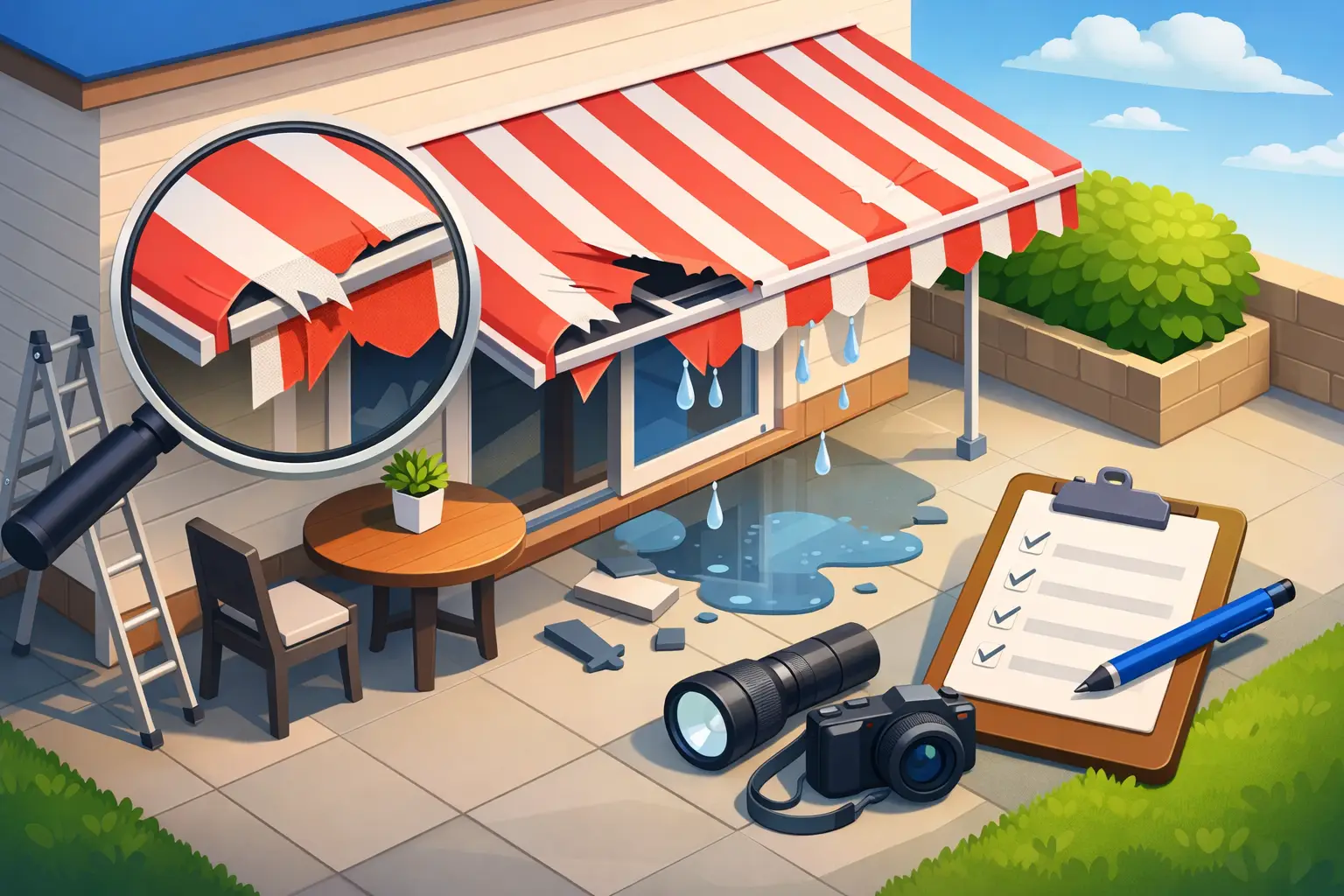
A shopfront awning rarely fails all at once. More often, the warning signs show up early - a new sag in the fascia, rust stains near fixings, water getting where it should not, or movement in strong wind that was not there before. If you are working out how to assess awning damage, the main job is to separate cosmetic wear from structural risk before it turns into a public safety issue.
For commercial premises, that distinction matters. An awning sits over entries, foot traffic and trading areas. If it is loose, corroded, leaking or impact-damaged, the problem is not just appearance. It can affect safety, waterproofing, compliance and the overall presentation of the business. A proper assessment gives you a clearer idea of whether you are looking at a straightforward repair, a more involved structural issue, or full replacement.
How to assess awning damage without missing the real issue
The first mistake many property owners make is judging the awning by the outer skin only. Torn fabric, dented cladding or peeling paint are easy to spot, but they do not always tell you what is happening underneath. The real condition depends on the frame, the fixings, the connection back to the building and how the awning handles water and wind load.
Start with a visual check from ground level. Look at the awning from straight on and from both ends. If the line of the front edge has changed, if one side sits lower than the other, or if the fascia looks twisted, that can point to movement in the frame or brackets. Fresh staining, bubbling finishes and hairline cracking around fixing points can also be signs that water or corrosion is working behind the surface.
Then consider what has changed recently. If the awning started showing issues after a storm, a vehicle strike, nearby construction, signage work or roof plumbing trouble, that context matters. Damage is often tied to an event, even when the defect takes a while to become obvious.
Start with the signs you can see from the street
A street-level inspection will not replace a proper site assessment, but it does help you decide how urgent the problem is. Sagging is one of the clearest warning signs. A flat or skillion awning that has developed a dip may be holding water, which adds load and speeds up deterioration. On older shopfront awnings, ponding water can be the first visible clue that the structure has shifted.
Rust is another one to take seriously. Surface rust on exposed steel is not ideal, but heavy scaling, flaking metal or rust bleeding from joints and bolts suggests deeper corrosion. Once corrosion starts around fixings and welded sections, the strength of the assembly can drop faster than people expect.
Cracks should also be treated carefully. A crack in render or sheeting may be superficial, but cracking around attachment points, support arms or frame connections can indicate stress. If you can see separation where the awning meets the building, do not assume it is just sealant failure. It may point to movement in the structure or deterioration in the substrate behind it.
Check for movement, noise and water problems
Some of the best clues show up during normal trading hours. If the awning rattles, flexes or vibrates excessively in wind, that may mean fixings have loosened or sections of the frame are no longer performing as intended. Water marks on the soffit, drips over the entry, or staining on the shopfront can point to drainage issues, failed waterproofing or internal corrosion.
Leaks do not always mean the awning itself is the only problem. Water can track from upper façade areas, roofing or failed flashings and show up through the awning. That is why a proper assessment should look at the interface between the awning and the building, not just the visible face.
Cosmetic damage versus structural damage
This is where good judgement matters. Cosmetic damage usually affects the finish, not the strength. Faded fabric, chipped paint, minor dents in non-structural cladding and weathered sealants may look tired, but they do not always mean the awning is unsafe. They still matter if presentation is important, especially on a street-facing tenancy, but the repair approach is usually straightforward.
Structural damage is different. Bent members, severe corrosion, loose brackets, failed welds, movement at fixing points, impact damage and water-related deterioration in the supporting structure all fall into a more serious category. If the awning is pulling away from the building, sitting out of level, or showing signs of load-related stress, the risk goes beyond maintenance.
The challenge is that cosmetic issues and structural issues often appear together. A rust stain may look minor from the ground while the steel behind the cladding is significantly deteriorated. Likewise, a small dent from impact may have shifted the load path enough to affect brackets or connections you cannot see. That is why surface appearance alone is not a reliable guide.
Where awnings usually fail first
Commercial awnings do not all fail in the same place, but a few areas turn up again and again. The connection back to the building is one of them. If the brackets, bolts or embedded fixings have corroded, loosened or pulled against weakened substrate, the whole awning can become compromised even when the outer finish still looks acceptable.
Joints and welded sections are another common weak point, especially where water sits or where dissimilar materials have been used. Drainage points, internal gutters, box sections and concealed cavities also deserve attention because corrosion can stay hidden until the damage is advanced.
Older shopfront awnings sometimes carry layers of patch repairs, signage changes or modifications that were done at different times. Those changes can introduce extra penetrations, uneven loading or poor detailing that shortens the life of the original structure. If the awning has had several rounds of repairs, it is worth asking whether further patching is still the right spend.
When a closer inspection is needed
If there are any signs of distortion, active leaking, falling debris, loose sheeting, advanced rust or movement, the awning needs more than a quick look from the street. In many cases, safe access is required to inspect the top surface, the underside, the fixings and the condition of the supporting members properly. That may also involve checking the wall connection, adjacent roof drainage and any concealed sections.
For commercial properties, there is also the question of liability. If the awning sits over a public area, you do not want to guess. A proper inspection helps you prioritise immediate make-safe work if needed, then decide whether repair, partial rebuild or replacement is the smarter path.
Repair or replace - what the assessment should tell you
A good assessment should not just list defects. It should help you make a practical decision. If the frame is sound and the issues are localised, repair can make sense. That might include replacing corroded sections, renewing cladding, fixing leaks, upgrading flashings or rectifying damaged fixings.
If the defects are widespread, if corrosion has reached critical structural points, if the awning has ongoing compliance concerns, or if repeated repairs are stacking up, replacement is often the better long-term option. It can cost more upfront, but it may save money and disruption over time, especially if the existing awning is past its useful life.
There is no one-size-fits-all answer here. A relatively modern awning with isolated storm damage is different from an ageing shopfront structure with hidden corrosion and years of water entry. The assessment needs to account for condition, risk, access, trading impact and what result you actually need from the work.
Practical next steps for property owners and managers
If you suspect awning damage, take clear photos from multiple angles and note any recent weather events, impacts or leak history. If you can see obvious instability, loose materials or anything that could affect the public, treat it as urgent and restrict access where possible until it is inspected.
Do not rely on a paint-over or a quick patch if the signs point to movement or corrosion. It may improve appearance for a short time, but it will not solve the underlying problem. For a commercial site, the right move is to have the awning checked by an experienced contractor who understands repair work, replacement requirements and where engineering input or certification may be needed.
That is usually the difference between a cheap-looking fix and a proper job. When the assessment is done thoroughly, you get a clearer scope, fewer surprises once work starts, and a safer outcome for the building, the business and the people walking under it every day.
If the awning on your premises does not look or perform the way it should, trust what you are seeing and act early. Small defects are easier to deal with than major failures, and a straight answer now is always better than an emergency repair later.