How to Assess Canopy Damage Before It Gets Worse
A damaged shop-front canopy is not just a presentation issue. It sits above customers, staff and pedestrians, often over a busy footpath or entrance. Knowing how to assess canopy damage early can help you prevent a minor defect becoming a safety incident, water-damage problem or costly replacement job.
The first rule is simple: do not put people at risk to get a closer look. A ground-level inspection can identify obvious warning signs, but any canopy that is loose, sagging, corroded, impact-damaged or dropping material needs professional assessment before anyone works beneath it.
Start with safety, not appearances
Before looking at the condition of the canopy, consider what is happening below and around it. If there are loose sheets, rattling panels, exposed sharp edges, falling rust, cracked glazing or water dripping near electrical fittings, keep people clear of the area. Where practical, move outdoor furniture, displays and deliveries away from the affected section and restrict access to the entrance.
Wind can turn a loose fascia, sheet or sign panel into a serious hazard. Heavy rain can add weight to damaged lining boards and expose existing leaks. If the canopy has been hit by a ute, plant equipment or a tall delivery vehicle, treat it as potentially structural damage even if the exterior looks mostly intact.
Do not climb ladders, walk on a canopy roof or remove panels to investigate unless you have the right access equipment, safety controls and trade experience. The visible damage is not always the full story. Fixings and supporting members may have been strained behind cladding or ceiling linings.
How to assess canopy damage from ground level
A sensible visual inspection starts from several positions: directly in front of the shop, along both sides of the awning and from inside the premises where the canopy meets the wall. Take clear photos in daylight before cleaning, patching or moving any damaged material. Include wide shots for context and close-ups of faults.
Look for changes in shape first. A canopy should sit level and appear straight along its front edge. Any new dip, bow, twist or uneven line can indicate water pooling, failed connections, distorted steelwork or deterioration in the supporting structure. A small sag at the front may be easy to miss from one angle, so stand back across the street or car park where safe to do so.
Then check the canopy surface and underside. The following signs generally warrant closer investigation:
- Rust staining, bubbling paint, flaking coatings or visible corrosion around steel members and fixings.
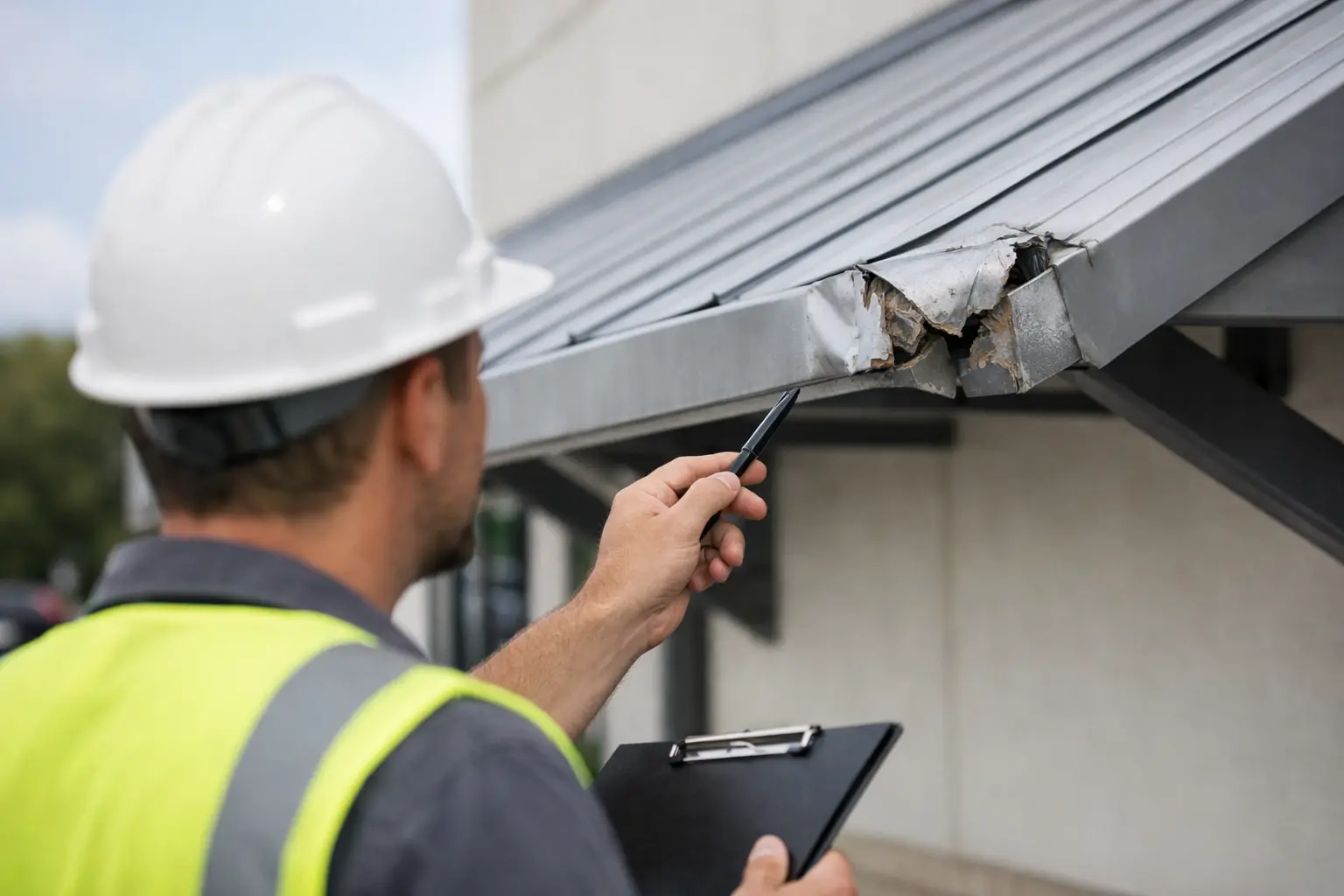
- Cracked, dented or lifted metal sheeting, fascia panels, polycarbonate, glazing or aluminium trims.
- Open joints, failed sealant, missing screws, popped rivets or gaps where the canopy meets the building.
- Water marks, mould, swollen linings, peeling paint or active drips on the underside.
- Loose signage, lighting, wiring, downpipes or decorative elements attached to the canopy.
One issue does not automatically mean full replacement is needed. Surface rust on a non-structural trim, for example, may be repairable if it is dealt with early. Corrosion around a wall connection or supporting bracket is a different matter because it can affect how the whole canopy is held in place.
Check where water is going
Water is one of the most common causes of commercial canopy deterioration. It enters through failed flashings, cracked sealant, blocked gutters, damaged roof sheets and joints around signs or services. Once inside, it can corrode concealed steel, rot timber elements and stain the ceiling long before the outside shows major damage.
Look for water pooling on the roof where it can be viewed safely from an adjoining upper level. From the ground, signs include overflowing gutters, streaking down the fascia, drips from a single point after rain, and staining that follows the line of a beam or wall connection.
Also check whether downpipes and outlets are discharging correctly. A blocked outlet may seem minor, but repeated overflow can accelerate corrosion at the canopy edge and affect the shopfront below. Temporary sealant may slow a leak, but it will not correct poor falls, failed flashings or deteriorated substrate.
Inspect the connections to the building
The points where a canopy attaches to the building deserve particular attention. Look for cracked render or masonry, gaps at the wall flashing, loose bolts, rust around brackets, movement at support posts and separation between the canopy frame and wall.
Movement is a key warning sign. If the canopy shakes noticeably in normal wind, makes new creaking noises, or appears to have pulled away from the façade, avoid using the area beneath it and arrange an urgent inspection. The same applies where a support post has been knocked, bent or undermined by vehicle impact.
For older shopfronts, previous repairs can complicate the picture. Layers of paint, sealant and patch plates may hide a history of leaks or corrosion. A competent contractor will assess the surrounding structure rather than simply patching the most obvious hole.
Separate cosmetic faults from structural concerns
Commercial property managers are often balancing safety, budget and the need to keep a business trading. The practical question is whether the issue is cosmetic, repairable damage or evidence that the canopy no longer performs safely.
Cosmetic defects can include faded paint, light surface corrosion, minor dents or aged sealant where the underlying frame and sheets remain sound. These still need maintenance, particularly on a visible street frontage, but they do not always require immediate replacement.
Repairable damage may include localised sheet corrosion, leaking flashings, damaged gutters, failed fixings, deteriorated linings or a small area affected by impact. The right repair depends on whether surrounding materials are still sound and whether replacement sections can be integrated properly without creating future leak points.
Structural concerns include widespread corrosion, sagging, damaged support members, cracked welds, loose wall connections, significant impact damage and repeated water ingress affecting concealed framing. These conditions may require an engineer's assessment, certification support, partial rebuild or full canopy replacement. There is no value in installing new cladding over a frame that has reached the end of its safe service life.
Record what you find before authorising work
Good records help you make a clearer decision and can assist with insurer, landlord, strata or builder discussions. Note when the damage was first noticed, whether it followed a storm or impact, and whether the fault is getting worse. Keep photos dated and include images after heavy rain if leaks are involved.
It is also useful to record operational impacts: water entering the tenancy, a blocked entrance, damaged signage, unsafe lighting or the need to close off part of the footpath. These details help a contractor plan access, safety measures and the scope of repair without making assumptions.
If the property is leased, notify the relevant landlord or managing agent promptly. Do not assume a canopy belongs to the tenant simply because it covers the shopfront. Responsibility for repairs can depend on the lease, building ownership and whether signage or later additions have altered the structure.
When to call a specialist straight away
Arrange urgent professional advice if the canopy is visibly sagging, loose, moving, leaking through electrical areas, shedding material or damaged by impact. The same applies when corrosion is visible around structural brackets, bolts or beams, or where cracks have appeared in the adjoining façade.
For a commercial site, the assessment should consider more than the roof skin. Access, public protection, demolition requirements, structural condition, drainage, signage and finishes all need to be planned as one job. In some cases, a targeted repair is the sensible option. In others, removing and replacing the canopy is safer, cleaner and better value over time.
Advanced Awnings works with Sydney commercial clients on canopy repairs, replacement and safe removal where existing shop-front structures have deteriorated or been damaged. A clear site inspection and properly scoped quote give you a practical basis for deciding what needs attention now and what can be planned.
A canopy rarely fails without showing signs first. Act on the change you can see, keep the public clear of any suspect area, and get the structure checked before the next storm, delivery impact or busy trading day makes the decision for you.