
Top Awning Materials for Coastal Shops Compared
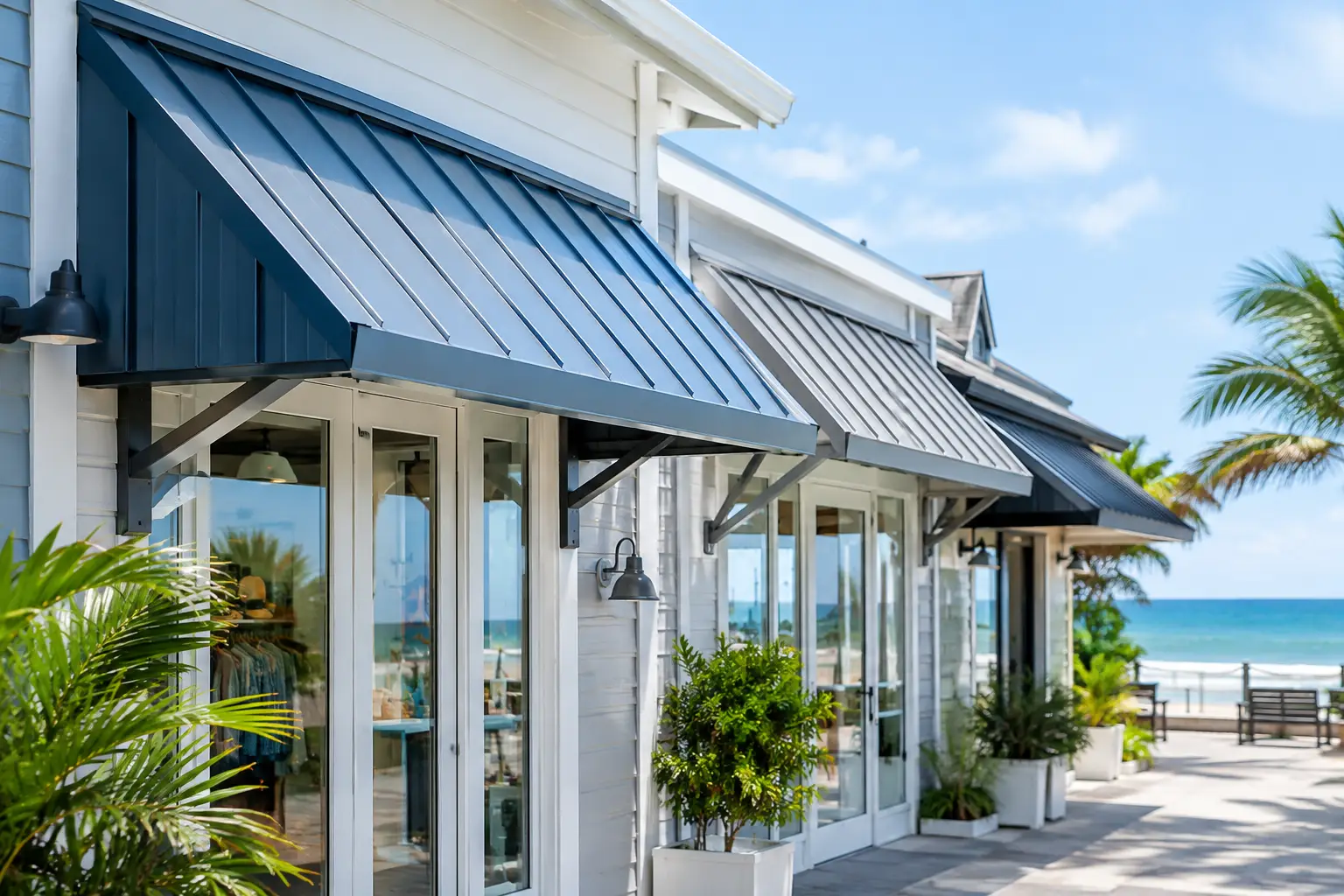
Salt does not need to hit a shopfront directly to cause trouble. On coastal sites, airborne salt settles on frames, fixings, gutters and the back of the fascia, then holds moisture against the surface. That is why the top awning materials for coastal shops need to be assessed as a complete system, not just chosen by appearance or upfront price.
For a retailer, café operator, landlord or property manager, the right material should suit the building, local exposure, signage needs and maintenance plan. A good coastal awning must also be properly fixed, safely detailed and built to handle wind loads. The material is only one part of getting the job right.
What coastal exposure does to an awning
Coastal corrosion is often gradual at first. Powder coating can look sound from the street while corrosion starts at scratched edges, folded sections, unsealed joints or around incompatible fasteners. Water pooling in a box gutter or against a wall connection speeds up the problem.
Sydney coastal suburbs vary considerably. A protected shopping strip set back from the water faces different conditions to a premises near the beach or exposed to prevailing winds. Before recommending a material, a contractor should consider distance from salt spray, building height, orientation, existing wall condition, stormwater discharge and whether the awning projects over a busy footpath.
The best result usually comes from simple, well-drained construction with accessible fixing points and finishes that can be cleaned and maintained. Complicated shapes can look impressive, but they create more joints and ledges where salt and debris can sit.
Top awning materials for coastal shops
Marine-grade aluminium
Aluminium is often the practical first choice for coastal shopfront awnings. It is light, does not rust in the way ordinary steel does, and can be fabricated into fascia panels, frames, cladding, louvres and fixed canopies. Its lower weight can also reduce demands on an existing façade, although the actual structural design still needs proper assessment.
For commercial work, the finish matters as much as the aluminium itself. A quality powder-coated finish provides colour, presentation and added protection, but it should be specified for the exposure level and applied to correctly prepared metal. Light-coloured finishes can be easier to keep presentable in harsh sun, while darker colours may show salt marks and fading more readily.
Aluminium is not maintenance-free. Salt deposits, grime and trapped moisture can still affect coated surfaces and concealed areas. It must also be isolated from dissimilar metals where needed. Direct contact between aluminium and certain metals, combined with moisture, can lead to galvanic corrosion. Proper washers, tapes, sealants and compatible fixings are not minor details on a coastal job.
Galvanised and coated steel
Steel remains a strong option where an awning needs longer spans, heavier framing or a more substantial structural arrangement. It is commonly used for brackets, support frames and steel-framed canopies. The trade-off is that steel needs a carefully planned corrosion-protection system from day one.
Hot-dip galvanising provides a protective zinc coating and is generally preferable to relying on a basic painted finish alone. For severe exposure, a duplex system - galvanising followed by a suitable protective coating - can offer better long-term performance. The important point is that welding, drilling, cutting and site alterations must be addressed properly. Bare edges or damaged coatings become starting points for corrosion.
Steel can be a sensible, durable choice when engineered, detailed and maintained correctly. It is not the material to select for a coastal shop simply because it is familiar or cheaper at quote stage. If water can sit inside hollow sections, or if inspection and repainting will be difficult, the long-term cost can quickly outweigh the initial saving.
Stainless steel for visible details and fixings
Stainless steel is highly useful in coastal awning construction, particularly for exposed bolts, screws, brackets, tension components and trim. However, not all stainless is the same. For coastal environments, 316-grade stainless steel is generally the more appropriate choice for exposed fixings and hardware than 304-grade.
Even 316 stainless needs regular washing in salt-laden areas. Tea staining can appear when salt and contaminants are left on the surface, especially in sheltered spots that do not receive rain. This does not always mean the material has failed, but it affects presentation and should be dealt with early.
Stainless steel is rarely the most economical material for the whole awning structure. It is usually better used where its corrosion resistance and clean appearance bring real value. Pairing stainless hardware with aluminium or coated steel components can work well, provided the materials are isolated and the connections are designed correctly.
PVC and acrylic fabric canopies
Fabric awnings can be an excellent fit for hospitality venues and retailers looking for shade, weather protection and a softer street presence. Solution-dyed acrylic fabrics offer good colour retention and breathable shade, while PVC-coated fabrics provide stronger water resistance and a more enclosed canopy finish.
The material choice comes down to how the awning will be used. Acrylic is often suited to shaded outdoor seating and shopfronts where airflow matters. PVC can suit fixed canopies requiring stronger rain protection, but it needs correct fall, tension and drainage to avoid ponding water. In either case, the fabric is only as good as the supporting frame, track system and fixing method.
Coastal fabric installations need regular cleaning to remove salt, bird droppings and airborne grime. Leaving these deposits on the fabric can cause staining, mildew and premature wear. Check the seams, tension, fixings and frame at the same time. A torn cover or loose fitting should be repaired before wind turns a small issue into a larger one.
Polycarbonate and metal roof sheeting
Polycarbonate roof panels allow natural light beneath a fixed canopy and can be useful over entry areas or narrow walkways. They need to be UV-rated, correctly supported and installed with allowance for thermal movement. Cheap or poorly detailed panels can discolour, crack or leak around fasteners, particularly where they are exposed to heat and wind.
Colour-coated metal roof sheeting is another practical option for larger fixed awnings. It offers a familiar commercial finish, good water shedding and straightforward replacement if a section is damaged. The key is selecting suitable coating systems, using compatible screws and flashings, and keeping cut edges protected. Good gutter design is essential, as water overflowing onto the shopfront or footpath creates both maintenance and safety problems.
Material selection is not just about the frame
A coastal awning can fail early because of one overlooked component. Standard screws, mixed-metal brackets, blocked gutters, unsealed penetrations and poorly finished welds all create weak points. The supporting wall and existing façade condition matter too. An awning is only as sound as its connection back to the building.
For public-facing shopfronts, structural requirements should be considered before fabrication starts. Wind loading, projection, signage weight, drainage and footpath clearance may affect the design. Where certification is required, it is far easier and safer to build to an engineered design than to alter a finished awning after the fact.
This is particularly relevant when replacing an older canopy. Corrosion may be hidden behind cladding or at wall fixings, and demolition needs to be planned so the area below is protected. A safe removal, careful inspection of the structure and a properly staged installation reduce disruption to trading and protect pedestrians.
A practical maintenance plan for coastal premises
No material will perform at its best if it is left dirty and unchecked for years. Coastal shopfront awnings should be washed with fresh water on a regular schedule, with more frequent cleaning for exposed sites. Avoid abrasive cleaning methods that damage coatings, and follow the product manufacturer’s cleaning advice for fabrics and roof panels.
During routine checks, look for bubbling paint, surface rust, staining, loose screws, cracked sealant, torn fabric, blocked gutters and water marks on the façade. Deal with minor defects early. Replacing a few corroded fixings or resealing a joint is usually far more manageable than rebuilding a section of frame after water has entered it.
Keep records of inspections and repairs, especially for commercial properties with multiple tenants or managed assets. It gives owners a clearer picture of the awning’s condition and helps plan replacement work before presentation or public safety is affected.
Choose for the site, then build it properly
There is no single best material for every coastal shop. Aluminium is often the most versatile choice for lightweight, corrosion-conscious shopfront construction. Coated steel may be the better answer for heavy-duty structural spans. Stainless steel earns its place in exposed hardware, while fabric, polycarbonate and roof sheeting each suit particular shade, weatherproofing and visual requirements.
The right decision comes from looking at the whole job: exposure, structure, drainage, finishes, fixings and future maintenance. For a coastal premises, a well-detailed awning that can be safely inspected and repaired will generally serve the business better than a cheaper option that only looks good on installation day.