
Shopfront Demolition Safety Case Study in Sydney
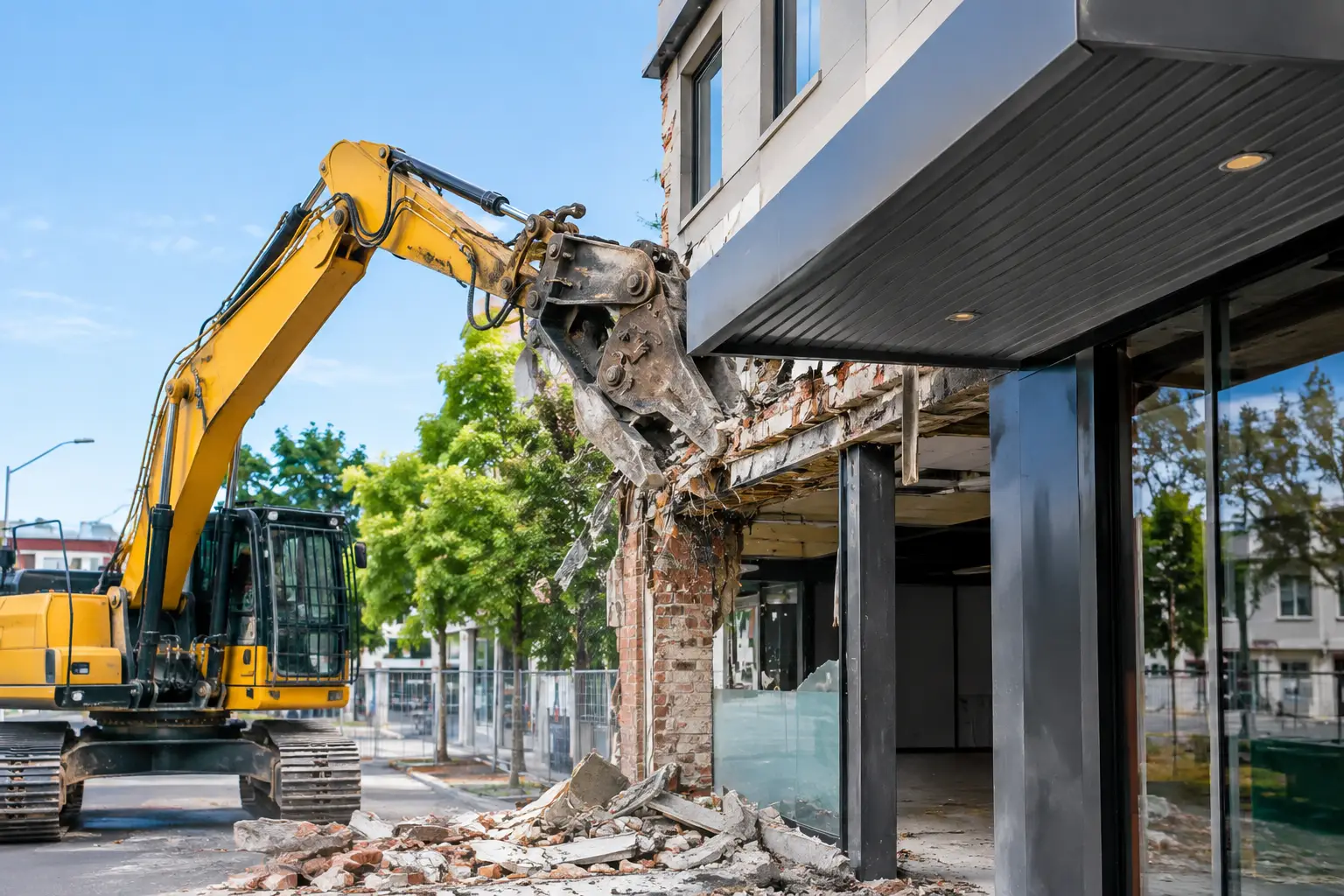
A loose shopfront awning is not a job to leave until the next fit-out. When brackets corrode, sheeting lifts or an old canopy starts moving under wind load, the risk sits directly above customers, staff and pedestrians. This shopfront demolition safety case study looks at how a failing street-facing awning can be removed in a controlled way while keeping the premises operating and the public protected.
The project involved an ageing steel-framed awning over a ground-floor retail tenancy. The landlord had noticed corrosion around the wall connections and water staining along the fascia. The tenant had also reported rattling during strong winds. From the street, the awning still looked serviceable. Up close, several sections had deteriorated enough that a repair-only approach could not be relied on.
The right outcome was demolition followed by replacement. The challenge was completing the removal above a busy footpath, beside neighbouring tenancies and without treating safety as an afterthought.
The job: an awning above an active footpath
The existing awning projected over the shop entry and part of the public footpath. It included metal roof sheeting, fascia sections, a steel frame and old electrical fittings associated with signage. Its condition was uneven. Some members were sound enough to support planned access, while others showed visible corrosion and could not be loaded or cut without first confirming how the structure would behave.
That distinction matters. A shopfront awning is not demolished by simply unbolting the nearest pieces and working backwards. Once a connection is removed, loads shift. A section that appears light from the ground may be tied into a larger frame, conceal water-damaged fixings or be carrying loose material above the ceiling line.
Before work started, the scope was checked against the site conditions rather than assumed from photographs. The team inspected access, wall fixings, likely load paths, nearby power services, the condition of the footpath and the best position for lifting equipment and waste removal. Where required, engineering advice and certification support were factored into the project plan.
Shopfront demolition safety case study: planning before removal
The safest demolition work is usually decided before tools are switched on. For this job, the main risks were falling materials, uncontrolled movement of the frame, public access below, traffic and deliveries near the work area, and the possibility of hidden services.
The demolition sequence was planned from the outside in and from the lightest removable elements through to the primary steelwork. Roof sheets and loose fascia were not allowed to fall or be pushed from height. Each section was released in manageable lengths, lowered under control and placed straight into the designated rubbish area.
The awning could not be treated as one uniform structure. A pre-start check identified which members would remain temporarily stable, where temporary support was needed and which connections had to stay in place until the final stage. This reduced the chance of a partially removed frame twisting or dropping unexpectedly.
Electrical isolation was also dealt with before demolition. Old sign wiring and lighting can be overlooked because they are often hidden inside fascia panels or behind ceilings. Confirming isolation early meant the crew was not cutting into unknown cabling while standing at height.
A site-specific safe work approach was communicated to the crew before work began. That included the sequence of removal, equipment checks, emergency arrangements, manual handling controls and who had authority to stop work if conditions changed. Clear instructions are not paperwork for paperwork's sake. They keep everyone working to the same plan when the structure starts coming apart.
Keeping the public separate from the work zone
On a shopfront site, the public is often the biggest variable. Pedestrians do not always follow the route you expect. Customers may arrive before opening time. Delivery drivers may try to access the kerb while materials are being loaded. Good site control needs to account for real behaviour, not ideal behaviour.
A secure exclusion zone was set up beneath and around the awning work area. Appropriate barriers, warning signage and managed access prevented people from walking under active demolition. Where footpath access needed to change, the work was coordinated so there was a safe, clear route around the site.
The tenant and neighbouring businesses were told when the noisy or higher-risk stages would occur. This helped staff manage customer entry and reduced last-minute interruptions. It also gave the crew a direct contact on site if conditions changed during the day.
Timing made a difference. The most exposed removal work was scheduled outside the busiest trading and pedestrian periods where practical. That is not always possible, particularly on tight Sydney high streets, but even a short change to the work window can reduce the number of people affected below the awning.
Weather was monitored as well. Wind can turn light roof sheeting into a serious hazard and can make elevated work unsafe. If wind, rain or poor visibility affected the controls in place, work stopped until conditions were suitable. Rushing to meet a programme is never a reason to keep dismantling an unstable structure.
Controlled removal, not fast removal
Once the area was secured, the crew started with the non-structural materials. Fascia and roof sheeting were removed in short, controlled sections. Material was handed down or lowered using suitable lifting methods rather than dropped into a skip. This protected both people and the remaining frame.
The steelwork came next. Connections were released according to the planned sequence, with the frame supported where required. Each member was assessed before cutting or unbolting. If corrosion made a connection unpredictable, the method was adjusted rather than forcing it.
This is where experience counts. A shopfront awning may have been altered more than once over its life. Extra brackets, patched steel, abandoned sign supports and non-standard fixings are common discoveries. The crew needs to recognise when the original plan still applies and when the job needs to pause for a safer alternative.
Access equipment was selected for the actual site, not simply what was easiest to book. In some locations, an elevated work platform is the right option. In others, restricted footpath width, overhead services, vehicle access or the awning layout may call for a different approach. The method depends on the structure, the street and the controls that can genuinely be maintained.
Throughout removal, the work area was kept tidy. Offcuts, loose screws and sharp sheet edges create their own hazards when left around access points. Regular clean-up also makes it easier to see whether barriers remain secure and whether any materials have shifted.
What the project showed
The main lesson was straightforward: visible deterioration was only part of the risk. The real safety outcome came from treating demolition as a planned construction activity, not a quick strip-out before replacement.
The tenant had a clear point of contact, the landlord knew what would be removed and when, and the public was kept away from the active work zone. The old awning was removed without uncontrolled falls, the façade was left ready for the next stage, and the business avoided a longer disruption caused by an incident or rushed shutdown.
For owners and property managers, the trade-off is usually between spending time on planning now or dealing with a far more expensive problem later. A contractor may need to allow for barriers, traffic or footpath management, lifting gear, electrical checks and staged removal. Those measures add to the upfront scope, but they are what allow the work to be completed properly.
When demolition is the safer option than repair
Repair remains the sensible choice when damage is localised and the primary frame, wall fixings and roof materials are still sound. A targeted repair can extend service life and maintain the appearance of a shopfront without the cost of full replacement.
Demolition and replacement become the better option when corrosion is widespread, structural connections are compromised, water ingress has affected several sections, or the awning no longer suits the building's current use. Repeated patching can become poor value if it leaves owners with ongoing maintenance, uncertain performance and a structure that remains difficult to certify.
A proper inspection should separate cosmetic faults from structural concerns. Rust stains, bent fascia and leaking joints may point to a deeper issue, but they do not tell the whole story on their own. The fix needs to match the condition of the complete structure.
If a shopfront awning is showing movement, corrosion or loose materials, arrange an inspection before the problem becomes a public safety issue. A clear scope, practical demolition plan and well-finished replacement give your premises a safer start, and give everyone below it one less thing to worry about.