
Best Awning Options for Retailers in Sydney
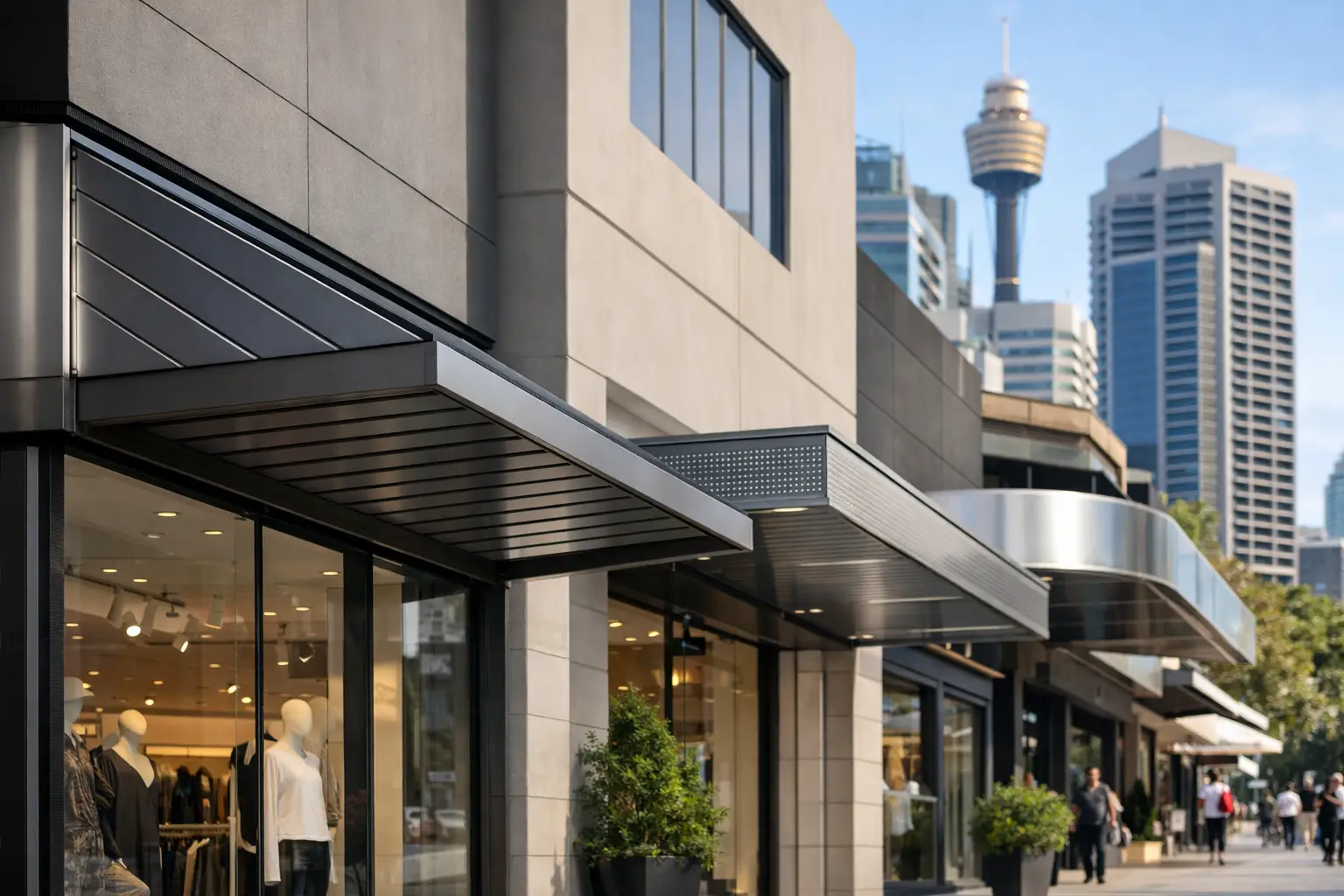
A shopfront awning does more than keep rain off the door. It protects customers waiting outside, gives staff a drier entry point, reduces harsh sun on the glass and makes the premises easier to spot from the street. The best awning options for retailers are the ones that suit the building, hold up to daily exposure and can be installed safely without creating future maintenance problems.
For a busy retail site, looks matter, but they are not the only consideration. The awning needs the right structure, drainage, fixings and clearances for the location. It also needs to work around pedestrians, neighbouring tenancies, signage and the practical demands of trading hours.
Start with the building, not the brochure
An awning should be selected after the existing shopfront and façade have been assessed. A lightweight canopy may suit one tenancy perfectly, while the next building along needs a more substantial steel-framed solution because of its span, wall construction or exposure to wind.
The condition of the existing awning is just as relevant. Rusted frames, water-damaged linings, loose flashing and poor fixings are not cosmetic issues. They can point to a structure that needs repair, replacement or controlled demolition before a new canopy is considered. Covering over an old problem is rarely the cheaper option once rectification work starts.
For landlords and property managers, it is also worth considering whether the new awning needs to serve one retailer or remain suitable for future tenants. A clean, durable shopfront canopy with sensible signage allowances can make a tenancy more flexible over time.
Best awning options for retailers
There is no single best style for every shop. The right choice depends on the frontage, local conditions, what is below the awning and how long the business expects to occupy the site.
Fixed metal shopfront awnings
A fixed metal awning is often the practical choice for street-facing retail premises. Built with a steel or aluminium framework and metal roof sheeting, it provides permanent coverage without moving parts. This makes it well suited to shops that need dependable all-weather protection over an entry, display windows or the footpath frontage.
The main benefit is durability. A properly designed and installed fixed awning can handle regular sun, rain and wind with straightforward maintenance. It can also be finished to suit the building and incorporated with fascia signage, lighting or a neat ceiling lining underneath.
The trade-off is that a fixed awning needs careful planning from the start. Its size, drainage and structural support need to be right before installation, particularly where it projects over a public area. On older buildings, the wall and existing connections may need closer investigation before work begins.
Cantilevered canopies
Cantilevered canopies create a clean, open look because they project from the building without posts at the front edge. That can be a major advantage where pedestrian access, prams, deliveries or sightlines are important. Cafés, boutiques and narrow footpath locations often benefit from keeping the frontage clear.
This style relies heavily on sound structural design and secure fixing back to the building. The wall cannot simply be assumed to carry the load. Engineer input may be required depending on the structure, span and site conditions. A cantilevered canopy can look simple from the street, but the work behind it needs to be done properly.
Post-supported awnings
Where a wider projection is needed, a post-supported awning may be the better option. Front posts take some of the load and can allow for greater coverage over outdoor seating, a broader entry zone or a long retail frontage.
Posts are not suitable everywhere. They must be positioned so they do not obstruct access, create a trip hazard or interfere with the footpath and services. On a busy frontage, the layout needs to be practical for customers as well as compliant with relevant approvals. When designed well, a post-supported awning is a strong option for larger commercial canopies.
Retractable fabric awnings
Retractable fabric awnings suit retailers that want adjustable shade rather than permanent rain protection. They work well over windows, outdoor displays and smaller seating areas where sun control is the main goal. Being able to extend the awning during hot periods and retract it when conditions change can be useful.
However, fabric systems have more moving parts and generally require more attention than a fixed metal canopy. Fabric condition, arms, motors, brackets and wind operation all need checking over time. They are not usually the first choice where the awning must provide constant protection from heavy weather or where the site is particularly exposed.
For a business that trades mostly in daylight and wants a lighter visual finish, retractable fabric may be a good fit. For a high-traffic shopfront that needs year-round cover, a fixed structure will often deliver better long-term value.
Polycarbonate and glazed canopies
Clear or tinted polycarbonate canopies can bring natural light into an entry while still offering overhead cover. They are commonly used over doorways and smaller sections of frontage where a solid roof might make the space feel too dark.
The practical consideration is heat and maintenance. Clear materials can show dirt, staining and leaf litter more readily than metal roofing, and they can allow heat build-up if the orientation is wrong. Drainage details and UV-resistant materials matter. This option can look sharp, but it needs to suit the aspect of the shop and the maintenance standard the property owner is willing to maintain.
Safety, approvals and public access come first
A shopfront awning is often built directly above areas used by the public. That changes how the work should be planned. Installation, repairs and demolition need proper site controls to protect pedestrians, staff, customers and adjacent businesses.
Before work starts, the contractor should understand access requirements, overhead hazards, delivery arrangements and whether part of the footpath or frontage needs to be managed during works. A site in a busy retail strip may require work to be staged outside peak trading times. That planning helps avoid rushed decisions once materials and equipment arrive.
Compliance requirements vary by site. Heritage conditions, council approvals, landlord requirements and engineering certification may all apply. If the awning is structural, projects should not rely on guesswork or a one-size-fits-all bracket detail. The right documentation and engineering support protect the building owner as well as the retailer.
Choose materials that match the exposure
Sydney shopfronts deal with strong sun, driving rain, wind and, in some areas, salt air. Materials should be chosen for the conditions, not just for the initial price. Galvanised and painted steel, aluminium components, quality roof sheeting, correctly installed flashing and appropriate fasteners all play a part in the life of the awning.
Drainage is one of the details that separates a tidy job from a troublesome one. Water should be directed away from entries and not allowed to run down the façade, onto signage or across customer walkways. Poor falls, blocked gutters and undersized outlets can cause damage well beyond the awning itself.
Colour and finish still matter. A canopy should suit the tenancy and building without becoming difficult to maintain. Lighter colours can reduce heat absorption, while darker colours may better suit a particular façade or brand. The practical answer depends on the site, not a trend board.
Budget for the full job, not just the canopy
Retailers comparing quotes should make sure they are comparing like for like. The price of an awning can change significantly once access equipment, structural steel, demolition, disposal, flashing, drainage, electrical coordination, permits and site protection are included.
A cheap quote can become expensive if it leaves out the work needed to make the installation safe and complete. Ask what is included, how existing defects will be handled and whether the contractor has allowed for safe public-area management. Clear scope avoids arguments halfway through the project.
It is also sensible to think beyond installation day. A well-built awning should be inspected periodically for loose fixings, corrosion, blocked drainage, damaged linings and water ingress around the wall connection. Small repairs carried out early are usually far easier than replacing a failed section later.
Get the shopfront working harder
The best commercial awning is one that protects the frontage without becoming a maintenance burden or a safety concern. It should look right for the business, suit the building it is attached to and be built for the conditions it will face every week.
If an existing canopy is showing its age, or a new tenancy needs a proper street-facing finish, start with a site assessment and a clear scope of work. Advanced Awnings can provide practical advice, free quoting and experienced support for shopfront awning installation, repair, replacement and safe demolition across Greater Sydney.