
Fixed Awnings vs Retractable Awnings for Shops
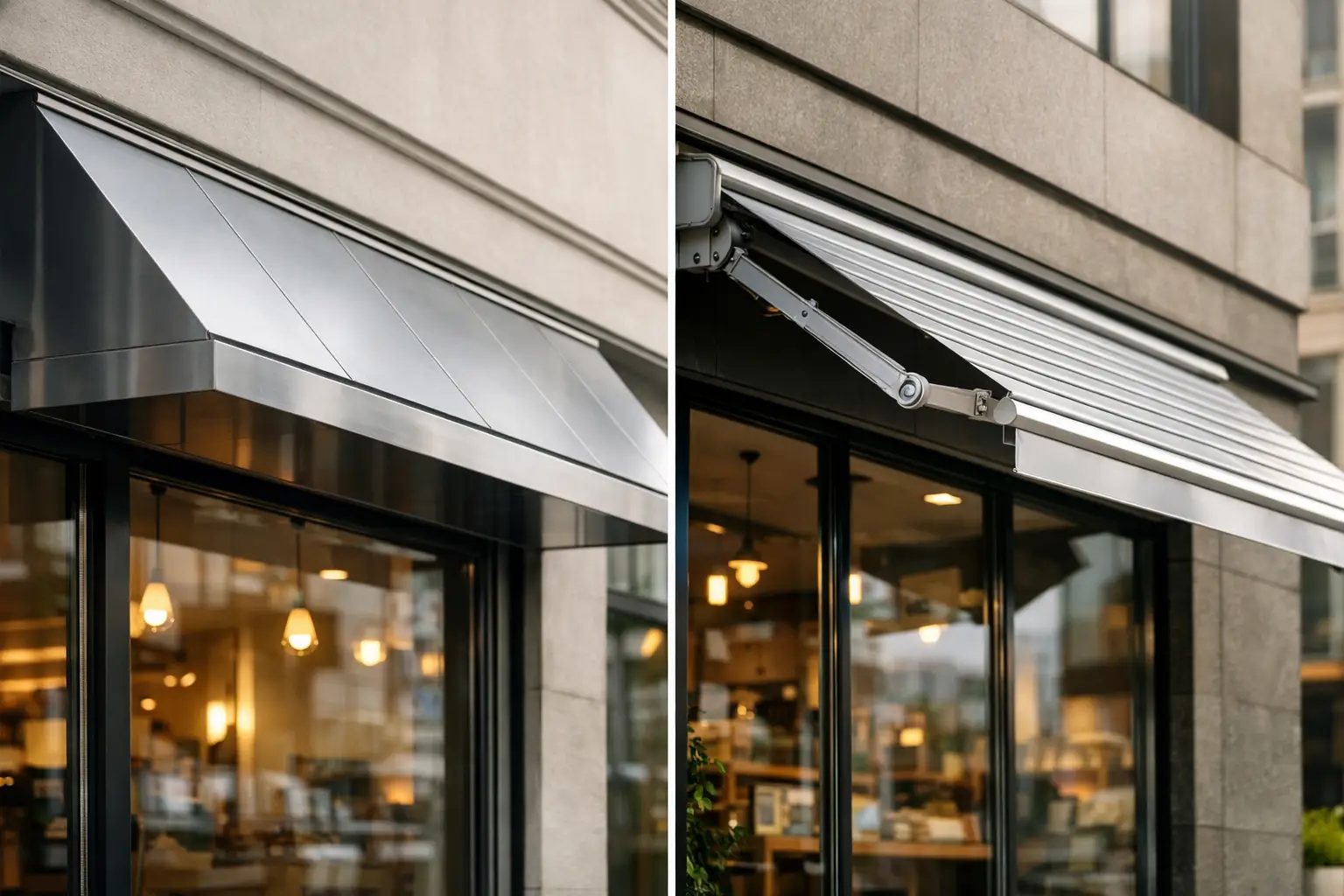
A shopfront awning has to do more than look good over the entry. It needs to protect customers from sun and rain, hold up in changing weather, suit the building and stay safe above a busy footpath. When weighing up fixed awnings vs retractable awnings, the best option comes down to how the premises operates, what the structure can support and how much day-to-day flexibility is actually useful.
For many commercial properties, a fixed awning is the practical long-term choice. For cafés, restaurants and venues with outdoor trade, a retractable system can be worth considering. The key is to choose the system for the site, not just the initial appearance.
Fixed awnings vs retractable awnings: the main difference
A fixed awning is a permanent canopy structure attached to, or supported from, the building. Shopfront awnings are commonly built from steel framing with metal cladding, though finishes and designs vary. Once installed, the canopy remains in place and provides ongoing coverage to the entry, windows and frontage.
A retractable awning uses a folding arm or track-based mechanism to extend and retract a fabric cover. It can be manually operated or motorised. When conditions are good, it can be pulled back to let more daylight into the premises. When sun is harsh, it can be extended to create shade.
That difference sounds simple, but it affects nearly every part of the decision: structural design, maintenance, wind exposure, signage, lighting, approvals and the way customers use the space.
Why fixed awnings suit most street-front businesses
A permanent shopfront canopy gives reliable protection every day, without relying on staff to operate it or weather conditions to remain calm. For retailers, medical practices, offices, service businesses and commercial landlords, that consistency is usually the point.
A fixed awning provides cover at opening time, closing time and through a sudden Sydney downpour. It helps keep the entrance dry, shades front glazing and gives customers a clear sense of where to enter. Where a queue forms outside, or staff regularly move stock through the front door, a permanent canopy can make the area safer and more usable.
It also offers a stronger platform for integrated commercial features. Signage, downlights, electrical work, gutters and drainage can be planned into the structure rather than added as an afterthought. A well-built awning can make an older façade look finished while giving the tenancy a more visible street presence.
For property managers and landlords, fixed awnings are often easier to manage over a long lease period. There are fewer moving parts, less risk of a cover being left out in strong winds and less dependence on tenants using the system correctly.
Fixed awnings need proper structural planning
Permanent does not mean simple. A commercial awning needs the right framing, connections and fixing method for the building. It must account for wind loads, drainage, existing façade condition and the public area below it. If the awning projects over a footpath or sits near neighbouring tenancies, the work may also involve council requirements and engineering considerations.
This is particularly relevant when replacing an old shopfront awning. Rusted steel, water damage and poor previous alterations can be hidden behind cladding. Safe demolition and a proper inspection before new work begins are part of doing the job properly.
When retractable awnings make sense
Retractable awnings work best where flexibility has a clear commercial benefit. A café courtyard, restaurant frontage or hospitality venue may want open sun during cooler months and shade during hot afternoons. A retractable cover can help staff adjust the outdoor area to suit the weather, service period and customer comfort.
They can also be useful where a fixed projection would make the frontage feel too enclosed or where a business wants an occasional rather than permanent shade solution. For a small seating zone under controlled conditions, a quality retractable awning can be a tidy option.
However, retractable systems should not be treated as a substitute for a fully engineered permanent canopy where all-weather coverage is required. Fabric covers and moving arms have limitations. They are generally less suitable for exposed sites, heavy rain, strong winds or locations where the awning will be expected to remain extended without regular supervision.
A retractable awning also needs clear operating responsibility. If a sudden storm rolls through and the unit is left open, damage can occur to the fabric, arms, mounting points and even the building façade. Motorised systems add convenience, but they still require sensible use and routine servicing.
Wind, rain and the real conditions at your site
The most common mistake is choosing an awning based on a showroom image rather than the conditions outside the actual premises. A quiet, protected lane is different from an exposed corner site. A low-rise retail strip is different from a building that catches wind funnelled between taller structures.
Fixed awnings are generally better suited to ongoing exposure because they are designed as permanent structures. The frame, cladding and fixings can be specified for the site, with drainage planned to direct water where it needs to go. That matters when customers, pedestrians and staff are moving beneath the canopy.
Retractable awnings provide good sun control, but rain performance depends on the fabric, pitch, drainage path and how far the unit extends. Water can pond if the angle is too shallow. Strong gusts can put serious stress on the mechanism. In practical terms, they are best viewed as adjustable shade systems, not as a guaranteed weather barrier.
Maintenance and whole-of-life costs
The cheaper option at installation is not always the lower-cost option over time. Both types need maintenance, but the work is different.
A fixed awning should be checked for corrosion, loose fixings, damaged cladding, blocked gutters and water ingress around the wall connection. Steelwork and roofing materials need to suit the environment, especially near the coast or in areas where existing drainage has been a problem. Repairs are often straightforward when issues are identified early.
Retractable awnings require attention to fabric condition, arm tension, brackets, gearboxes or motors, sensors and moving joints. Dirt, mould, fading and tears can affect the cover’s appearance and service life. A fabric replacement may cost less than rebuilding a permanent canopy, but it is a recurring consideration that should be allowed for.
For a landlord responsible for several tenancies, a fixed awning may offer more predictable long-term upkeep. For a venue that earns directly from flexible outdoor seating, the extra maintenance of a retractable system may be justified.
Signage, lighting and visual impact
A shopfront awning is often one of the most visible parts of the tenancy. It can carry fascia signage, support lighting and create a clean line across the building. Fixed awnings give more options here because the structure is permanent and can be designed around the frontage from the start.
Retractable awnings can carry branding on the valance or fabric, but their signage area is more limited and the finish is generally lighter. That may suit a café or boutique looking for a softer appearance. It is less suitable where a business needs a strong, permanent sign visible from the road or across the street.
The design should also work with the rest of the building. An oversized canopy can darken windows and make a narrow footpath feel tighter. A poorly placed retractable unit can interfere with doors, signs or external lighting. Measuring the site properly before quoting avoids those problems.
Compliance and public safety cannot be an afterthought
Commercial awning work is not just a cosmetic upgrade. Anything installed over an entry, outdoor dining area or public footpath creates a duty to protect the people below it. The structure, anchors and installation method need to suit the building and the location.
Depending on the scope of work, approvals, engineering documentation or certification may be required. Existing awnings may also need to be removed safely before replacement work starts. This is not a job for guesswork, particularly where aged steelwork, electrical connections or pedestrian access are involved.
An experienced commercial awning contractor should assess the existing structure, explain the proposed approach and provide a clear quote that covers the practical work required. Advanced Awnings takes this approach on commercial projects across Greater Sydney, with safety and workmanship considered from demolition through to the final finish.
Which option is right for your premises?
Choose a fixed awning when the premises needs dependable all-weather coverage, permanent signage, integrated lighting or a durable shopfront feature that will serve the property for years. It is usually the stronger choice for retail, commercial entries and exposed street-facing sites.
Choose a retractable awning when adjustable shade will actively improve the way an outdoor dining or seating area is used, and the location is reasonably protected from wind. Make sure someone is responsible for operating and maintaining it.
Before committing, look at the frontage in rain, afternoon sun and windy conditions. Consider where water will go, what sits beneath the awning, whether signage is needed and how the system will be maintained after handover. A sound decision at the quoting stage saves costly alterations once the work is underway.