Top Causes of Awning Deterioration Explained
A shop front awning can look sound from the footpath while corrosion, failed fixings or water damage are building behind the fascia. Understanding the top causes of awning deterioration helps commercial property owners act before a minor repair becomes a public safety issue, an unplanned closure or a full replacement job.
For Sydney businesses, awnings deal with hard sun, heavy rain, coastal air in some areas, traffic grime and constant exposure to the public. Age matters, but it is rarely the only reason an awning fails. Most serious deterioration starts with moisture getting into the wrong place, protective coatings breaking down, or components moving under load for years without being checked.
The top causes of awning deterioration on commercial premises
Water entry and poor drainage
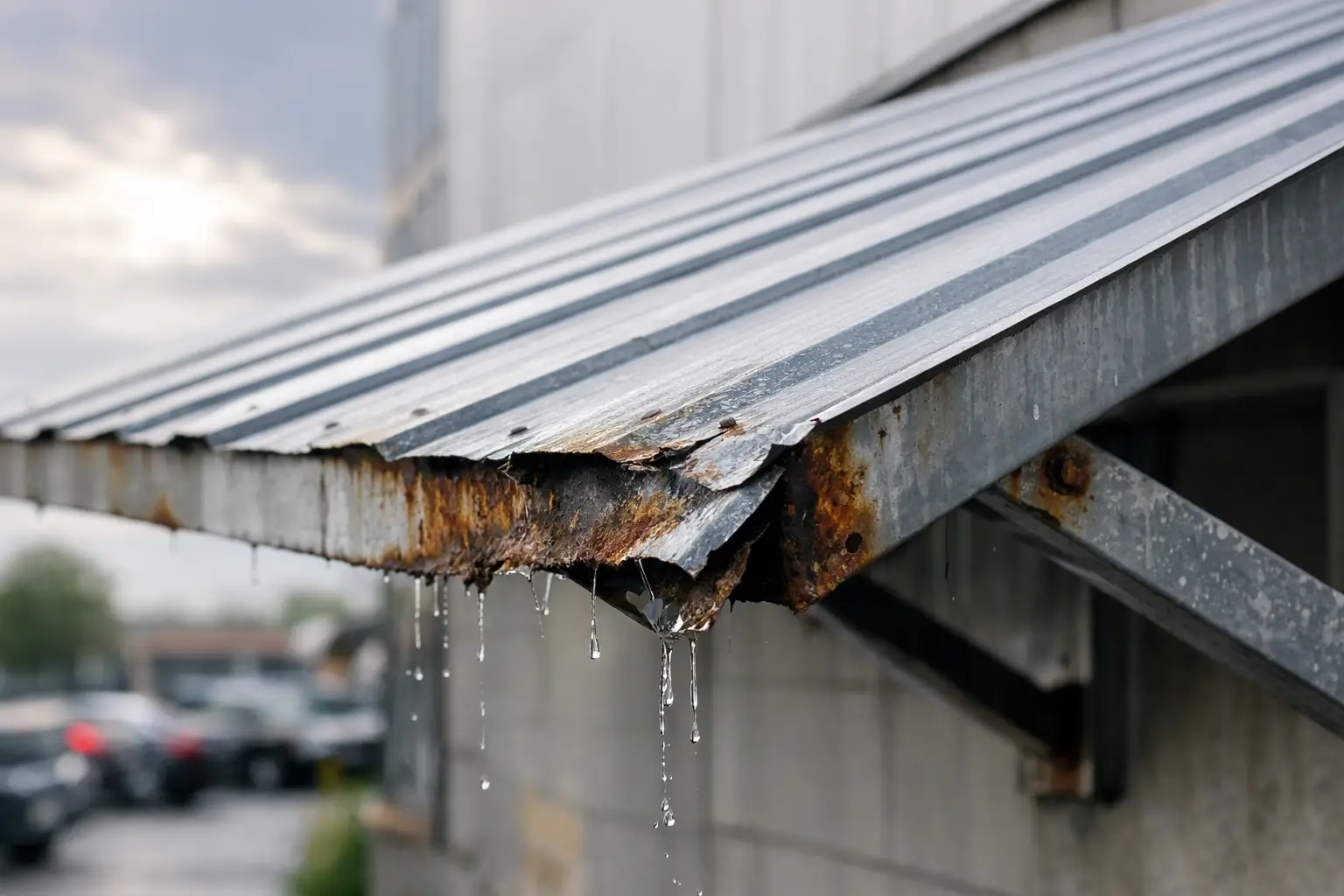
Water is one of the most common causes of structural awning damage. A properly built awning should direct rainwater away from the building and prevent it from sitting on top of roof sheets, flashings, gutters and brackets. When drainage is blocked, falls are inadequate, or flashing has lifted away from the wall, water can pool and find its way into joints.
That trapped moisture causes steel to rust, timber components to rot and fixings to weaken. It can also damage the wall connection behind the awning, which is not always visible from street level. Water staining, rust marks, peeling paint, sagging sections and damp patches inside the tenancy are all signs worth investigating.
A blocked gutter might sound minor, but it can put extra weight on an awning during a downpour. On a busy shop front, that is not a risk to leave until the next maintenance cycle.
Corrosion from weather, salt and pollution
Steel awnings rely on coatings, paint systems and regular maintenance to keep corrosion under control. Once a coating is chipped, cracked or worn through, exposed metal can begin to rust. The corrosion often starts around welded joins, roof penetrations, gutters, screws and areas where water sits.
Coastal and harbour-side locations can deteriorate faster due to salt-laden air. Busy roads can add grime and pollutants that hold moisture against surfaces. Even inland sites are affected when leaves, dirt and rubbish collect in gutters and along roof edges.
Surface rust is not automatically a reason to replace an awning. The key question is how far it has progressed. If corrosion has reduced the thickness of a structural member, damaged a connection or spread behind cladding, repair work needs to address the underlying steel rather than simply painting over it.
Failed flashings, sealants and roof sheets
Awning roofs are made up of practical details that all need to work together. Flashings stop water entering where the awning meets the building. Sealants protect laps and penetrations. Roof sheets shed rain and resist movement from wind and heat.
Over time, sealants dry out and crack. Flashings can loosen. Roofing screws may lose their grip or their sealing washers can fail. Small gaps then allow water into concealed areas where deterioration can continue unnoticed.
This is why a visual repaint alone is not a complete repair. A proper inspection should trace staining or leaks back to their source, check the roof condition and examine the wall junction. Repairs may involve replacing damaged sheets, renewing flashings, resealing joints and correcting drainage so the issue does not return after the next storm.
UV exposure and heat movement
Sydney sun is tough on awning finishes, fabric, sealants and roof materials. UV exposure fades colour, makes some coatings chalky and brittle, and reduces the flexibility of sealants. Heat also makes metal expand, while cooler conditions cause it to contract.
That movement is normal, but it becomes a problem where fixings are loose, joints are poorly detailed or materials have reached the end of their useful life. Repeated movement can open gaps, fatigue fasteners and create cracks around penetrations.
Fabric awnings have their own wear pattern. Prolonged sun exposure can weaken fibres and coatings, while water pooling may stretch the fabric and strain its framework. A faded canopy may still be serviceable, but tears, sagging, mildew and loose tensioning should be assessed before the fabric fails in wind.
Wind loads, storms and impact damage
Awnings are exposed structures. Strong wind can place significant pressure on roof sheets, fascias, brackets and building fixings. Storm damage is sometimes obvious, such as bent cladding or a loose fascia. Other times, the damage is less visible: a connection may have shifted, screws may have pulled slightly, or flashing may have lifted just enough to cause future leaks.
Impact is another regular issue on commercial sites. Delivery vehicles, tall loads, maintenance equipment and neighbouring works can damage an awning without causing an immediate collapse. Even a small dent or bent support can affect water run-off and place uneven stress on the structure.
After a major storm or impact, do not assume the awning is safe because it remains standing. Keep people clear of any visibly loose material and arrange a professional inspection, particularly where the awning extends over a public footpath or customer entry.
Poor original installation or unsuitable alterations
Not every deteriorating awning is simply old. Poor detailing at installation can shorten its lifespan from the start. Common problems include inadequate falls for drainage, incompatible materials, undersized fixings, unprotected cut edges and roof penetrations that were not properly sealed.
Later alterations can create just as many issues. Signage, lighting, air-conditioning services or temporary fixtures may add weight, create new holes in roof sheets or interfere with drainage. A commercial awning is not a convenient mounting point unless its capacity and connections have been properly considered.
Where repairs involve structural members, major corrosion or changes to the awning layout, engineering input may be required. This is particularly relevant for older shop fronts where original drawings are unavailable or previous modifications are unclear.
Lack of planned maintenance
Many awnings receive attention only when they leak, look untidy or become visibly unsafe. By then, the repair can be larger and more disruptive than it needed to be. Planned maintenance is not about over-servicing a sound structure. It is about catching predictable issues while they are still manageable.
A practical inspection should look for blocked gutters, leaf build-up, loose cladding, failing sealant, corrosion, water staining, loose bolts and deterioration around wall connections. The frequency depends on the awning’s age, location, material and exposure. A sheltered awning may need less attention than one exposed to salt air, trees, traffic or strong weather.
Warning signs that should not be ignored
A change in appearance is often the first clue. Rust streaks down the fascia, bubbling paint, sagging roof lines, drips at the entry and loose sheets all deserve prompt attention. So do unusual movement in the wind, cracked welds, visible gaps where the awning meets the building, or recurring leaks after rain.
Inside the premises, look for damp plaster, mould, staining near the shop front wall or water entering around doors and windows. These may point to an awning fault, although the building façade or roof could also be the source. The right repair starts with identifying where water is actually getting in.
If there is a risk of loose material above customers, staff or pedestrians, treat it as a safety matter first. Restrict access below the affected area and seek urgent advice. Do not rely on temporary patching where there are signs that structural components or fixings have failed.
Repair, replacement or demolition: what makes sense?
The best option depends on the extent of the damage, the awning’s condition as a whole and the intended use of the premises. Localised corrosion, damaged roof sheets or failed sealants can often be repaired when the frame and wall connections remain sound. Repairing early generally protects the existing structure and limits disruption to trade.
Replacement may be the more sensible long-term decision where corrosion is widespread, drainage design is poor, the structure no longer suits the tenancy, or repeated repairs are only delaying a larger problem. In some cases, safe demolition is necessary before a new compliant awning can be installed.
The important point is not to make the call based on appearance alone. Commercial awning work needs a clear assessment of the structure, building connection, public safety requirements and the practical access needed to complete the job. Advanced Awnings approaches this work with the same focus: identify the problem properly, explain the workable options and carry out the required repair or replacement to a professional standard.
A well-maintained awning does more than improve the look of a frontage. It protects customers at the door, keeps water away from the tenancy and gives your business one less costly surprise to manage.