
How to Maintain Shop Awnings on Busy Sydney Streets
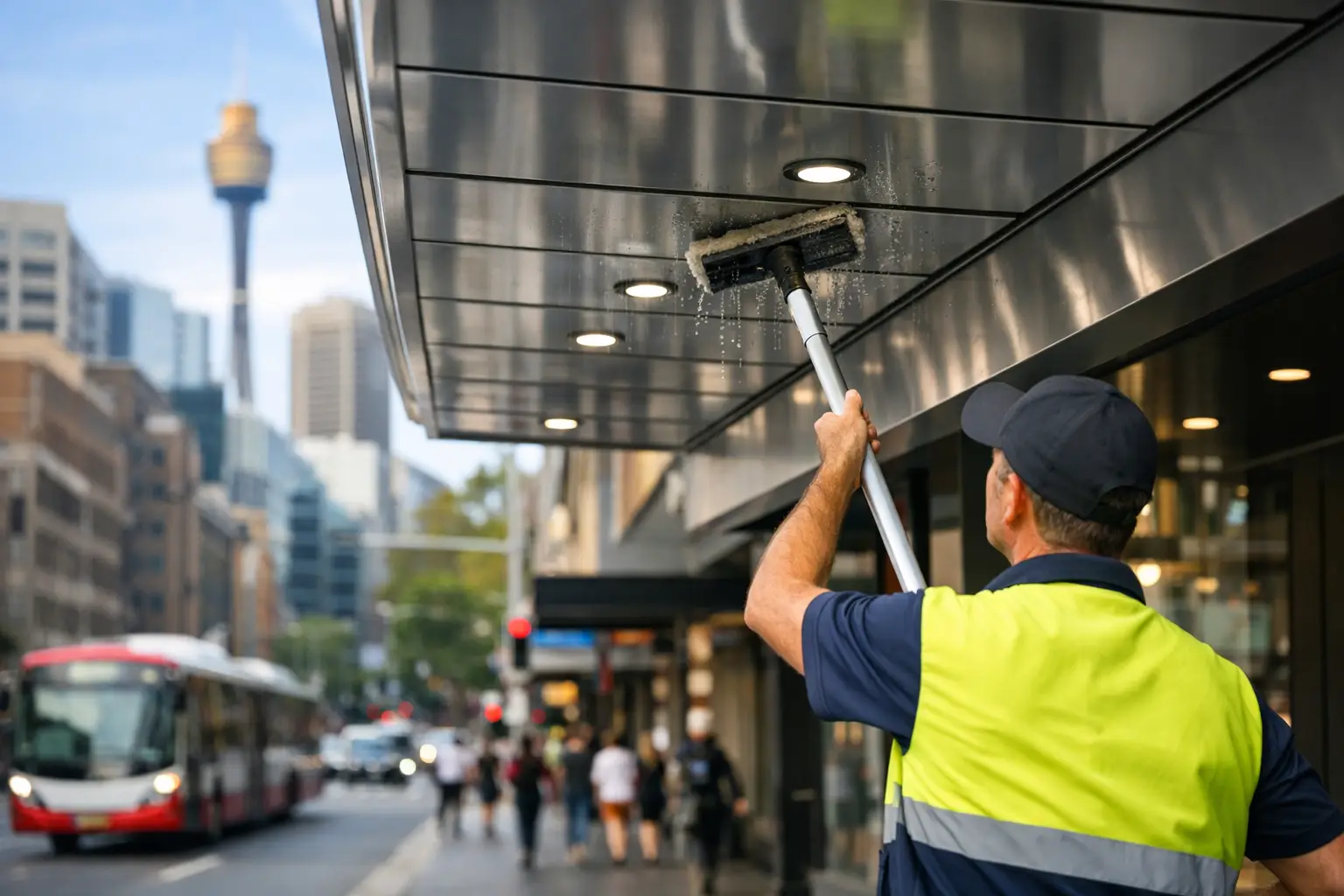
A shop awning takes more punishment than most building elements. It sits over a public footpath, catches wind-driven rain, absorbs heat, collects leaf litter and is exposed to vehicle fumes, salt air in coastal areas and day-to-day knocks from deliveries. Knowing how to maintain shop awnings is not just about keeping the frontage tidy. It is about protecting customers, pedestrians, tenants and the structure itself.
A well-maintained awning makes a premises look cared for and can help avoid expensive repair work. A neglected one can develop leaks, rust, loose signage, damaged lining or structural movement that needs urgent attention. The practical approach is regular visual checks, sensible cleaning and early action when something changes.
Start with a simple inspection routine
Most shop owners or property managers can carry out a visual inspection from ground level every few months, and after major storms or unusually high winds. Look up from across the street as well as directly beneath the awning. Changes are often easier to spot from a distance.
Check whether the awning line still looks straight, whether the fascia is sitting evenly and whether there are stains or bulges in the soffit lining. Water marks, peeling paint and rust streaks are usually signs that water is getting into an area it should not. A small issue at the edge of the awning can travel back towards the wall, damaging timber, steel, fixings or the shopfront below.
Pay attention to rattling, flexing or movement in windy weather. Some movement can be normal depending on the awning type and span, but new movement, banging panels or visible gaps around wall fixings should be assessed by an experienced commercial awning contractor. Do not climb onto an awning or try to tighten structural bolts from a ladder over a public footpath.
For properties with several tenancies, make inspection responsibility clear. A retail tenant may notice a leak first, but the landlord or strata manager may be responsible for the structure. Clear reporting avoids a minor maintenance job becoming a dispute or a safety issue.
Keep drainage paths clear
Blocked drainage is one of the most common causes of shop awning damage. Leaves, rubbish, tennis balls and dirt can build up in box gutters, valleys and downpipes. When water cannot drain properly, it pools on the roof surface, finds its way through laps and penetrations, and adds unnecessary weight to the structure.
After autumn and after storms, arrange for gutters and outlets to be cleared safely. This work is not a job for someone standing on a lightweight canopy or leaning out of an upper window. Access needs to suit the building and the awning design, particularly where the work is above a busy pedestrian area.
Also check where the downpipes discharge. Water should be directed away from entrances and should not overflow onto customers using the footpath. Persistent overflow can stain cladding, make paths slippery and cause water to track into walls. If the awning has no effective drainage path, a repair or redesign may be more sensible than repeatedly patching leak points.
Clean the awning without damaging its finish
Cleaning keeps a shopfront presentable, but the wrong cleaning method can shorten the life of painted metal, polycarbonate, fabric or composite panels. Start with a soft brush or low-pressure rinse to remove loose dust, leaves and grime. Use a mild, non-abrasive detergent where needed, then rinse thoroughly so residue does not dry onto the surface.
Avoid harsh acids, solvents, wire brushes and aggressive pressure washing. These can strip coatings, force water into joints and leave exposed steel vulnerable to corrosion. If graffiti needs removal, test any product on a small hidden area first or use a specialist who understands the awning material.
Fabric awnings need a different approach to metal shopfront canopies. Mildew, bird droppings and trapped moisture can damage fabric coatings, while over-scrubbing may weaken the weave. Follow the supplier's cleaning advice where available and allow the fabric to dry fully before it is rolled or folded away.
Signage, lights and cables fitted to an awning also need care. Clean around them gently and look for cracked seals, loose brackets or water entering through cable penetrations. Any electrical work should be handled by a licensed electrician, not treated as part of a general wash-down.
Deal with corrosion before it spreads
Sydney's weather can be hard on exposed steel, especially near the coast or in areas with regular moisture and pollution. Rust often begins at cut edges, screw heads, welds, damaged paintwork and areas where water sits. A few orange marks may look cosmetic, but they can point to corrosion behind a fascia panel or along a structural member.
Minor surface corrosion may be repairable if it is properly prepared, treated and recoated with a compatible system. The key is preparation. Painting over active rust only hides it for a short time. Loose material must be removed, the substrate assessed and the correct protective coating applied.
Where corrosion has affected brackets, support arms, structural beams or connections back to the building, it needs a closer inspection. The right repair depends on the remaining steel thickness, the load on the awning and whether water has also damaged the wall connection. In some cases, replacing a section is safer and better value than trying to preserve deteriorated material.
Check flashing, joints and wall connections
Leaks are not always caused by a hole in the awning roof. They often start where the awning meets the building. Flashing can lift, sealant can crack and movement between materials can open a small gap. Water then runs behind the fascia or into the wall cavity, where the damage may stay hidden for months.
Look for cracked sealant, loose flashing, staining above the awning line or water marks inside the premises. These signs deserve attention even if the leak only appears during heavy rain. Repeated patching with off-the-shelf sealant can make later repairs harder, especially if it conceals failed flashing or poor falls.
Joints around skylights, sign fixings, exhaust penetrations and air-conditioning services are also common weak points. Every penetration through an awning roof needs proper waterproofing. If a new sign or service has been added since installation, inspect that area closely after rain.
Maintain shop awnings with safety in mind
Because shop awnings sit above public areas, maintenance has to be planned around people below. A loose panel, failed light fitting or falling piece of corroded fascia is not simply a maintenance problem. It can create a serious public safety risk and potential liability for the property owner or occupier.
If you see sagging, loose sheets, exposed sharp edges, major rust, water dripping near electrical fittings or movement at supports, keep people away from the area where practical and arrange an urgent professional inspection. Do not wait for the next planned maintenance visit. Temporary barriers, safe access equipment and traffic or pedestrian management may be required before work begins.
The same applies to demolition or replacement work. Shopfront awnings can contain heavy steel, brittle sheeting, old signage and concealed services. Safe removal requires a proper method, suitable access and controls for the public below. For larger or altered structures, engineer input may be needed to confirm the repair or replacement design.
Plan maintenance around the type and age of awning
There is no single schedule that suits every shopfront. A newer aluminium canopy under a protected arcade will need less attention than an older steel-framed awning exposed to coastal weather. Hospitality venues may require more frequent cleaning because of grease, steam and signage, while a leafy suburban strip may fill gutters faster than a CBD location.
As a practical baseline, carry out a ground-level visual check every three months, clear drainage before and after the wet season, and arrange a more detailed professional inspection annually. Increase that frequency after storms, building works nearby, impact damage or any reported leak.
Keep a simple record of inspections, photographs, repairs and quotes. This is useful for landlords and managers budgeting for capital works, and it provides a clear history if a defect develops. It also helps identify recurring problems, such as a gutter that blocks in the same spot or a joint that fails after every heavy downpour.
A clean, straight and watertight awning gives customers confidence before they walk through the door. More importantly, prompt repairs protect the people beneath it. If something looks different, sounds different or leaks where it never used to, treat that change as the right time to get it checked.