
Best Awning Styles for Cafes and Shopfronts
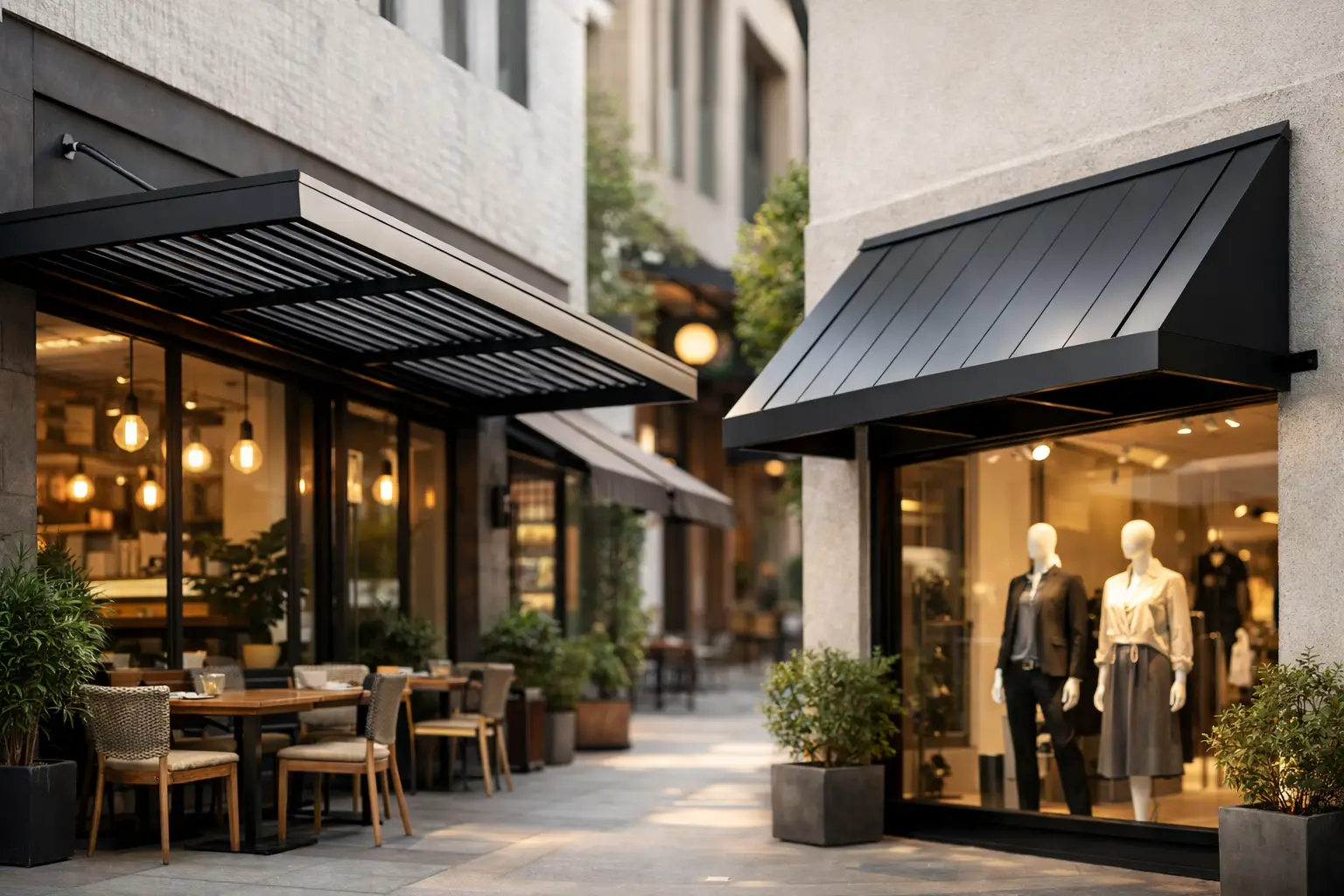
A café awning has to do more than look good over a few outdoor tables. It needs to shade customers in hard Sydney sun, handle rain, suit the building, protect the footpath below and give the business a clear presence from the street. The best awning styles for cafes are the ones that balance those practical jobs without creating maintenance, compliance or access problems later.
For most café owners, landlords and builders, the right choice comes down to the frontage, available fixing points, council requirements, outdoor dining layout and how much weather protection is genuinely needed. A good-looking awning that is undersized, poorly fixed or difficult to maintain is not a good investment.
Start with the café frontage, not the catalogue
Before selecting a style, look at how the premises operates from morning to close. A narrow footpath café has different needs from a corner site with broad outdoor seating. A heritage-style terrace may call for a more traditional profile, while a modern retail strip can suit clean, simple lines.
The existing façade matters too. Masonry walls, lightweight cladding, upper-floor structures and older shopfronts all need proper assessment before an awning is attached. This is where experienced installation work counts. The awning frame, brackets and fixings need to suit the structure behind the façade, not just the finish visible from the street.
Signage, doors, windows, outdoor heaters, lighting and delivery access should also be considered early. Sorting these details before fabrication avoids costly changes once work is underway.
Fixed shopfront awnings: the reliable all-weather option
A fixed awning is often the best choice for a café that needs dependable, permanent cover over its entry, windows or outdoor seating. It is built as part of the shopfront and can be designed in a range of projections, shapes and finishes to suit the building.
For busy cafés, fixed awnings offer consistent shade without staff needing to operate the system each day. They can protect glazing from direct heat, reduce glare inside and provide a more comfortable area near the front counter or outdoor tables. They also create a strong place for fascia signage, lighting and branding.
A metal-framed fixed canopy with quality roofing is particularly practical where weather exposure is high. It is not as flexible as a retractable option, but it generally provides better long-term protection and stands up well to frequent use. For a café open through wet weather, that reliability is worth considering.
The trade-off is that a fixed structure needs to be designed carefully around the footpath, property boundary and access requirements. Its projection, clearance height, drainage and structural support all need to be right. On public-facing sites, public safety is not an afterthought.
Best suited to
Fixed awnings work well for established cafés, corner sites, high-exposure locations and premises that need permanent weather cover over a main entry or a defined seating zone.
Retractable awnings: flexible shade when the conditions change
Retractable awnings are popular for cafés with outdoor dining areas where customers want sunshine at some times and shelter at others. The canopy extends when the heat or light rain arrives, then retracts when the area needs to be opened up.
This style can work especially well in courtyards, arcade-style seating areas and frontages where a large fixed canopy would feel heavy or block valuable light. Fabric choices also give operators more freedom with colour and branding.
However, retractable awnings are not a replacement for a properly engineered fixed shopfront canopy where ongoing rain protection is required. They have moving parts, fabric components and wind limitations. Staff need to know when to retract them, and the system needs regular checking to keep arms, mounts and motors working properly.
For Sydney cafés, wind exposure deserves real attention. A site that seems sheltered at ground level can still catch sudden gusts along a retail strip or near an open intersection. If the awning will be used daily, choose a commercial-grade system and make sure the fixing structure has been properly assessed.
Dutch hoods and traditional fabric awnings: character with limits
Dutch hoods, sometimes called bullnose awnings, have a curved fabric profile that suits traditional shopfronts, bakeries, small espresso bars and hospitality venues chasing a softer streetscape look. They can make a compact frontage feel welcoming and are highly visible from the footpath.
These awnings are usually most effective over individual windows and doorways rather than across a wide outdoor dining area. They provide shade and visual appeal, but their projection is generally more limited than a fixed canopy or retractable awning.
Fabric needs care. Fading, staining, torn seams and water pooling can quickly affect presentation if the material or installation quality is poor. A fabric awning can still be a smart choice, but it should be selected with realistic expectations about cleaning, repairs and replacement cycles.
Cantilevered canopies: clean lines for modern cafés
A cantilevered canopy projects from the building without visible front posts. This gives a clean, modern look and keeps the footpath clear - an important advantage where pedestrian access, prams, wheelchairs and outdoor tables all compete for space.
For café operators, the main benefit is a more open frontage. There are no posts interrupting customer movement or obstructing the view into the venue. A well-designed cantilevered canopy can also provide a strong horizontal line for signage and lighting.
The structural requirements are more demanding than they are for a simple supported awning. The wall structure and fixing points must safely carry the load, including wind forces. Depending on the project, engineering input and certification may be required. It is not the place for light-duty brackets or shortcuts.
Pergola-style and freestanding café covers
Where outdoor seating is set back from the building, a pergola-style awning or freestanding canopy may be more suitable than a wall-mounted option. These structures can cover a courtyard, laneway dining space or larger seating area that cannot be reached from the shopfront wall.
They are useful when the café wants to create a defined outdoor room. Posts can support integrated lighting, blinds or side screens, and the roof can be designed for either permanent protection or adjustable shade. The result can be very effective, particularly for venues that trade heavily outdoors.
The downside is that these structures involve more planning. Posts take up space, drainage has to be managed, and the structure may affect access routes, neighbouring properties or lease conditions. A freestanding cover should be planned as part of the site, not added as an afterthought once tables are already in place.
Choosing materials that hold up in hospitality settings
The frame and roof finish affect how an awning performs just as much as its style. Steel and aluminium are common choices for commercial awnings, with the right option depending on span, load requirements, finish and budget. Powder-coated finishes can help tie the structure into the café’s branding and existing shopfront colours.
For roofing, solid metal sheeting gives dependable cover and durability, while polycarbonate can bring in light where a darker canopy would make the interior gloomy. Fabric offers flexibility and character but needs more regular attention. There is no single best material for every café.
Drainage should never be overlooked. Water needs a controlled path away from the awning and away from customers entering the premises. Poor falls, blocked gutters and damaged flashings can cause leaks, staining and avoidable repairs.
Do not separate style from safety and compliance
An awning sits over a public area, often beside active traffic, pedestrians and outdoor diners. That means demolition, replacement and installation work need to be managed properly. Old awnings can conceal corrosion, damaged fixings or unsafe structural conditions that are not visible from the street.
Before replacing an existing canopy, assess its condition and how it is connected to the building. Safe removal, site protection and controlled installation matter, especially when the café remains open during works. The cheapest quote is rarely the best value if it ignores access, safety controls, engineering requirements or the quality of the fixing work.
For projects involving larger structures, difficult façades or public-facing locations, ask early about engineer’s certification, insurance and the installation approach. Clear answers at quote stage help prevent surprises later.
The right awning should earn its place every day
The best café awning is not necessarily the largest or the most decorative. It is the one that gives customers comfortable cover, keeps the frontage looking sharp and stands up to daily commercial use without becoming a maintenance problem. Fixed shopfront canopies suit many venues because they are durable and dependable, while retractable, traditional fabric and freestanding styles each have a place when the site calls for them.
If the awning needs repair, replacement or a completely new design, get the frontage assessed before settling on a style. A practical site inspection and a clear quote will show what can be built safely, what will suit the premises and what will keep working long after opening day.