Awning Demolition Safety for Sydney Shopfronts
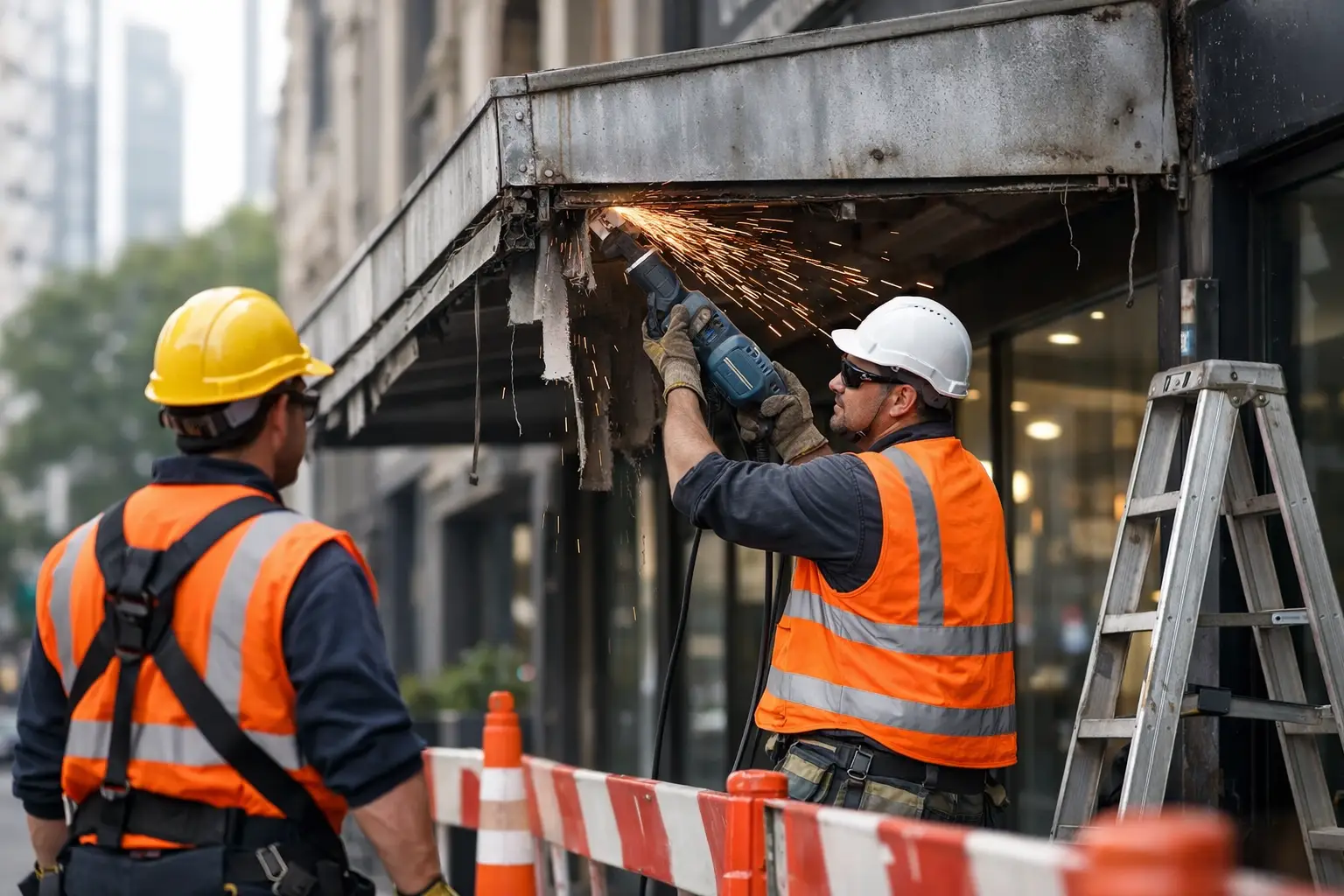
A shopfront awning can look straightforward from the street. Behind the fascia, it may be carrying years of alterations, corroded steel, old wiring, signage, damaged fixings and materials that are no longer fit for purpose. That is why awning demolition safety starts well before anyone climbs a ladder or removes a sheet. The job needs a clear plan for the structure, the people below it and the business operating around it.
For landlords, shop owners and builders, the goal is not simply to get an old awning down quickly. It is to remove it without injuring workers or pedestrians, damaging the façade, disrupting neighbouring businesses unnecessarily, or leaving a site exposed to weather and security issues.
Why awning demolition safety needs a proper plan
Shopfront awnings are often installed above busy footpaths, loading areas, outdoor dining spaces or customer entrances. A loose panel, a dropped tool or an unstable section of framework can create a serious public risk in seconds. Unlike demolition on a closed building site, commercial awning removal often happens in a live environment where people still need to access shops, apartments and neighbouring premises.
The condition of the awning also matters. Steel brackets can rust behind cladding where the damage is not visible. Timber framing may have deteriorated from water ingress. Older awnings may have been patched, extended or fitted with signs and light boxes that change the original load path. Removing one section without understanding what supports the rest can cause a sudden shift or collapse.
A professional contractor assesses these risks before starting work. This includes looking at the awning’s attachment points, span, framing, roof sheeting, drainage, signage, electrical connections and the condition of the building façade. Where the structure is complex, damaged or unusually large, engineering advice may be required to confirm the safe removal method.
Start with the site, not the tools
The safest demolition sequence depends on the individual site. There is no one method that suits every shopfront awning.
A small, lightweight aluminium awning over a quiet tenancy may be removed in controlled sections with access equipment and a short-term footpath exclusion zone. A large steel canopy attached to a heritage façade or running across several tenancies needs a more detailed approach. It may require staged removal, engineered temporary support, traffic management and close coordination with occupants.
Before work begins, the site should be inspected for practical hazards such as overhead electrical services, restricted vehicle access, uneven ground, nearby glass, loading docks and pedestrian flow. The contractor also needs to establish where equipment, removed materials and rubbish bins can be placed without blocking access or creating another hazard.
For active retail and hospitality sites, timing can be just as important as the physical work. Early morning, after-hours or low-traffic periods may reduce public exposure and make the job easier to control. The right timing depends on the location, trading hours and local access requirements.
Protecting pedestrians and neighbouring businesses
Public protection is one of the biggest parts of commercial awning demolition. A few witches hats and warning tape are not enough where there is a real risk of falling materials.
A suitable exclusion zone should be established beneath and around the work area. Depending on the site, this may involve solid barricades, overhead protection, controlled access points and a spotter to prevent people entering the zone. If demolition affects a public footpath, approvals and traffic or pedestrian management requirements may apply. These need to be organised before the crew arrives, not worked out halfway through the job.
Clear communication also prevents avoidable problems. Tenants, neighbours and building managers should know when work will occur, which entrances will be affected and whether there will be noise, dust or temporary access changes. For a café, a short interruption to outdoor seating can be planned. For a medical practice or retail store, customer access may need a different arrangement.
Good site control protects the public, but it also protects the client. Damage to a neighbouring sign, a blocked entrance or an injury on the footpath can turn a routine replacement project into a costly dispute.
Electrical, signage and hidden services
Many old awnings have more than roofing and framework attached to them. They can carry illuminated signs, security cameras, exterior lights, speakers, power cables, data cabling and drainage lines. Some services may have been added years after the awning was installed and may not be obvious from ground level.
Electrical services must be identified and safely isolated by the appropriate qualified trades before demolition begins. Cutting into a framework without confirming what is behind the cladding is poor practice. It can lead to electric shock, damaged services, fire risk or an unnecessary interruption to the tenancy.
Signage requires its own removal plan as well. A sign can be heavier than it appears, particularly if it has steel framing, acrylic faces, transformers or internal lighting. It should be supported, disconnected and lowered in a controlled manner rather than left hanging while the supporting awning is dismantled.
Hazardous materials cannot be guessed at
Older commercial buildings can contain materials that need specialist handling. Fibre cement sheeting may contain asbestos, and old painted surfaces can create dust hazards when disturbed. Corroded materials, bird droppings and mould from long-term water leaks can also affect the way work is carried out.
If there is any reason to suspect asbestos-containing material, work should stop until the material is assessed. Asbestos must only be handled and removed in line with applicable NSW requirements by appropriately licensed and competent people. Breaking, drilling or cutting suspected material to “see what it is” puts workers, occupants and the public at risk.
The same practical approach applies to dust control and rubbish removal. Demolition debris should be lowered safely, contained and removed progressively. Throwing material from height, allowing sharp metal to build up on the ground, or leaving loose sheets exposed overnight is not acceptable on a commercial frontage.
Safe access and working at height
Awning demolition regularly involves work at height, often over a footpath or narrow shopfront. Ladders may have a limited role for short, low-risk tasks, but they are rarely the right primary access method for dismantling structural materials. The access method needs to suit the height, reach, duration and weight of the components being removed.
Scaffolding, elevated work platforms and other purpose-suited systems can provide a safer working position when correctly selected and operated. The choice depends on ground conditions, overhead clearance, access restrictions and whether the work zone can be isolated. A busy inner-city site may call for a different solution from a freestanding suburban premises with clear vehicle access.
Workers also need a safe way to handle materials. Long steel sections, roof sheets and fascia panels can catch the wind or become difficult to control in tight spaces. Sections should be removed in manageable sizes, with lifting arrangements planned before fixings are released. Weather matters too. High winds and heavy rain can make roof-level demolition unsafe, so the programme must allow for delays rather than pushing on regardless.
The removal sequence matters
A controlled awning demolition generally works from the non-structural elements through to the main framework. Cladding, roofing, gutters, signs and services are dealt with first, while the primary support remains stable. Structural members are then removed in a planned order so loads are not transferred unexpectedly.
This is where experience makes a real difference. A contractor needs to recognise when an awning is self-supporting, when it relies on wall fixings, and when a damaged bracket or hidden connection could alter the sequence. Cutting steel early to save time can create a dangerous situation if that steel is holding more than expected.
Once the awning is down, the job is not finished. Fixing points need to be checked, made safe and weatherproofed where required. Holes, damaged render, exposed penetrations and loose electrical fittings should not be left for the next trade to discover. If a replacement awning is planned, the building face should be prepared properly so the new installation starts from a sound base.
Documentation, insurance and clear responsibility
Commercial clients should expect more than a verbal promise that the work will be done safely. A capable contractor will explain the scope, site controls, access arrangements and responsibilities before work starts. Depending on the project, this can include a site-specific safety plan, risk assessment, work method documentation, public protection measures and relevant permits or approvals.
Insurance is also part of responsible project delivery. Public liability cover matters when work is taking place over or beside areas used by customers and the public. For larger or more complicated structures, engineer input and certification can provide further confidence that both demolition and replacement work have been considered properly.
The cheapest quote is not always the cheapest outcome. A price that excludes traffic management, safe access, waste removal, electrical isolation or proper make-good work can quickly grow once the site is open and the risks become obvious. A clear quote should state what is included, what assumptions have been made and what may require further investigation.
Choose a contractor who understands shopfront work
Awning demolition is specialised commercial work, not a general clean-up task. The right contractor understands how street-facing structures are built, how businesses trade around them and how to keep a public area controlled while the work is underway.
Advanced Awnings approaches removals with the same attention needed for a new installation: inspect the structure, plan the sequence, protect the public and leave the site ready for what comes next. Whether the awning is being replaced, repaired or removed permanently, the work should be carried out by people who do not cut corners when the risks are overhead.
If an old awning is showing rust, movement, water damage or loose sheeting, arrange an assessment before it becomes an urgent problem. A clear site inspection and honest scope give you the best chance of keeping tenants, customers and the footpath safe while the work is done properly.