Free Quote Awning Installation for Sydney Shops
A shopfront awning is not a small detail. It sits above staff, customers and people using the footpath, while also carrying a large part of the building’s street appeal. A free quote awning installation should therefore be more than a quick price over the phone. It should give you a clear view of the work involved, the condition of the existing structure and the practical steps needed to complete the job safely.
For landlords, shop owners, builders and property managers, the right quote helps avoid the usual headaches: unclear inclusions, surprise structural work, access problems, delays to trading and an awning that does not suit the premises. Good commercial awning work starts with seeing the site properly and asking the right questions before materials are ordered.
What a Free Quote Awning Installation Should Cover
A useful quote begins with the awning itself, but it cannot stop there. The installer needs to understand the frontage, the building façade, the existing fixings, the condition of any old awning and the space available for safe access. A busy retail strip has different requirements from a quiet industrial premises, particularly where pedestrians, parked vehicles and neighbouring tenancies are involved.
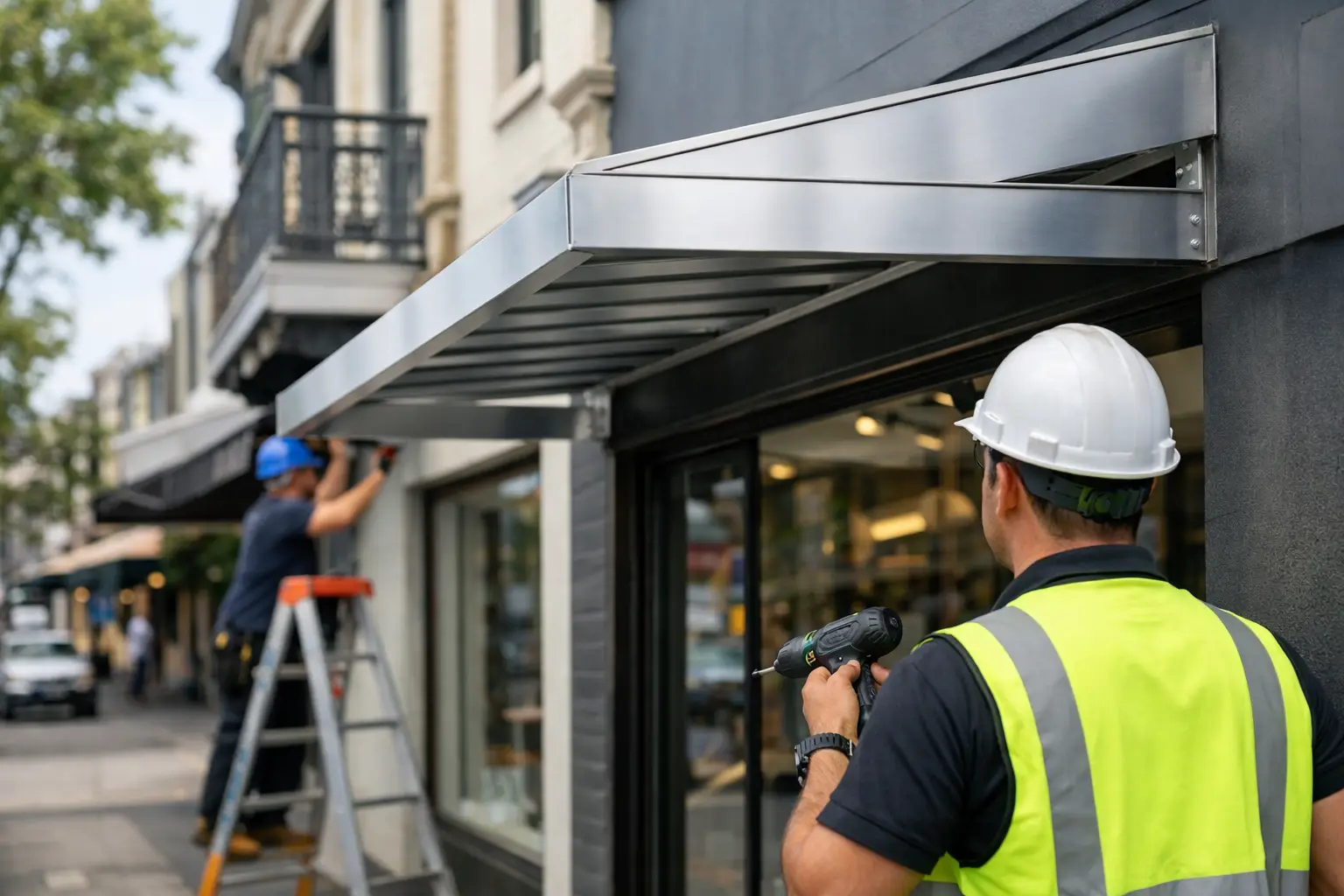
During a site inspection, an experienced contractor will look at the width and projection of the proposed awning, where it will be fixed, drainage considerations, signage requirements and the finish required for the shopfront. They will also assess whether the old structure can remain, needs repair, or should be removed before a replacement is installed.
The written scope should make it clear what is included. That may cover supply of the frame and roof sheeting, installation, flashings, guttering, site access equipment, removal of old materials and rubbish disposal. If painting, signwriting, electrical disconnection or council approvals are outside the scope, that should be stated plainly as well.
A cheap figure with no detail can look attractive at first. It can also leave room for disputes once work starts. A proper quote gives both sides a workable plan.
Why Site Conditions Change the Price
Commercial awning installation is not one-size-fits-all. Two awnings of similar size can require very different amounts of labour and materials depending on the building and the site.
A straightforward replacement on a sound brick façade may be relatively simple. By comparison, an old awning with rusted brackets, damaged timber, failing fascia or unknown structural fixings can involve more preparation. Access from a narrow footpath, work above a main road, limited loading areas or the need to keep a business open can also affect how the work is staged.
Engineering is another factor. Some projects require engineer’s details or certification to confirm the structure and its fixings are suitable. This is particularly relevant for larger shopfront awnings, altered building façades, replacement work where the original support system is not clear, or premises managed under strict strata or landlord requirements. It is better to identify this early than discover it after fabrication has begun.
The aim is not to complicate the quote. It is to price the actual job, not an ideal version of it.
New installation, replacement or repair?
The quote process should first establish what type of work you really need. A new installation suits a tenancy without adequate weather protection or a new fit-out requiring a finished street frontage. Replacement is often the right call where an old awning is beyond economical repair, visibly deteriorated or no longer meets the needs of the business.
Repair can be a practical option when the main structure remains sound and the issue is limited to roof sheeting, flashings, gutters, minor corrosion or isolated damage. It depends on the condition of the frame and how long you need the result to last. Patching a failing structure may cost less this month, but a properly planned replacement can be better value if repeated repairs are likely.
An honest assessment matters here. The best recommendation is the one that suits the condition of the awning, the building and your budget, not simply the largest job.
Planning Installation Around a Working Business
Most commercial sites cannot simply shut down while awning work takes place. Cafes need customer access, retailers need visibility and property managers need tenants and the public kept safe. This is where planning separates a professional installation from a messy disruption.
Before work starts, agree on access times, delivery arrangements, work zones and any temporary protection needed below the awning. Where work affects the footpath or public area, appropriate safety controls are essential. Barriers, exclusion zones and careful scheduling protect pedestrians and keep the site organised.
Demolition work deserves particular attention. Old awnings can contain corroded steel, loose sheeting, damaged timber or sections that are no longer securely fixed. Removing them safely requires a controlled approach, suitable equipment and a crew that understands how to manage overhead work in public-facing areas. It is not a job for rushed removal or guesswork.
For businesses operating during the day, work may be staged around quieter periods where practical. That can mean completing preparation early, scheduling noisy or high-risk tasks at suitable times, and leaving the frontage clean and accessible at the end of each shift. Exact arrangements depend on the site, but clear communication should be part of the service from the start.
Questions to Ask Before Accepting an Awning Quote
A quote should make you confident about who is taking responsibility for the work. Before proceeding, ask whether the contractor has experience with commercial shopfront awnings, what insurance they carry, how they manage public safety and whether engineering support is available where required.
It is also worth confirming the finish. Ask about the proposed roof material, steel treatment, flashing details, drainage and how the new awning will meet the existing façade. A well-built awning can still look out of place if the proportions, colour or fascia detail are poorly considered.
Clarify what happens if hidden issues are found after the old awning is removed. No contractor can see behind every fascia or wall lining before opening the job up. What matters is having a clear process: explain the issue, outline the options, price any variation fairly and obtain approval before additional work proceeds.
Finally, ask about the programme. A realistic timeframe is more useful than a promise that cannot be kept. Fabrication, access arrangements, engineering requirements and weather can all influence the schedule.
Getting Better Value From Your Awning Project
Value is not only about the lowest number on the quote. A commercial awning should be durable, drain properly, suit the building and remain presentable under daily exposure to sun, rain and wind. Poor fixings, thin materials or rushed flashing work can lead to leaks, corrosion and call-backs that soon wipe out any initial saving.
It also pays to consider the whole frontage while the work is being planned. If signage, fascia repairs, guttering or surrounding cladding need attention, coordinating those items can prevent duplicated access costs later. This does not mean adding unnecessary work. It means looking at the parts that connect to the awning so the completed job performs as it should.
Advanced Awnings approaches commercial awning projects with this practical focus: inspect the site, set out the scope clearly, manage the work safely and deliver a finish that holds up on a busy shopfront. With more than 20 years of specialist experience, the team understands that the small details behind the fascia are often what determine whether an awning lasts.
Request a Clear Quote Before Work Starts
Whether you are replacing a damaged shop awning, fitting out a new tenancy or dealing with an ageing structure above a public footpath, start with a site-specific quote. Have a few details ready, such as the property address, photos of the frontage, approximate dimensions, the issue you are dealing with and any deadline linked to a fit-out or lease.
A clear conversation early on can save time, reduce surprises and help you choose the right repair, replacement or installation path. The goal is simple: a safe, well-finished awning that protects the premises and presents the business properly from the street.