Cantilever Awning Installation Done Right
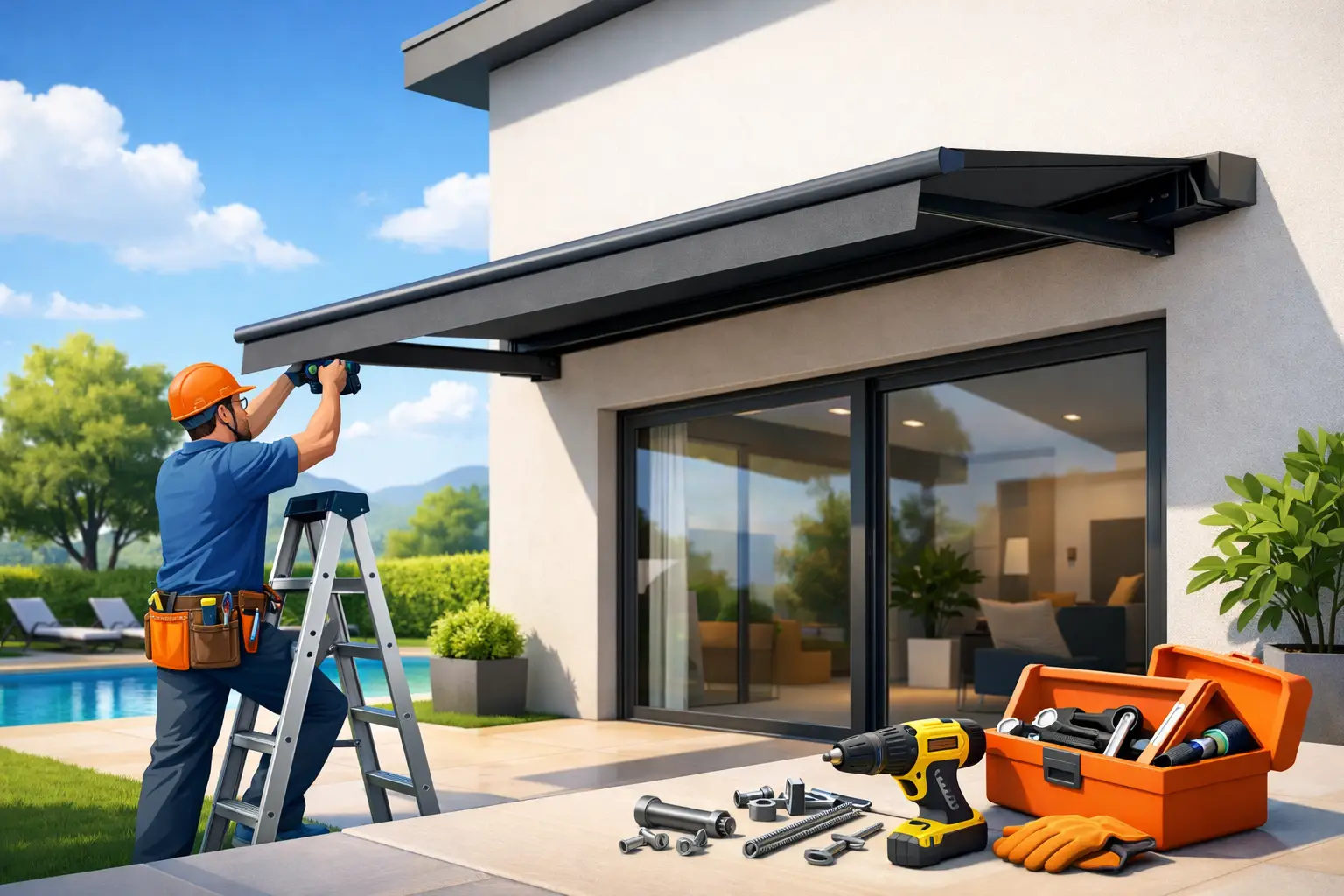
A cantilever awning only looks simple from the street. What most people see is a clean overhead cover with no front posts. What they do not see is the load path back into the building, the condition of the existing structure, and the amount of planning needed to get cantilever awning installation right on an active commercial site.
For shop owners, builders and property managers, that matters. A street-facing awning has to do more than look tidy. It needs to handle weather, suit the tenancy, protect pedestrians below, and be installed in a way that does not create problems later. If the support, fixings or drainage are wrong, the defects usually show up after handover, when access is harder and the cost of rectification is higher.
What makes a cantilever awning different
A cantilever awning projects out from the building without front support posts. That gives you a cleaner frontage, better visibility to signage and fewer obstructions at ground level. For retail strips, hospitality venues and pedestrian entries, that can be a real advantage.
It also means the structure is asking more of the building it is fixed to. The wall, slab edge, steel frame or other supporting element has to carry the load back properly. Wind load, sheet weight, frame design and projection all affect the final build. A small awning over a narrow shopfront is one thing. A wider commercial canopy over a busy footpath is another.
This is why a proper assessment comes first. On many jobs, the visible façade does not tell the full story. Old brickwork, patched concrete, previous fixings, hidden services or undocumented alterations can all change the installation method.
Cantilever awning installation starts with the structure
Before any steel goes up, the first question is simple - what are we fixing into, and is it suitable?
That sounds basic, but it is where plenty of avoidable problems begin. If a contractor treats every frontage the same, the risk lands on the owner. Masonry may need a different fixing strategy to structural steel. Existing lintels may not be suitable for new loads. Older shopfronts can look sound but have corrosion, movement or damage that only becomes obvious once the work starts.
A reliable cantilever awning installation process usually involves a site inspection, measurements, review of the existing frontage and, where required, engineer input. That is not overkill. It is the practical way to avoid finding out too late that the structure behind the cladding cannot carry what is proposed.
In some cases, the right answer is straightforward installation. In others, there may need to be strengthening works, new support steel or partial demolition before the new awning can be fixed safely. Honest advice early saves time, money and arguments later.
Design, compliance and real-world use
Commercial awnings sit in public view and often over public access areas, so compliance is not just a paperwork exercise. The awning has to be built for its location and intended use.
Projection, clearance, drainage, fascia detail and signage integration all need to work together. Hospitality sites may need better weather protection at entrances or outdoor trade zones. Retail shopfronts may prioritise clean lines and tenant visibility. Landlords may want a durable structure that is easy to maintain across future lease changes.
There is usually a balance to strike. A deeper projection can improve cover, but it increases loads and may affect approvals or the build method. A lighter-looking frame can suit the façade, but not every finish or section size will hold up equally well on exposed sites. Good installation is not about overselling the biggest option. It is about matching the structure to the site, the building and the way the premises actually operate.
The site conditions matter more than most clients expect
A big part of commercial awning work happens in places that stay open while the job is underway. That changes everything.
If there is pedestrian traffic, nearby tenants, parked vehicles, service entries or limited access for lifting and deliveries, the installation has to be planned around public safety and site control. Materials cannot just be stacked wherever there is space. Old awnings cannot be removed carelessly. Fixing works overhead need proper exclusion zones and sequencing.
For that reason, installation experience matters just as much as fabrication quality. A well-made awning can still become a poor project if the site is mismanaged. The cleaner jobs are usually the ones where the contractor has already thought through access, demolition, waste removal, protection of surrounding finishes and how to keep disruption under control.
Common issues that affect cantilever awning installation
No two shopfronts are exactly the same, but the same trouble spots turn up often enough.
One is hidden condition. Once old linings, sign panels or existing frames come off, the supporting substrate may be weaker than expected. Another is water management. If the fall, flashing or drainage points are wrong, leaks can travel back into the tenancy or stain the frontage.
Alignment also gets overlooked. On paper, the awning is square. On site, the building may not be. If installers chase a crooked façade without allowing for visual lines and set-out, the finished awning can look off even when it is technically fixed in the right place. Commercial frontages need a professional finish because they are judged at a glance.
Then there is the issue of old versus new. A replacement awning may need to tie into existing cladding, signage, lighting or façade treatments. Sometimes that works neatly. Sometimes it exposes the need for additional make-good works. It depends on what is already there and how far the client wants to go with the frontage upgrade.
Why engineer support and certification can matter
Not every client comes to a job thinking about engineer certification, but many should. Where structural loads, council requirements, landlord approvals or builder handovers are involved, proper documentation can be part of getting the job across the line.
For commercial operators, this is often less about theory and more about risk. If you are responsible for a site, you want confidence that the installed awning is supported properly and signed off where required. That becomes even more relevant on larger canopies, replacement works after storm damage, or jobs tied to broader fit-out and façade upgrades.
Experienced awning contractors know when certification is likely to be needed and when it is sensible to raise it early. That helps avoid delays once fabrication has already begun.
Choosing the right contractor for the job
If you are comparing quotes, look past the headline price. With cantilever awning installation, the cheaper number is not always the cheaper outcome.
A good contractor should be clear about scope, site conditions, exclusions, access issues and whether demolition, make-good or engineering input is part of the price. They should also understand commercial work in live environments, not just fabrication in a workshop.
Ask practical questions. Who is checking the existing structure? How will the site be managed during removal and installation? What happens if hidden defects are found? Is the finish suited to the location? Will the completed awning present properly from the street?
Straight answers are a good sign. So is a contractor who does not pretend every job is simple. The best operators are usually the ones who have seen enough problem sites to know where things can go wrong and how to prevent that.
What a good finished result looks like
A properly installed cantilever awning should feel solid, look clean and make sense with the building. The lines should be straight, the fixings and flashings should be well resolved, and the drainage should not create a future maintenance issue. Just as importantly, it should suit the tenancy underneath it.
For a shopfront, that might mean preserving signage visibility and giving the entrance better weather cover. For a landlord, it might mean a durable frontage upgrade that improves presentation without creating a maintenance headache. For a builder, it means a specialist package delivered safely and to programme.
That is the real point of specialist installation. Not just getting an awning up, but getting one that performs, presents well and does not come back as a defect.
Advanced Awnings works with commercial clients who need that kind of practical result - safe work, straight advice and a finish that holds up in the real world.
If you are planning a new awning or replacing an existing one, the best starting point is not the drawing. It is a proper look at the building, the site and the risks before the first bracket is fixed.