Choosing Awning Demolition Contractors
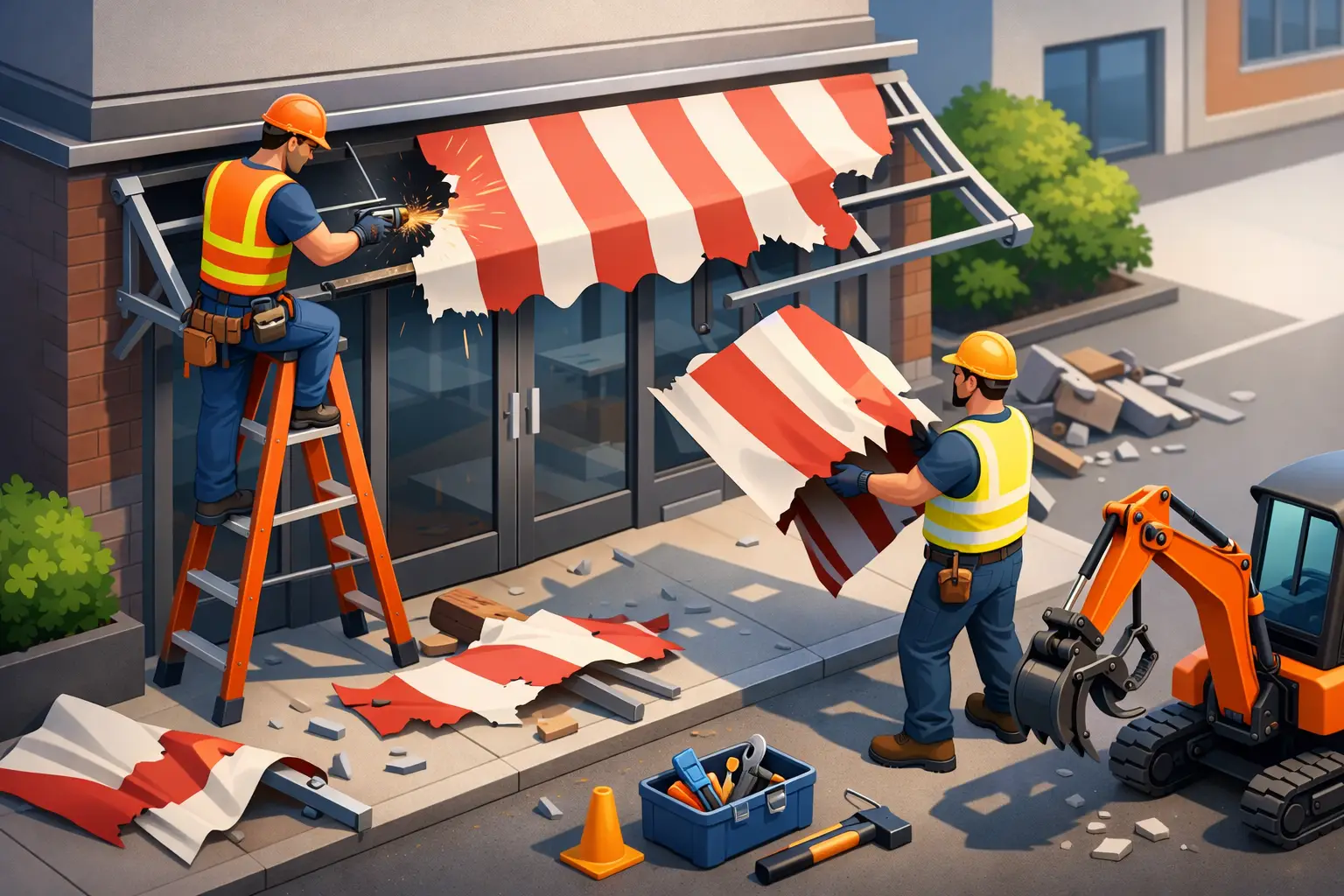
A tired or damaged shopfront awning can quickly become more than an eyesore. Loose sheeting, rusted steel, failed fixings and water damage all create real risk, especially on a busy frontage where pedestrians, staff and customers pass underneath every day. That is why choosing the right awning demolition contractors matters. This is not light strip-out work. It is structural removal in a public-facing environment, and it needs to be handled properly from the first site check to the final clean-up.
What awning demolition contractors actually do
When people hear demolition, they often picture a quick tear-down and a skip bin. Commercial awning demolition is more controlled than that. A proper contractor is assessing how the awning is fixed to the building, what materials are involved, whether services are connected, what public protection is needed and how the removal affects the next stage of works.
On older shopfronts, you may be dealing with corroded steel frames, ageing signboards, patched electrical work, water ingress or non-compliant additions bolted on over time. In some cases the awning only needs partial demolition so a section can be repaired or replaced. In others, complete removal is the safest and most practical option. A contractor with specific awning experience will know the difference and will not treat every frontage like a basic demo job.
Why specialist awning demolition contractors are worth it
A general demolition crew might be capable on paper, but awnings bring a different set of site conditions. They sit over entries, windows, footpaths, loading areas and outdoor trading zones. That means removal has to be staged around public movement, neighbouring tenancies and business operations.
There is also the issue of appearance once the awning comes off. Many clients are not just removing an old structure. They are preparing for a replacement awning, a façade upgrade or a tenancy handover. If the contractor damages the wall line, leaves a poor make-good or cuts corners on the finish, the next trade wears the delay and the client wears the cost.
That is where specialist experience pays off. Contractors who regularly work on shopfront awnings understand sequencing, temporary protection, safe dismantling and what needs to happen after removal so the site is ready for the next step.
What to check before hiring awning demolition contractors
The first thing to check is whether the contractor is properly insured and experienced in commercial frontage work. Public liability cover matters here because the work often happens where the public is close by. You also want to know whether the team has handled occupied sites before, including jobs where access is tight and trading needs to continue.
The next point is methodology. Ask how they plan to remove the awning, how they will isolate the area, what traffic or pedestrian controls may be needed and how waste will be managed. If the answer is vague, that is a problem. Good contractors can explain the job clearly because they have done it many times.
It is also worth asking whether engineer input is required. Not every job needs the same level of documentation, but once structural elements are involved, the contractor should be comfortable working with engineers and following certified details where needed. For landlords, builders and property managers, that kind of coordination saves time and avoids arguments later.
Safety and compliance are not optional
Safety is the part clients usually notice only when it is missing. On a live commercial site, poor controls show up fast. You will see exposed sections left unsecured, rubbish piling up, noisy work happening without proper isolation, or access blocked in a way that disrupts tenants and pedestrians.
Good awning demolition contractors do the opposite. They plan the job around the site, not just around their own convenience. That can mean scheduling works outside peak trade, using exclusion zones, installing overhead protection, coordinating with building management and removing materials in a way that keeps the frontage tidy and controlled.
Compliance also sits in the background of every decent project. Depending on the structure, location and replacement scope, there may be council, strata, building or engineering requirements to consider. A reliable contractor will not pretend those steps do not exist just to win the quote. They will tell you what is needed, what is likely, and what depends on the condition of the existing awning once the job starts.
Cost matters, but so does what the quote includes
There is nothing wrong with comparing prices. Most commercial clients should. But with demolition, a cheap number can hide expensive gaps. One quote may include full removal, rubbish disposal, temporary protection, making good the wall and coordinating safe access. Another may only cover pulling the structure down and carting some of it away.
That is why the detail in the quote matters more than the headline figure. Ask whether disposal is included. Ask what happens if concealed damage is found behind the awning. Ask whether electrical disconnection is allowed for. Ask what the finished surface will look like once the structure is gone.
If you are planning a replacement awning straight after demolition, ask whether the contractor understands the handover requirements for the installation stage. Saving a few dollars on demolition can cost much more if the new work is delayed because fixings were cut badly, surfaces were left uneven or extra repair work is suddenly needed.
Timing, access and business disruption
For many premises, the awning is right above the main entry. That means demolition can affect customer access, deliveries, signage visibility and day-to-day trade. A decent contractor will talk about those practical issues early, not halfway through the job.
Sometimes the cleanest approach is after-hours work. Sometimes staged daytime work is fine with the right barriers and communication. It depends on the site, the tenancy mix and how exposed the frontage is to public movement. There is no one-size-fits-all answer, and any contractor promising one should be treated cautiously.
This is especially relevant for hospitality venues, retail strips and high-footfall shopping areas. In those settings, planning is not a nice extra. It is part of doing the job properly.
When partial demolition makes more sense
Not every awning has to come down in full. In some cases, only damaged sections need to be removed so the remaining structure can be repaired, strengthened or reclad. That can reduce cost and shorten downtime, but only if the existing frame is still worth saving.
A proper assessment matters here. Partial demolition sounds cheaper, but if the retained structure is heavily rusted, out of level or non-compliant, you may just be delaying a full replacement. Good contractors will tell you when repair is practical and when it is false economy.
For older shopfronts in particular, the best path often becomes clearer once close inspection starts. Years of patch repairs and ad hoc signage changes can leave hidden issues behind linings and fascias. That is why straight advice is worth more than a sales pitch.
The value of end-to-end capability
Where possible, many clients prefer a contractor who understands more than the demolition stage. If the same business can assess the existing awning, remove it safely, carry out repairs, install the replacement and coordinate certification support where needed, the project tends to run cleaner.
That does not mean every job must be bundled under one contractor. There are times when separate trades make sense. But on shopfront awnings, fewer handovers often means fewer delays, fewer surprises and better accountability. If there is a problem, you know who is responsible for fixing it.
For commercial property owners and managers, that kind of clarity matters. It keeps communication simple and helps maintain confidence across the life of the job.
Questions worth asking before work starts
Before you appoint anyone, ask direct questions and expect direct answers. Have they done similar commercial awning removals before? What safety controls are planned for the public area? Is make-good included? Will they coordinate with engineers or other trades if required? What could change the scope once the awning is opened up?
The right contractor will not brush those questions aside. They will answer them clearly, because that is what experienced operators do. If you are dealing with an active street frontage, straight communication is part of the service, not an optional extra.
For clients looking at shopfront awning removal, replacement or repair, that practical approach is what separates a tidy, well-managed job from a messy one that drags on. Advanced Awnings works in that space every day, with the kind of hands-on experience commercial sites demand.
A good demolition job does not draw attention to itself. The old awning comes down safely, the site stays under control, and the next stage can get underway without unnecessary hold-ups. That is usually the best sign you hired the right team.