Engineered Awning Installation Sydney
A shopfront awning is not the place to cut corners. If you need engineered awning installation Sydney, you are usually dealing with more than appearance. You are dealing with public safety, weather exposure, council requirements, structural loads, and the day-to-day reality of running a business under a structure that has to do its job properly.
For commercial sites, an awning has to look right, but that is only part of it. It also needs to suit the building, handle wind and rain, and be installed in a way that stands up over time. When the job is engineered from the start, there is less guesswork, fewer problems during installation, and a much better result for the owner, tenant, builder, or property manager responsible for the site.
What engineered awning installation means
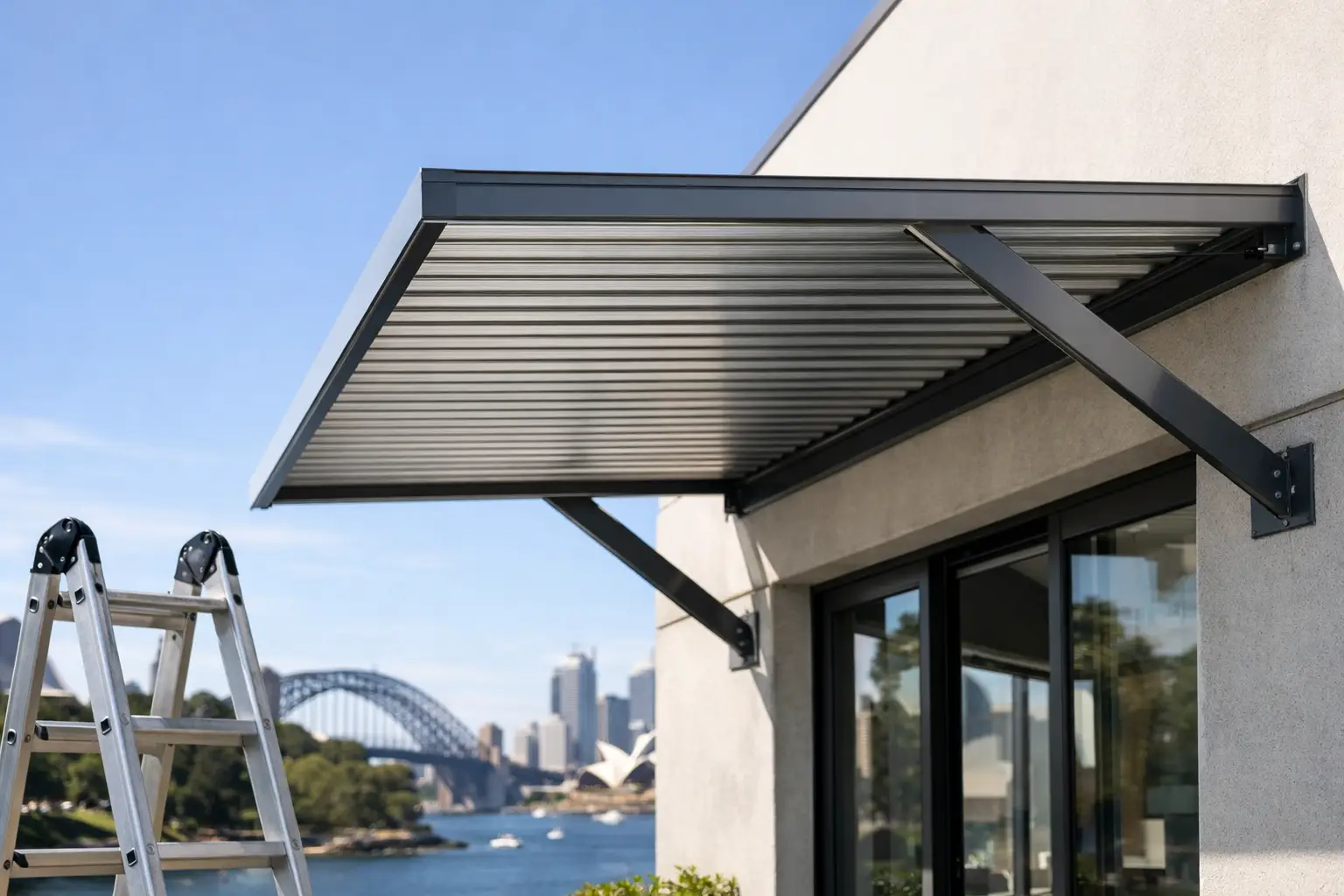
An engineered awning is not just a standard frame fixed above a shop. It is an awning backed by proper structural consideration, site-specific planning, and the right documentation where required. That can include engineer input on fixing methods, steelwork, load paths, and certification, depending on the scope of works.
For street-facing commercial premises, that matters. Awnings sit over entries, glazing, outdoor trading areas, and foot traffic. They are exposed to weather and visible to everyone. If the structure is poorly designed or badly installed, the issue is not only cosmetic. It can become a liability.
This is why experienced contractors treat engineered awning installation as a construction job, not just a fit-off. The condition of the existing facade, the age of the building, the fixing points available, access restrictions, and the surrounding public area all affect how the work should be carried out.
Why commercial sites need a different approach
Shopfront awnings on active premises are different from residential shade products. A commercial awning often has to integrate with signage, services, neighbouring tenancies, glazed facades, and public access ways. In many cases, the premises needs to stay operational while work is underway.
That changes the whole job. Safe access, barricading, staging, and timing become part of the installation process. If demolition of an old awning is involved, the site needs even more control. Loose sheeting, corroded steel, failed fixings, and hidden damage behind the fascia are common enough on older structures. Until the old awning is opened up or removed, you do not always know exactly what you are working with.
A proper contractor will allow for that. They will not promise a quick install without looking at the condition of the site, the scope of removal, or the structural requirements behind the new awning.
Engineered awning installation Sydney projects often come with hidden variables
Sydney commercial sites rarely offer a clean, easy run. Older strips can have patched facades, uneven walls, ageing brickwork, legacy sign frames, and undocumented alterations from previous tenants. Newer buildings can be better on paper, but they often come with tighter site rules, access limits, and coordination requirements with builders or strata.
That is why engineered awning installation Sydney work should start with an honest site assessment. Measurements are only one part of it. The installer also needs to assess substrate condition, access equipment, surrounding hazards, drainage, and whether the proposed design can actually be fixed safely and neatly to the existing structure.
It depends on the building. A straightforward replacement on a sound facade is one thing. A custom awning over an older shopfront with deteriorated fixing points is another. Both are manageable, but they need different planning.
The steps that matter before installation starts
The best awning jobs are usually the ones that feel uneventful by the time installation day arrives. That only happens when the planning has been done properly.
The process normally starts with a site inspection and quote. From there, the scope gets clearer. Is this a new build, a replacement, a repair with partial reconstruction, or a full demolition and new install? Does the site need engineered details or certification? Will the awning include cladding, signage provision, lighting, drainage, or other integrated features?
Once those details are clear, fabrication and installation can be planned around the real site conditions. For commercial clients, this stage matters because it affects programme, access, safety controls, and how much disruption the business will wear.
Good contractors are direct about this. If extra structural work is needed, they should say so. If the old awning needs to come down before the new one can be properly measured or fixed, they should explain that as well. Straight answers early save trouble later.
Compliance, certification and public safety
Awnings over public-facing areas are not just private building elements. They affect pedestrians, customers, staff, and neighbouring properties. That is why compliance and engineering support matter so much.
Not every project will need the same level of documentation, but commercial clients should expect clear advice on what the job requires. In some cases, engineer certification will form part of the process. In others, the key issue may be safe demolition, correct fixings, or making sure the new structure is suitable for the building and intended use.
The trade-off is simple. Doing it properly can take more planning upfront, but it reduces the risk of defects, unsafe work, rework, and future disputes. For landlords and property managers in particular, that is worth paying attention to. A cheap awning that becomes a maintenance or compliance headache is not cheap for long.
What good workmanship looks like on an awning job
Most commercial clients know bad awning work when they see it. Uneven lines, crude flashing, poor water run-off, rattling panels, visible patching, and awkward junctions with the facade all stand out quickly. So do sites left untidy or unsafe during the job.
Good workmanship is not only about the finish, though that matters. It is also in the preparation, the fixings, the alignment, and the way the awning meets the building. A properly installed awning should feel solid, look clean, and suit the frontage rather than fighting against it.
It should also be built with service life in mind. Materials, coatings, drainage detail, and joint treatment all affect how the awning performs over the years. A smart install considers maintenance from day one, especially on busy shopfronts where future access can be awkward and downtime costs money.
Repairs, replacement or a full new awning?
Not every site needs a complete replacement. Some awnings can be repaired if the main structure is still sound and the issues are localised. That might involve sheet replacement, steel repairs, fascia work, or addressing damaged sections caused by rust, impact, or water entry.
But there is a point where repair work becomes poor value. If the frame is compromised, the fixings are unreliable, or the awning has repeated patch jobs already, replacement is often the smarter call. The upfront cost is higher, but the result is safer, cleaner, and more reliable.
This is where experience matters. A contractor who works on shopfront awnings every week can usually tell the difference between an awning worth saving and one that should be removed and rebuilt. Honest advice is important here. Some clients ask for a repair because they want the cheaper option, but the right answer is not always the cheapest one.
Choosing the right contractor for engineered awning installation Sydney
If you are comparing contractors, look beyond the quote figure. Ask who is actually doing the work, what experience they have with commercial shopfronts, whether they understand demolition and replacement as well as installation, and how they handle engineering and certification support where needed.
It also helps to ask how they manage live sites. A contractor can be skilled in fabrication and still struggle on an occupied commercial frontage. Public safety, communication, access control, and tidy project delivery are all part of the job.
Advanced Awnings works in this space because shopfront awnings are not side work. They are specialist commercial structures that need to be measured properly, built properly, and installed properly. For owners and managers responsible for visible public-facing premises, that matters more than a polished sales pitch.
When you are planning an awning project, the right starting point is a clear assessment of the site, the structure, and the end result you actually need. A good job is not the one that gets rushed through fastest. It is the one that stands up, looks right, and lets you get on with business without second-guessing what is over your front door.