
Shop Awning Defects Checklist for Safer Premises
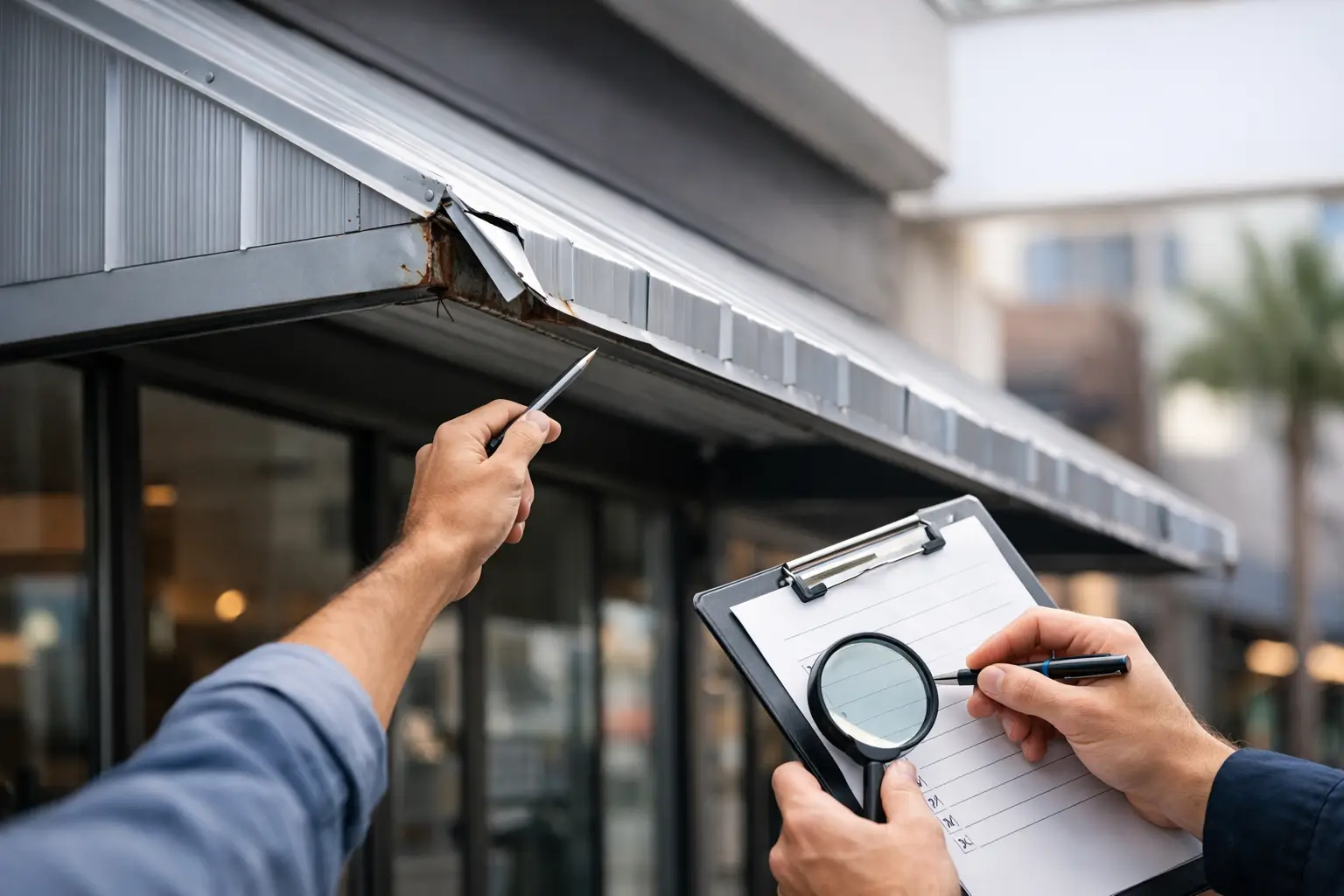
A shop awning can look sound from the footpath while problems are building behind the fascia, at the wall connection, or above the ceiling line. This shop awning defects checklist gives owners, tenants and property managers a practical way to spot warning signs before they become a public safety issue, a water-damaged shopfront, or an urgent repair bill.
The aim is not to turn a visual check into a structural inspection. It is to identify what needs prompt attention and when to bring in an experienced commercial awning contractor or engineer. If anything appears loose, distorted, heavily corroded or at risk of falling, keep people clear of the area and arrange professional assessment straight away.
Why shop awning checks should be routine
Shopfront awnings sit in a hard-working position. They take sun, wind, rain, vehicle fumes and vibration, while often carrying signage, lighting, drainage components and decades of paint layers. In Greater Sydney, a sudden heavy downpour can expose a drainage fault quickly, while coastal air can speed up corrosion on exposed metalwork.
The risk is not limited to an awning coming down. A small leak can rot timber framing, damage plasterboard or electrical fittings, stain stock, and create a slippery entry. Loose sheet metal, failed signage fixings and cracked soffit linings can also put pedestrians at risk below.
A sensible inspection is particularly worthwhile before signing a new lease, purchasing a commercial building, repainting a facade, fitting new signage, or starting shopfront works. It also makes good sense after severe weather, impact from a vehicle, or reports of water entering the premises.
Shop awning defects checklist: what to look for
Start from ground level in good daylight. Walk the full length of the frontage from both directions and look at the awning from across the street where possible. Take dated photos of any concern so changes can be tracked. Do not climb onto an awning, remove panels, or test loose sections by hand.
- Sagging, dipping or an uneven front edge. A straight awning should generally remain straight. A new dip may point to water ponding, bent steel, failed supports, deteriorated timber, or movement at the building connection. Even a slight change deserves investigation if it was not there previously.
- Rust, corrosion and blistering paint. Surface rust can often be treated as part of planned maintenance. Deep pitting, flaking steel, rust streaks below bolts, holes in sheet metal or corrosion at welded joints are more serious. Pay close attention to the fascia edge, posts, brackets, gutters and areas where water can sit unseen.
- Loose, missing or corroded fixings. Look for protruding bolts, missing screw heads, open fixing holes, cracked masonry around anchors and brackets pulling away from the wall. The wall connection is one of the most important parts of the structure. A freshly painted bracket is not proof that the steel behind it is sound.
- Water stains, drips and blocked drainage. Brown staining on the soffit, damp patches inside near the shopfront, mould, peeling paint, or water dripping from places other than the gutter all suggest drainage or waterproofing trouble. Check whether downpipes discharge properly and whether leaves or rubbish are blocking gutters. Persistent ponding adds weight and accelerates deterioration.
- Cracked, dented or loose cladding and soffit panels. Metal sheeting, aluminium composite panels and fibre cement linings can become loose at edges or around fasteners. Look for rattling in wind, lifted corners, gaps, cracks and panels that have dropped out of alignment. A loose panel over a public footpath requires urgent action.
- Timber decay and concealed movement. Older shop awnings may contain timber framing beneath metal cladding. Soft sections, swelling, fungal growth, recurring paint failure and a hollow or spongy appearance can indicate moisture damage. The real condition may not be visible until controlled opening-up work is carried out.
- Cracks at the wall, parapet or adjoining facade. Fine paint cracks are not always structural, but widening cracks, stepped brickwork cracks, separation between the awning and wall, or movement around support brackets should not be ignored. These signs may involve the building fabric as well as the awning itself.
- Signage, lights and services fixed to the awning. Added loads matter. Check that signs are not pulling on the fascia, light fittings are secure, and cables are protected from water and physical damage. A sign installed years after the awning can place load on components not designed to carry it.
Separate cosmetic wear from structural concerns
Not every defect means replacement is needed. Faded paint, minor surface marks and isolated sealant failure may be suited to scheduled maintenance. A contractor can clean, prepare and repaint surfaces, replace sealants, repair gutters or renew selected sheets where the supporting frame remains sound.
The decision changes when defects affect the structure, the wall fixing, or the safety of people below. Significant corrosion, recurring leaks from concealed framing, distorted beams, failed brackets and widespread timber rot can make patch repairs poor value. Repeated small repairs may cost more over time and leave the underlying risk unresolved.
This is where an honest site assessment matters. The practical answer may be a targeted repair, partial rebuild, full replacement, or safe demolition while a new compliant awning is designed. The right option depends on the age of the structure, how far the damage has spread, access conditions, current use of the tenancy and whether new signage or facade works are planned.
When an engineer should be involved
Arrange engineering advice where there is visible movement, significant corrosion, concern about load capacity, a change to the awning design, or uncertainty over the original construction. Engineering certification can be especially relevant for replacement awnings, altered support arrangements and structures carrying signs or other additional loads.
Avoid relying on assumptions such as “it has been there for years” or “it only leaks when rain is heavy”. Age does not confirm safety. Some defects progress slowly until a storm, wind event or extra loading exposes the weak point.
A qualified contractor can identify whether an engineer needs to inspect, help coordinate the required documentation, and plan work around public access. For an active shop, café or hospitality venue, this planning is as important as the repair itself. Pedestrian management, overhead protection, work zones, deliveries and trading hours all need to be considered before tools come out.
What to do when you find a defect
First, make the immediate area safe. If there is a risk of falling material, restrict access beneath the affected section and notify the property owner or manager without delay. Do not let staff improvise a repair with screws, timber props or tape. That can conceal the problem and create further risk.
Next, record the defect clearly. Note its location, when it was first noticed, whether it changes during rain or wind, and whether water is entering the shop. Photos taken from the ground and inside the tenancy are useful for comparing condition and obtaining an accurate quote.
Then organise a professional inspection that considers the full assembly, not just the visible damage. A proper assessment should look at the frame, cladding, fixings, drainage, wall connection and any attached signage. If access equipment or careful demolition is needed to expose concealed damage, that work should be planned and controlled rather than rushed.
Plan maintenance before it becomes an emergency
For most commercial properties, a visual check every six months is a practical starting point, with another check after severe weather. Buildings near the coast, older premises and awnings beneath large trees may need closer attention due to salt exposure, leaf build-up and constant moisture.
Keep gutters clear, address minor paint and sealant failures early, and avoid mounting new signs or equipment without checking how they are supported. Maintain a simple record of inspections, photographs and completed repairs. It gives property managers a useful history and helps contractors see whether a crack, stain or sag is getting worse.
Advanced Awnings works with commercial clients on shopfront awning repairs, replacement and safe removal where an existing structure has reached the end of its serviceable life. The best time to act is when a defect is still manageable, not when rain is coming through the ceiling or a loose panel has forced you to close off the entrance.