Awning Installation for Sydney Shopfronts
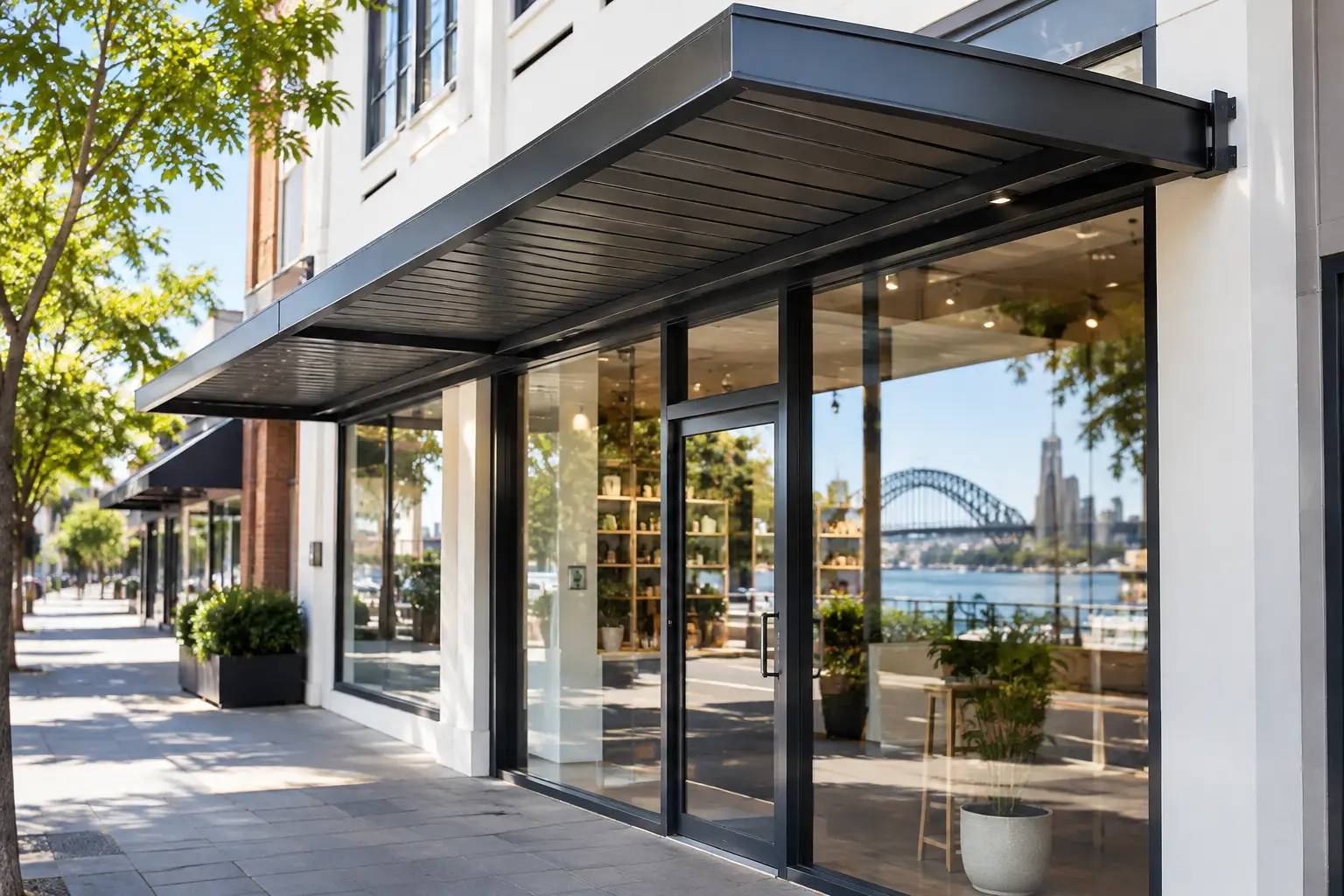
A shopfront awning has to do more than look right on opening day. It needs to handle weather, protect customers at the entry, suit the building structure and stand up to years of exposure over a busy footpath. Professional awning installation is where those requirements come together - before steel is fixed, cladding is fitted or a site is closed off.
For commercial premises, a poorly planned awning can create expensive problems. Water may run back towards the façade, fixings may not suit the wall structure, signage can be obstructed, or the work may create public safety risks during installation. Getting the details right early keeps the job moving and helps protect the property over the long term.
Start with the building, not the awning
Every commercial awning installation should begin with a proper site inspection. The shape and size of the proposed awning matter, but the existing building is the starting point. A solid brick wall, concrete façade, steel frame and lightweight shopfront each require a different approach to fixing and load support.
The installer needs to assess the condition of the wall, available fixing points, services behind the façade, access from the street and the clearance needed above the footpath. Existing signs, air-conditioning units, lights, gutters and neighbouring tenancies can all affect the final design.
This is also the point to identify whether an old awning needs repair, replacement or full demolition. In some cases, the existing frame can be retained and reclad. In others, corrosion, water damage or unsuitable old fixings mean removal is the safer option. Reusing a structure may reduce cost, but only where its condition and suitability have been properly checked.
Match the awning to how the premises operate
A café with outdoor seating has different needs from a retail tenancy with a narrow street frontage. A loading entrance may need clear vehicle access, while a medical practice may prioritise weather protection at the doorway. The best solution is one that works for customers, staff and building maintenance - not simply the largest canopy that will fit on the façade.
Consider where rainwater will discharge, how far the awning projects, whether it will affect sightlines from the street and how it will work with signs, lighting and security cameras. A neat finish matters, but practical operation matters just as much.
Safety comes first during awning installation
Commercial awning work is often carried out above active pedestrian areas, parked vehicles and operating businesses. That makes site control a central part of the job, not an afterthought.
A competent contractor will plan access equipment, exclusion zones, material handling and pedestrian management before starting work. Depending on the location and scope, this can involve barriers, spotters, elevated work platforms, temporary footpath controls and scheduled work outside peak trading times.
Demolition requires particular care. Old shopfront awnings can hide corrosion, weakened brackets or materials that do not behave as expected once fixings are removed. Sections must be supported and dismantled in a controlled order. Dropping materials onto the footpath or working around the public without proper controls is never acceptable.
For landlords and property managers, this planning reduces disruption and protects against avoidable risk. For business owners, it means the job can be coordinated around trading hours where practical, rather than leaving the shopfront exposed for longer than necessary.
Engineering and compliance should be addressed early
Some awning installations require engineering input or certification, particularly where there are substantial projections, structural steel components, unusual façade conditions or changes to an existing structure. Requirements can also vary depending on the site, building classification and local approvals.
The key point is not to assume that a replacement awning can simply be installed the same way as the old one. Older structures may have been built under different standards, and a new awning may create different loads or use different materials. An experienced specialist can identify when engineering advice is needed and coordinate the work accordingly.
Clear drawings, measurements and scope details also help avoid disputes later. They confirm what is being supplied, where the awning starts and finishes, what cladding or roofing material is included, and whether associated works such as fascia, gutters, signage removal or making good are part of the quote.
Choosing materials that suit a commercial façade
Material selection affects appearance, lifespan, maintenance and cost. Steel framing is commonly used for strength and durability, while aluminium components can suit particular designs where lower weight or corrosion resistance is useful. The roof and fascia finish may be selected to match the building, business branding or surrounding streetscape.
There is no single best material for every job. A highly visible retail frontage may justify a more detailed fascia finish, while a rear service entry may call for a straightforward, hard-wearing canopy. Coastal exposure, direct sun, wind and rain should also be considered. Materials that look fine in a protected location may require more maintenance on an exposed corner site.
Good drainage is just as important as the visible finish. Water needs a clear path off the awning and away from the façade, entry points and pedestrian areas. Poor falls, blocked gutters and undersized outlets can lead to staining, leaks and deterioration around the building line.
What a clear awning installation quote should cover
A quote should give you more than a figure at the bottom of the page. It should make the work easy to understand. For a commercial project, the scope should set out the proposed awning size, framing approach, roofing or cladding finish, access arrangements and any demolition or removal work.
It should also identify exclusions and site assumptions. For example, engineering, council approvals, electrical relocation, signage works or unexpected façade repairs may sit outside a standard installation scope unless specifically included. Being direct about these items from the start is better than finding them halfway through the job.
Before accepting a quote, ask how the contractor will manage public safety, protect the shopfront, remove rubbish and deal with access restrictions. Check that appropriate insurance is in place and ask whether certification support is available where the project requires it. These are practical checks that separate a planned commercial job from a rushed installation.
The value of specialist workmanship
Shopfront awnings sit in full view every day. Crooked lines, rough flashing, poorly aligned fascia and untidy sealant stand out quickly. More importantly, poor workmanship can allow water into the building or shorten the life of the structure.
Specialist experience helps because commercial awnings involve more than fixing a cover above a doorway. The work has to account for existing buildings, public areas, weather exposure, access constraints and the need to leave the premises looking professional when the site is packed down.
At Advanced Awnings, the focus is on practical project delivery: assessing the existing structure, planning safe access, completing the installation properly and keeping clients informed from quote through to finish. That approach is particularly valuable where an old awning needs to be removed before a new shopfront canopy can be installed.
After installation: protect the investment
A new awning should not be ignored once the installers leave. Regular visual checks can catch small issues before they become repairs. Look for debris in gutters, loose fasteners, damaged cladding, signs of water staining and corrosion around joints or fixings.
After heavy rain or strong winds, inspect the awning from a safe position and report any concerns early. Do not attempt to climb onto the structure or make makeshift repairs above a public area. A minor leak or loose section is easier and less costly to address before it affects the façade, ceiling or footpath below.
A well-built commercial awning gives a premises a stronger street presence while providing real protection for customers and staff. The right result comes from careful measurement, sound materials, safe site management and workmanship that holds up long after the barriers are removed. If your shopfront needs a new awning, replacement or repair, start with a clear site assessment and a quote that explains exactly how the work will be done.