
Best Commercial Awning Drainage Solutions
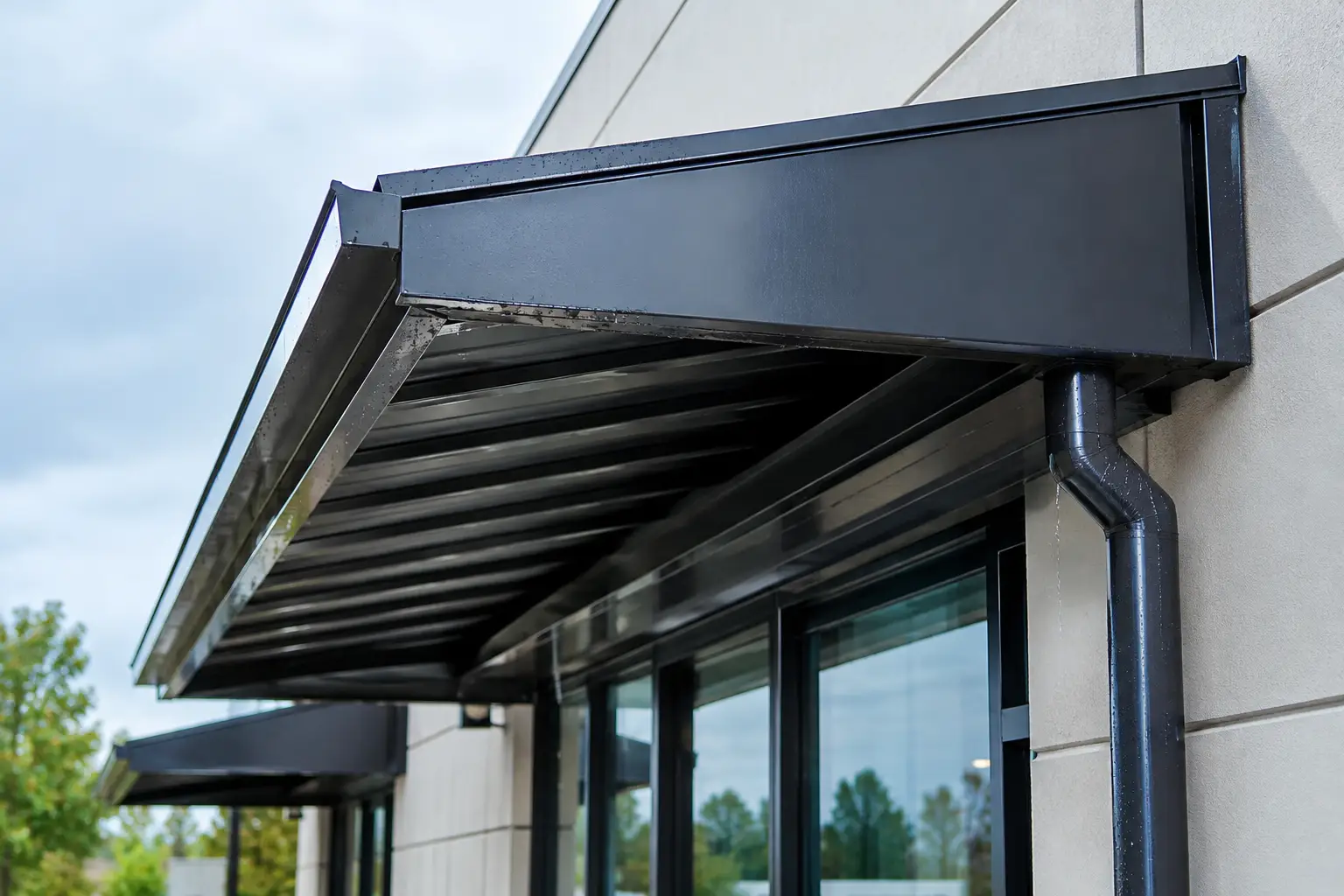
A shop front awning can look solid from the street while quietly sending water into the wrong place. Overflowing edges, stained fascia panels, dripping entryways and water pooling on the footpath are usually drainage problems, not just maintenance issues. The best commercial awning drainage solutions move rainwater away from the building, customers and public areas without compromising the awning’s finish, strength or street appeal.
For commercial properties, poor drainage can become expensive quickly. Water can work behind flashings, mark cladding, damage signage and create slip hazards at entrances. A practical drainage design needs to suit the awning’s size, roof fall, existing stormwater system and the amount of exposure the site receives.
Start with the awning fall
Drainage begins with the pitch of the awning. Water needs a clear path to the front edge or nominated collection point. If the fall is too shallow, water can sit on the roof surface, collect around fixings and eventually find its way through joints. If it is too steep, the awning may not suit the frontage, signage layout or required head clearance.
There is no single pitch that works for every shop front. A compact entry canopy and a long steel-framed awning over a hospitality venue have different structural and drainage demands. The roof material matters too. Metal sheeting, polycarbonate panels and custom folded cladding all need appropriate laps, flashings and support spacing to prevent ponding.
On an existing awning, standing water after rain is a clear sign that the fall should be checked. It may be caused by settlement, damaged brackets, a bent frame, blocked outlets or previous repair work that has altered the roof line. Simply sealing the visible leak may not solve the cause.
Best commercial awning drainage solutions for shop fronts
The right option depends on the awning type and where the water can legally and safely discharge. In most cases, a properly formed gutter and downpipe system is the most reliable approach, but the details make the difference.
Front-edge box gutters
A box gutter is built into or positioned along the lower front edge of an awning. It collects runoff across the full length of the roof and directs it towards one or more outlets. This is a common choice for broad commercial awnings because it keeps water collection neat and can be integrated into the fascia line.
Box gutters suit premises where a clean, squared-off shop front appearance is required. They also allow the gutter capacity to be matched to a large catchment area. The trade-off is access. If the gutter is enclosed behind fascia cladding with no practical way to inspect or clean it, leaves and rubbish can build up unnoticed. A good installation considers maintenance access from the start.
External quad or half-round gutters
External gutters are fixed along the awning edge and remain visible from below or the street. They are often a sensible option for repairs, replacements and straightforward installations where a concealed system is not necessary.
Their main advantage is easy inspection. A property manager or maintenance contractor can quickly see whether a gutter is holding leaves, overflowing or sagging. External gutters can also be easier to replace than a concealed box gutter. On the other hand, they need to be selected and fixed carefully so they look appropriate on a customer-facing frontage and do not interfere with signs, lighting or roller shutters.
Concealed gutters with internal outlets
For a more streamlined architectural finish, drainage can be concealed within the awning fascia or structure. Water enters an internal gutter and exits through outlets connected to downpipes, often hidden within posts, wall sections or purpose-built covers.
This approach can produce a clean result for higher-profile retail, hospitality and commercial fit-outs. It is not automatically the best answer, however. Concealed drainage relies on proper falls, adequately sized outlets, reliable waterproofing and accessible inspection points. A hidden blockage is still a blockage, and it can cause water to back up before anyone sees it.
Downpipes connected to stormwater
Gutters only collect the water. Downpipes carry it away. On many commercial sites, the most dependable arrangement is to connect downpipes into an approved stormwater system, subject to the building layout and site requirements.
Downpipes should be positioned where they will not obstruct access, create a hazard near doorways or spoil the frontage. They must also be sized for the roof area and expected rainfall, particularly where a large awning drains to only one outlet. A narrow downpipe may look tidy but can struggle in a heavy Sydney downpour.
Where a downpipe runs at the front of a tenancy, it needs protection from foot traffic, trolleys and deliveries. In busy retail and hospitality settings, a damaged downpipe can quickly become both a drainage issue and a sharp-edge risk.
Scuppers and directed discharge points
A scupper is an opening through a parapet, fascia or gutter edge that lets water discharge into a downpipe, rainhead or controlled outlet. It can work well where the awning meets an existing wall or where conventional gutter placement is limited.
Scuppers must not discharge water onto a public footpath, neighbouring property or building entry. Water that spills straight from an awning edge may seem harmless until it creates a wet, slippery patch during trading hours. Directed discharge needs to be planned around pedestrians, access paths and the surrounding drainage system.
Do not treat flashing as an afterthought
Many awning leaks start where the awning meets the building rather than at the gutter. Wall flashings need to direct water over the roof surface, not behind it. If flashing is poorly lapped, lightly sealed or fixed into deteriorated wall material, water can travel behind the awning and enter the façade.
This is especially relevant when replacing an old shop front awning. Removing the existing structure can expose cracked render, failed sealant, corroded fixings or previous patch repairs. The new awning should not be installed over unresolved defects. Proper preparation and flashing work protect the building as well as the awning.
Allow for maintenance before the first storm
Commercial awnings collect more than rainwater. Leaves, takeaway packaging, dust, bird nests and construction debris can all block gutters and outlets. Sites near trees, busy roads or upper-level balconies generally need more regular checks.
A simple maintenance plan is usually enough: inspect gutters and outlets before wetter periods, clear visible debris, check for staining around flashings and look for drips after heavy rain. If water is overflowing, do not assume the gutter only needs cleaning. Check whether the gutter has enough fall, whether outlets are undersized, or whether the awning roof is holding water further back.
For tenanted properties, responsibility should be clear. A tenant may notice an issue first, but the owner or manager often needs to arrange repairs to the awning structure and stormwater connection. Delays can turn a minor overflow into damaged ceilings, signage or façade finishes.
Repairs versus replacement
Not every drainage problem requires a new awning. Localised corrosion, loose brackets, a failed outlet or damaged flashing can often be repaired where the main frame remains sound. Targeted repair work can restore drainage and extend the life of the existing structure.
Replacement is worth considering when the awning has widespread rust, repeated leaks, poor roof fall, unstable supports or drainage that was never properly designed. Trying to patch several underlying problems can cost more over time than replacing the system with a correctly built awning, guttering and downpipe arrangement.
Before work starts, the condition of the structure should be assessed properly. Commercial awnings sit above staff, customers and passers-by, so repairs, demolition and replacement need to be planned with public safety in mind. For larger or more complex structures, engineering input and certification may also be required.
Choose drainage that suits the whole frontage
The best drainage solution is not the one with the most hidden components or the lowest upfront price. It is the one that suits the awning’s roof area, structural design, building connection and maintenance access, while keeping water off the entry and away from the public.
For Sydney shop fronts, that often means a properly pitched roof, adequately sized gutter, secure downpipes and sound flashing installed as one coordinated system. Advanced Awnings can assess existing drainage issues or build a new commercial awning with the practical details sorted before the next heavy rain puts the frontage to the test.