
How to Replace Rusted Awnings Properly
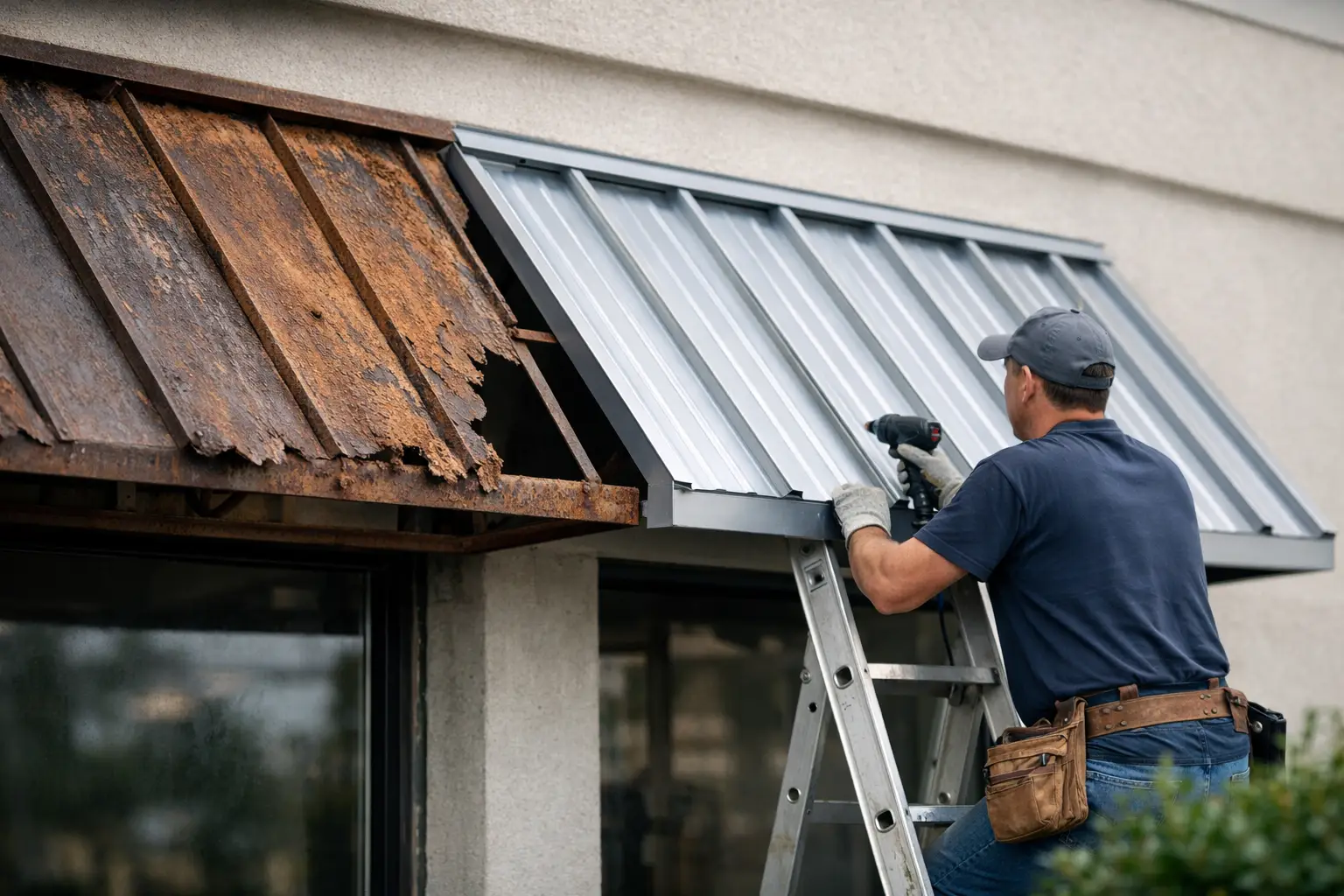
A rusted shopfront awning rarely fails all at once. It usually starts with staining at joints, bubbling paint, swollen fixings, or sheet edges that no longer sit straight. If you are looking up how to replace rusted awnings, the main issue is not just appearance. It is whether the structure is still safe above a public entry, whether water is getting into the building, and whether a patch-up job is now costing more than a proper replacement.
For commercial premises, the stakes are higher than they are on a house. You have pedestrians under the awning, tenants trading beneath it, and often an ageing structure tied into an older facade. That means replacement needs to be approached as a construction job, not a handyman task.
How to replace rusted awnings without creating bigger problems
The first step is working out whether you are dealing with surface rust, localised steel failure, or a broader structural issue. These are not the same thing. A bit of corrosion on a non-structural trim section may be repairable. Rust at welded connections, support arms, brackets, fascia framing, or points where water has been sitting for years is a different story.
A proper assessment should look at the awning frame, roof sheeting, box guttering if present, fascia, underside lining, fixings, and the wall connections back to the building. In commercial settings, rust often shows itself in the visible parts first, while the more serious damage sits behind the cladding or in concealed steel.
If the awning has sagging sections, movement in windy conditions, cracking around connection points, or active water entry into the tenancy, replacement is generally the safer path. Once corrosion has reduced the integrity of the steel, repainting over it does not solve much.
Start with a site inspection, not a materials order
A common mistake is jumping straight to pricing new sheets or a fresh fascia. That only works if the frame underneath is sound. In many older shopfront awnings, the visible roof covering is not the main problem. The issue is the support structure and how it connects to the building.
A site inspection should confirm the awning dimensions, access conditions, public exposure, existing steel condition, drainage issues, and whether the replacement will be like-for-like or upgraded. This is also the point where you check if engineering input or council requirements may apply. It depends on the size of the structure, the building type, and how much of the existing awning is being removed and rebuilt.
When repair stops being cost-effective
Some rusted awnings can be repaired, but commercial clients usually need to look at value over time, not just the cheapest immediate fix. If you are replacing sheets, patching corroded steel, repainting, and revisiting leaks every wet season, you are still carrying the risk of a tired awning over a public area.
Replacement is often the better option when corrosion is widespread, when water drainage has failed, or when different parts of the awning have already been patched over several times. It also makes sense when the frontage needs to present properly again. A rusted, uneven awning can drag down the whole look of a premises, even if the business inside is well run.
The trade-off is upfront cost and project coordination. Replacement takes planning, safe demolition, fabrication, and installation. But done properly, it resets the lifespan of the structure and removes the guesswork around what is happening behind old cladding.
Signs your awning needs full replacement
There are a few red flags that usually point past repair. One is rust bleeding through multiple sections of fascia or soffit lining. Another is repeated leaks even after sealing works. Distorted steel members, loose fixings, visible holes in sheet metal, and corrosion around welded connections also matter.
If pieces are at risk of coming loose above the footpath, the issue becomes urgent. Public safety comes first, and temporary make-safe work may be needed before a full replacement can be organised.
The real process behind replacing a rusted commercial awning
If you want to know how to replace rusted awnings properly, the process usually runs in five parts: assessment, make-safe planning, demolition, fabrication, and installation. Each one matters.
Assessment confirms what can stay and what must go. Make-safe planning deals with hoardings, exclusion zones, access equipment, and how to protect the public and the shopfront below. Demolition removes the compromised awning without damaging the facade or leaving hazards behind. Fabrication is where the replacement structure is built to suit the site. Installation then brings everything together, including waterproofing, finishing, and final checks.
For occupied commercial sites, staging is important. Some jobs can be sequenced to limit downtime. Others need after-hours work or temporary weather protection so the business can keep trading. That depends on the tenancy, frontage conditions, and how exposed the entry is during removal.
Demolition has to be controlled
Old awnings are often heavier and more unpredictable than they look. Rust can weaken one area while another remains rigid, which creates awkward loads during removal. That is why demolition should be planned around the actual structure, not treated as simple strip-out work.
Safe removal usually involves isolating loose elements first, progressively dismantling roofing and linings, then dealing with the steel frame in a controlled sequence. On a busy street, pedestrian management and site protection are just as important as the physical removal itself.
Replacement materials need to suit the environment
The best replacement is not always a direct copy of the old awning. If the previous design trapped water, lacked proper falls, or used details that encouraged corrosion, rebuilding it exactly the same way just repeats the problem.
This is where good fabrication and detailing matter. Galvanised or appropriately protected structural steel, suitable roofing and fascia materials, proper flashings, and better water run-off all help. In coastal or high-exposure areas, material selection becomes even more important. A cheaper finish may save money at the start and cost more in maintenance not long after.
Compliance, certification, and who should handle the job
Commercial awning replacement sits in a different category to general maintenance. There may be structural considerations, public liability exposure, access issues, and compliance requirements that need to be addressed before works begin. If the awning projects over a public area or forms part of a larger facade arrangement, the project should be handled by a contractor who understands that environment.
That means proper insurance, safe work methods, and where required, engineer involvement. It also means clear quoting so the owner or property manager knows what is included - demolition, disposal, fabrication, installation, finishes, and any make-safe measures.
For builders and property managers, the practical question is simple: can the contractor manage the whole job cleanly and safely, or are you left coordinating separate trades and carrying the risk between them? End-to-end delivery usually saves time and headaches, especially on older sites where hidden issues are common.
What property owners should check before approving replacement
Before signing off on the job, ask what is actually being replaced, what remains, how drainage is being handled, and what protections are in place for the public and tenancy. If certification is needed, confirm that early. If access is tight, ask how installation will be staged.
It is also worth checking whether the visible corrosion matches the internal condition. Sometimes the frame is worse than expected once linings come off. A realistic contractor will tell you that up front rather than promise a perfect price on incomplete information.
For Sydney shopfronts and hospitality venues, timing can also affect the job. Busy trading periods, neighbouring tenancies, traffic conditions, and footpath access can all shape how the replacement is programmed. Good planning keeps the project moving and reduces disruption.
A straight answer on how to replace rusted awnings
The short answer is this: inspect the full structure, make the site safe, remove the compromised awning in a controlled way, and install a properly fabricated replacement that suits the building and exposure conditions. If the awning sits over a public-facing commercial frontage, do not treat it like cosmetic maintenance.
A rusted awning is one of those building problems that tends to look manageable right up until it is not. The right time to replace it is before movement, falling material, or ongoing water damage forces your hand. If the structure is tired, the safest and most economical move is usually to do the job once and do it properly.