
Awning Works for Occupied Premises, Done Safely
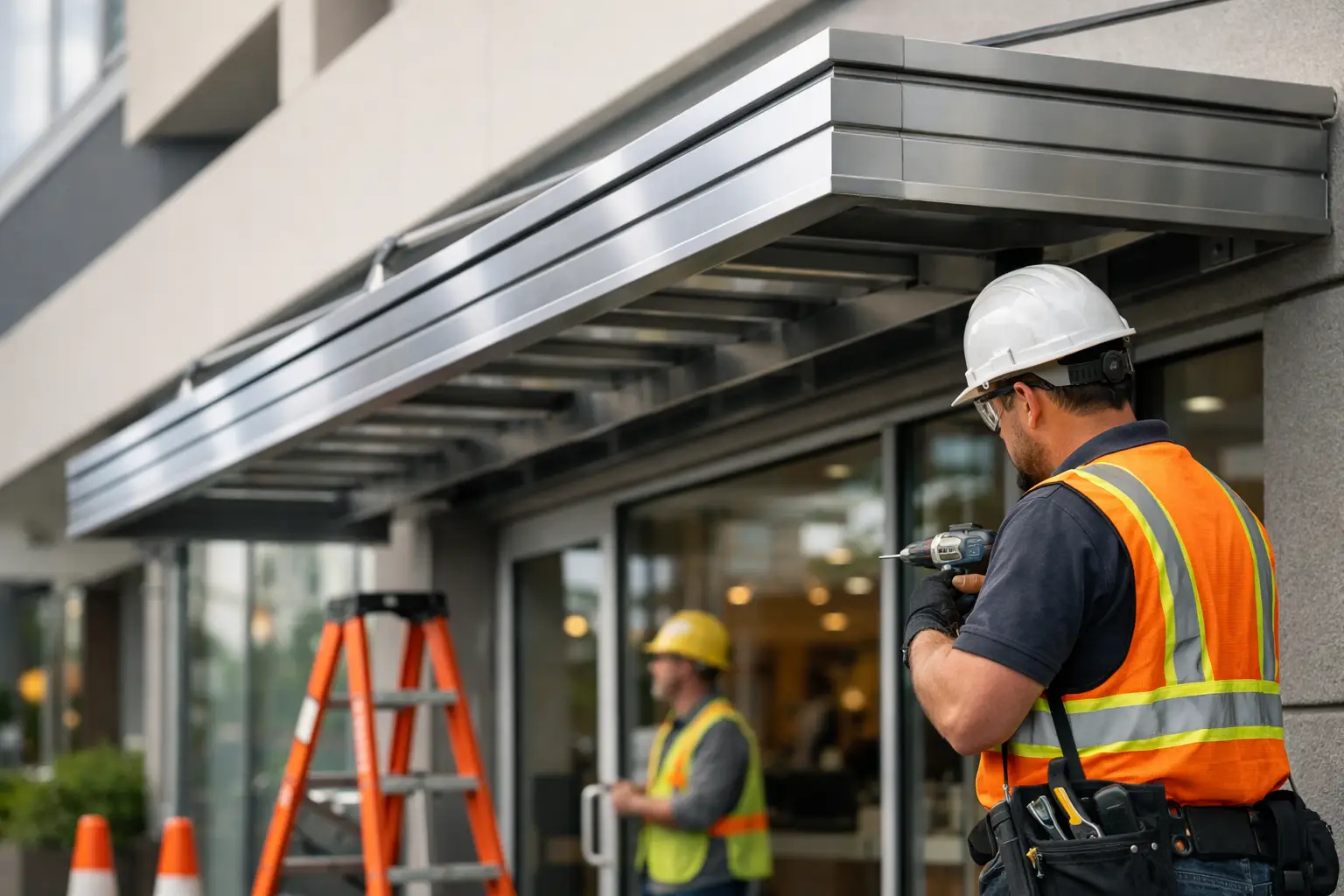
A shop does not stop being a workplace just because its awning needs attention. Awning works for occupied premises need to protect staff, customers, tenants and pedestrians while giving the building a properly finished, compliant result. That calls for more than turning up with tools. It requires a clear work plan, careful site control and tradespeople who understand live commercial environments.
For a street-facing business, the awning is often directly above the busiest part of the premises. It may cover customer entry, outdoor seating, display windows, delivery access or a public footpath. Whether the job involves repairs, replacement, new installation or demolition of an unsafe structure, the work needs to be planned around how the site actually operates.
What makes occupied-premises awning work different?
Working on an empty tenancy gives a contractor more room to move. Working above an operating shop, café, medical practice or office means every decision has an effect on people below. Access routes, noise, dust, falling-object risks and trading hours all need to be considered before work begins.
The main challenge is managing the interface between construction activity and the public. A loose fixing, deteriorated fascia or damaged support can be a safety issue in its own right. But removing or repairing it also creates temporary risk if the area is not properly isolated and controlled.
That is why the cheapest quote is not always the sensible choice. A contractor may be able to carry out the physical work quickly, but a proper commercial awning job also allows for safe access equipment, exclusion zones, protection of the shopfront, rubbish removal and clear communication with the people using the building.
Plan awning works for occupied premises before tools arrive
A site inspection should establish the awning's condition, construction and access requirements. The team needs to identify where supports are fixed, whether there are signs of corrosion or movement, and how the awning connects to the façade. Existing signs, lighting, wiring, air-conditioning units and drainage can all affect the scope.
Just as importantly, the inspection should cover the day-to-day operation of the premises. A retailer may need the front door accessible for most of the day. A hospitality venue may have a quiet period between breakfast and lunch that suits noisy work. A strata-managed building may require notice to tenants and approval for access through common areas.
There is no one timetable that suits every site. In some cases, work can be staged while the business remains open. In others, the safest option is to complete demolition, lifting or major fastening outside normal trading hours. The right approach depends on the awning size, its structural condition, the available work zone and how close customers are likely to be.
Agree on access and exclusion zones
The work area needs to be physically separated from staff, customers and passers-by. On a busy Sydney street, this can involve coordinating footpath access and setting up barriers, signage and overhead protection where required. The objective is simple: nobody should be able to walk beneath active overhead work.
Inside the premises, the contractor should confirm where workers can enter, where materials can be stored and which areas need protection. Window displays, furniture, stock and outdoor tables may need to be moved or covered. A short discussion before the job can prevent a great deal of disruption on the day.
Set realistic expectations on disruption
Awning works can involve drilling, grinding, lifting components and removing old materials. Even a straightforward repair can create brief periods of noise and restricted entry. Being upfront about this is better than promising a completely disruption-free job that cannot realistically be delivered.
A good contractor will explain the likely sequence of work, when the entry may need to close temporarily and when noisy activities are planned. The business owner or site manager can then brief staff, adjust bookings or arrange an alternate customer entry if needed.
Safety comes first during repairs, removal and replacement
An awning that has deteriorated from age, water ingress, impact damage or corrosion should not be treated as a cosmetic issue until it has been assessed. Commercial awnings carry weight, catch wind and sit above public areas. If fixings or supports have failed, the risk can be serious.
Demolition work deserves particular care. Old awnings can contain concealed damage that only becomes visible once linings, signs or flashings are removed. Components should be supported and removed in a controlled sequence, rather than cut loose or pulled down without a plan.
For occupied sites, the work crew must also maintain good housekeeping throughout the job. Offcuts, screws, sharp sheet metal and packaging cannot be left where staff or customers may come across them. The area should be checked regularly, not merely cleaned at the end of the day.
Where structural design or certification is needed, engineer involvement can provide the required assurance that the replacement structure, supports and fixings are suitable for the building and its intended loads. This is especially relevant for larger shopfront awnings, altered façades and jobs where the existing structure has raised concerns.
Keep the business trading where it is safe to do so
Many owners assume awning replacement automatically means closing the premises. That is not always the case. With sensible staging, a business can often keep operating for much of the work. The key phrase is ‘where it is safe to do so’.
For example, one part of a long frontage may be completed while another entrance remains open. A café may continue serving customers inside while outdoor seating is temporarily unavailable. A shop can schedule the most disruptive work before opening, after closing or during its quietest hours.
However, there are times when a short closure is the right call. If the main entry sits directly below lifting work, if a failing awning needs urgent removal, or if public access cannot be separated from the work zone, safety has to take priority. A professional recommendation should be based on the site conditions, not on a blanket promise to avoid downtime at any cost.
Choose materials and details that reduce future disruption
Replacement is a chance to fix the underlying causes of repeated maintenance. Water that tracks behind a poorly finished flashing, inadequate fall for drainage, low-grade fasteners or mismatched materials can all shorten an awning's service life.
A well-built commercial awning should suit the building, the frontage and the local exposure conditions. It should also allow practical access for future inspection and repairs. The finish matters too. Straight lines, tidy cladding, secure signage provisions and properly finished edges make a visible difference to the presentation of a business.
Property managers and landlords should think beyond the immediate repair cost. Spending properly on sound fabrication, installation and weatherproofing can reduce the likelihood of another urgent call-out that interrupts a tenant later. For operators, it protects the appearance of the premises and helps keep the entry safe and welcoming.
Communication keeps a live site under control
The most reliable occupied-premises projects are not necessarily the biggest. They are the ones where the contractor, owner, tenant and site manager know what is happening and who is responsible for each decision.
Before work starts, confirm the scope, timing, access arrangements and the person to contact if site conditions change. During the job, updates should be direct and practical. If hidden damage is found, it should be explained clearly with the available options, rather than covered up or turned into a surprise at the end.
Advanced Awnings approaches commercial awning work with that same practical focus: assess the site properly, protect the public, complete the work to a high standard and keep the client informed. After more than 20 years working on shopfront awnings, the value is in knowing that the details around the job matter as much as the finished structure.
If your awning needs repair, replacement or safe removal while the premises are still operating, start with a clear site assessment and a detailed quote. The right plan can keep disruption manageable without taking shortcuts on safety or workmanship.