
How to Protect Pedestrians During Awning Removal
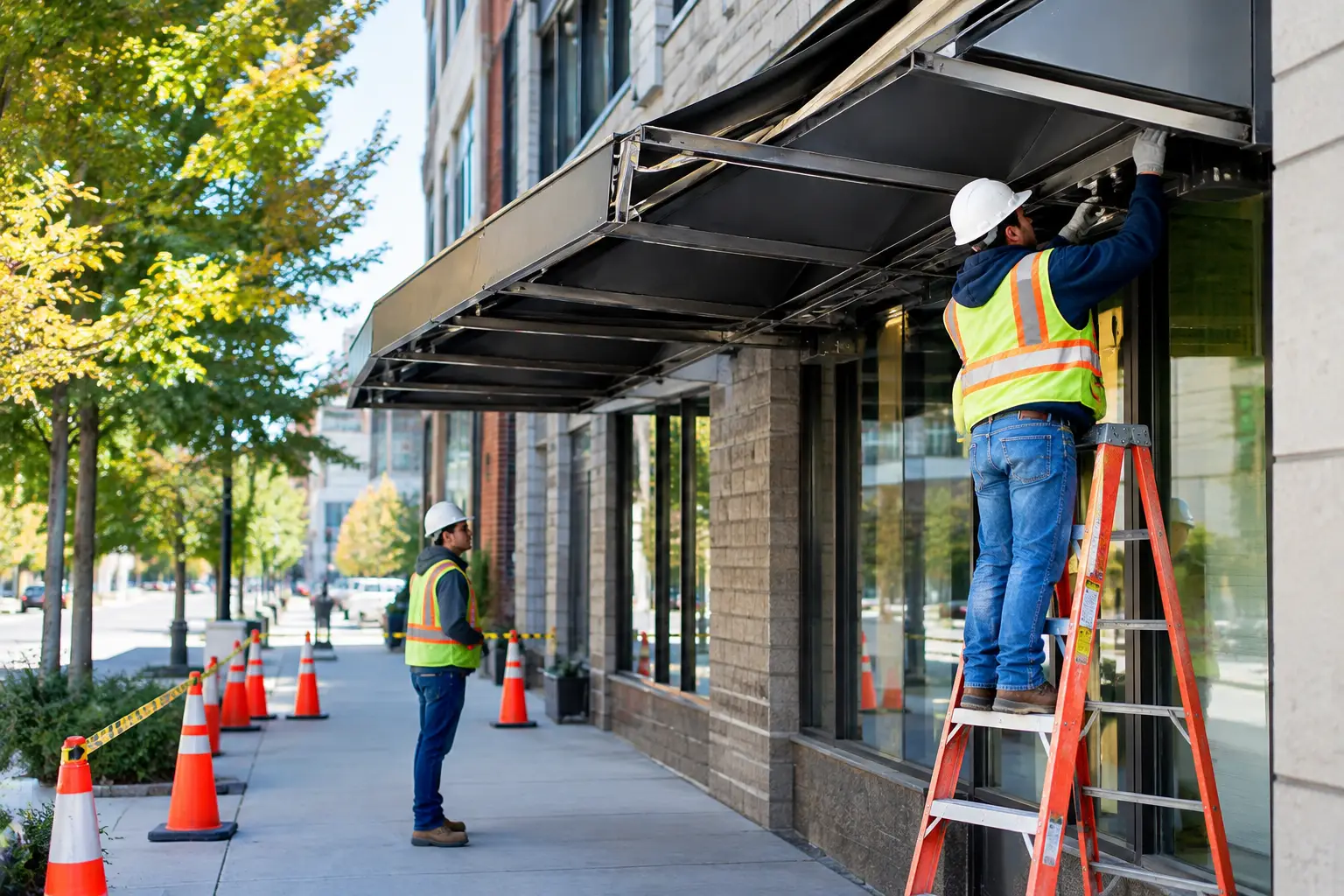
A shopfront awning can sit directly above a busy footpath, outdoor dining area or building entry. That makes demolition different from work contained behind a fence on a private site. To protect pedestrians during awning removal, the public must be treated as part of the work area from the first inspection through to final clean-up. A falling sheet, loose sign panel or poorly managed diversion can cause serious harm in seconds.
For landlords, builders and business owners, the safest outcome comes from appointing a contractor that understands both structural removal and public-facing site control. The job is not simply to pull down an old awning. It is to isolate the risk, remove the structure in a controlled sequence, and keep the premises accessible where it is safe to do so.
Start with a site-specific removal plan
No two awnings come down the same way. A lightweight aluminium canopy fixed to a modern shopfront presents different risks to a deep steel-framed heritage-style awning, particularly where the frame is tied into masonry, fascia or an upper-level façade. Condition matters too. Rusted connections, water-damaged timber, cracked welds and loose cladding can change how the structure behaves once removal starts.
Before work begins, the contractor should inspect the awning, its fixings and the area below it. The plan needs to identify overhead hazards, likely drop zones, access for equipment, nearby power lines, vehicle movements, neighbouring tenancies and public access points. It should also set out the removal sequence. In most cases, cladding, gutters, signage, lighting and other loose components are removed before the main frame is dismantled in manageable sections.
This planning stage is where shortcuts are most costly. Cutting a support before the load path is understood can make a section move unexpectedly. If the awning appears unstable, work may need to stop while temporary support, engineering advice or a different removal method is arranged. That can affect programme and cost, but it is the right call.
Check approvals and responsibilities early
Work over or beside a public footpath may require approval from the relevant local council or road authority, especially if the footpath needs to be occupied, partially closed or diverted. Requirements vary across Greater Sydney, so they should be checked well before the work date.
The property owner or project manager should also confirm who is responsible for permits, traffic management, notifications and reinstatement. A clear scope avoids the common problem of a crew arriving ready to work while access controls or approvals are still missing.
Create a real exclusion zone below the awning
A few witches hats and caution tape do not provide adequate protection beneath demolition work. The public needs a physical, clearly defined barrier that keeps people outside the potential drop area. The size of that zone depends on the height of the awning, the demolition method, the condition of materials and the possibility of debris bouncing or rolling beyond the immediate footprint.
Solid temporary fencing, barricades and suitable overhead protection may be required. The correct measure depends on the site. On a narrow retail strip, fully closing the footpath for a short, controlled period may be safer than trying to maintain a thin pedestrian corridor beside overhead work. On a wider street, a protected diversion route may be practical.
The key point is simple: pedestrians must not be asked to walk beneath active removal work. This includes customers heading to the shop, delivery drivers, people leaving adjoining businesses and residents using the street as normal.
Where access to a tenancy must remain open, coordinate the work around trading hours or use a separate safe entry that is clearly signed and supervised. Hospitality venues need particular attention because diners, staff and deliveries often move in and out throughout the day. If a safe route cannot be maintained, temporary closure is often the better option.
Use clear pedestrian and traffic controls
People do not always follow signs, especially in busy retail areas. Some will step around barriers, look at their mobile, or assume the work is finished because the crew is temporarily out of sight. Good controls account for normal human behaviour rather than relying on perfect compliance.
Signs should be placed early enough that pedestrians can choose another route before reaching the work zone. They need plain language, visible placement and a logical diversion. A sign that directs someone across a road without a safe crossing point creates a new problem rather than solving one.
Where the work affects vehicle lanes, loading areas or a busy driveway, a traffic management plan and trained traffic controllers may be necessary. This is particularly relevant where a crane, elevated work platform, truck or rubbish skip is positioned near the kerb. Pedestrian controls and vehicle controls must work together. A protected footpath is of limited value if reversing vehicles can enter it without oversight.
Remove materials in controlled sections
The safest demolition method is generally progressive, not forceful. Components should be disconnected, supported and lowered rather than allowed to fall. Larger steel members may need lifting equipment, tag lines and a designated landing area. Smaller sheets and trims can still become dangerous in wind or when released from high level, so they need to be handled with the same discipline.
Workers should not throw materials into a skip or onto the ground. Apart from the risk to pedestrians, this can send sharp fragments outside the exclusion zone, damage paving and create trip hazards. Debris should be lowered, stacked safely or placed directly into a suitable bin.
Weather can change the plan. Strong wind makes sheet metal, sign faces and long lengths of flashing difficult to control. Rain can make elevated work surfaces slippery, while poor light reduces visibility around barriers and access routes. A reliable contractor monitors conditions and pauses the task when controls are no longer effective. Finishing an hour later is preferable to taking a chance with the public below.
Keep the work area clean as the job progresses
Public safety does not end once the last bracket is removed. Offcuts, fasteners, broken cladding, silicone tubes and dust can all create hazards on a shopfront footpath. Regular housekeeping prevents rubbish building up around the barriers and makes it easier for the supervisor to see whether the exclusion zone remains secure.
At the end of each shift, the site should be left stable. Any remaining structure must be secured, exposed fixings made safe, and the public route either restored or properly protected until work resumes. Temporary fencing should be checked after hours, particularly in high-traffic areas where it may be moved, bumped or tampered with.
Communicate with the people affected
Good communication reduces conflict and improves safety. Let the tenant, adjoining businesses and building occupants know when noisy work, access changes or footpath restrictions are expected. For a retail premises, this gives staff time to advise customers, adjust deliveries and plan around the disruption.
On site, one person should be responsible for monitoring the work zone and responding if a member of the public approaches a barrier or needs assistance. This is not an optional extra on a tight street frontage. Crews focused on cutting, lifting or lowering materials cannot safely manage public interactions at the same time.
The supervisor should also hold brief pre-start discussions with the team. Everyone needs to understand the exclusion zone, lifting sequence, emergency response, communication signals and stop-work authority. If conditions change, the controls should be reviewed before work continues.
Choose experience over the cheapest demolition quote
Awning removal can look straightforward until old fixings fail, hidden damage is exposed or the footpath becomes crowded. The lowest quote may not allow for proper pedestrian management, suitable access equipment, insurance, waste handling or enough labour to lower materials safely.
Ask practical questions before appointing a contractor. How will the public be separated from the work? Is footpath occupation required? What happens if the awning is found to be unstable? Who manages traffic controls and clean-up? A contractor with clear answers is more likely to have considered the real conditions of the site.
Advanced Awnings approaches shopfront demolition with the same attention needed for installation and replacement work: assess the structure, plan the sequence, protect the public, and leave the frontage ready for the next stage. That is the standard commercial property owners should expect.
A well-managed removal may briefly inconvenience the footpath, but it protects people, reduces liability and keeps the project moving without an avoidable incident. When an old awning has to come down, make public safety the first item on the scope, not an afterthought once work has started.