Top Signs of Canopy Corrosion on Shopfronts
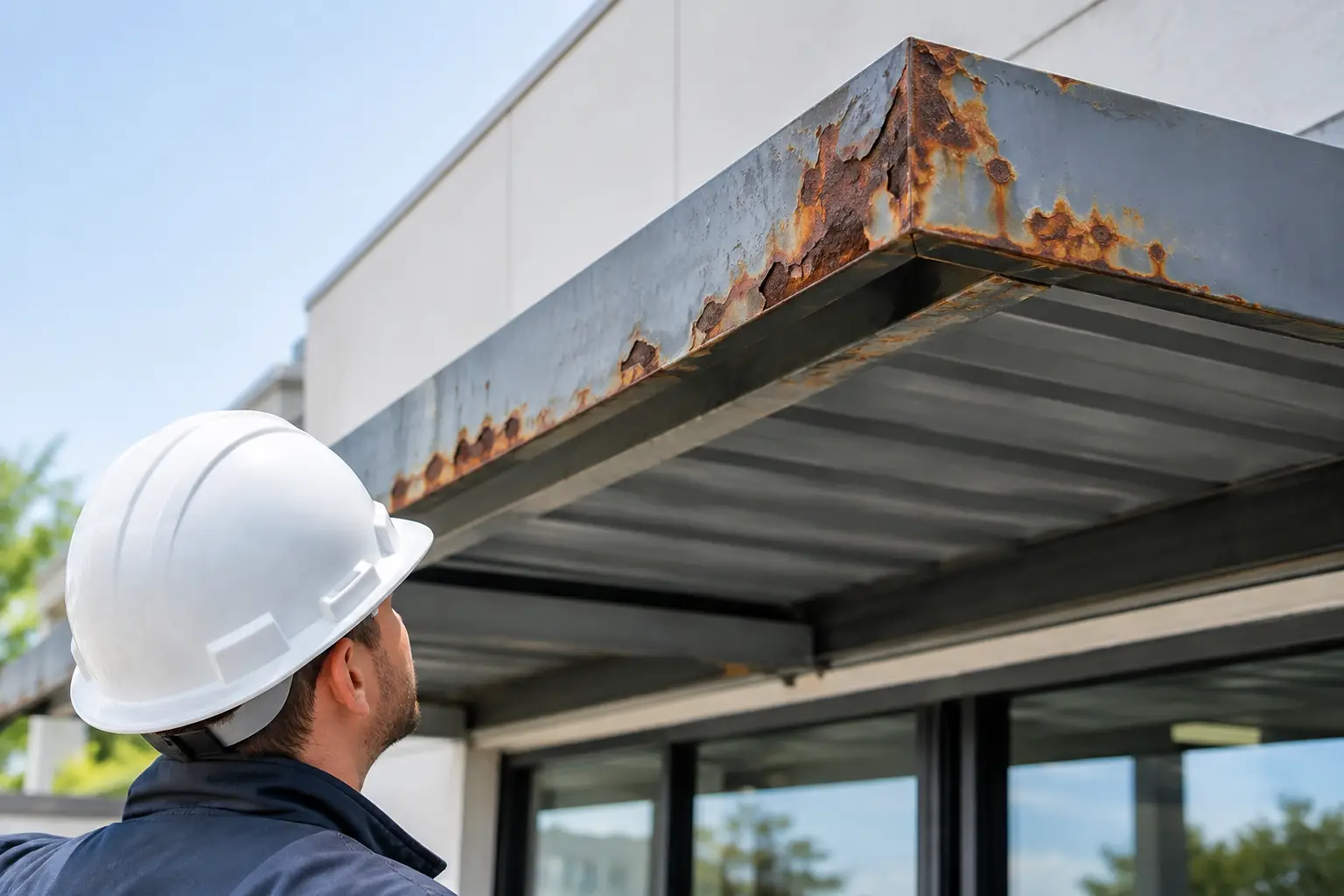
A shopfront canopy can look sound from the street while corrosion is working away behind the fascia, at roof joints or around fixings. The top signs of canopy corrosion are not always dramatic at first, but leaving them unchecked can lead to water damage, loose cladding, weakened steel and a real risk to people using the footpath below.
For landlords, shop owners and property managers, the right response is early inspection and practical repair planning. A small rust issue is often manageable. Once corrosion reaches structural members or fixing points, the scope, cost and safety controls can change quickly.
Top Signs of Canopy Corrosion to Watch For
Rust streaks and staining below the canopy
Brown or orange staining on the fascia, wall face, soffit lining or shopfront glazing is one of the clearest early warnings. Water carries rust from exposed steel, failed fasteners or corroding joints, often leaving marks some distance from the actual source.
Do not assume a clean or painted-over surface has solved the problem. If staining returns after rain, water is still getting in. The source may be a split flashing, blocked drainage point, damaged sealant or a joint where the protective coating has broken down.
Bubbling paint, lifting coatings and flaking surfaces
Protective paint and coatings are there to keep moisture away from metal. When they blister, crack or peel, corrosion can begin beneath the surface before visible rust becomes extensive.
Pay close attention to edges, folded sections, welded areas, bolt heads and places where different materials meet. These are common weak points. On older commercial awnings, repeated movement, water exposure and past patch repairs can all compromise the coating system.
A localised coating failure may only need proper surface preparation and recoating. If the metal underneath has thinned or deteriorated, painting alone is not a repair.
Swelling, distortion or holes in metal sections
Rust takes up more volume than the original steel. That means corrosion can push sheets apart, distort a fascia, open seams and cause lining panels to sit unevenly. In more advanced cases, the steel can become pitted or perforated.
Any visible hole, soft section or warped metal deserves prompt attention. It can allow more water into the canopy and may indicate that the damage extends behind the visible surface. A neat-looking fascia can conceal badly corroded framing, particularly where the canopy slopes back towards the building.
Loose fixings, brackets or cladding
Bolts, screws, rivets and brackets are small components with a big job. If corrosion affects them, a canopy panel or sign fascia may no longer be properly secured. Look for missing fasteners, rusted bolt heads, enlarged fixing holes, rattling sheets or sections that move in the wind.
This is not a maintenance issue to leave for the next tenancy refresh. Loose material above a public entrance or footpath must be treated as a safety concern. Keep people clear of the affected area where practical and arrange an experienced contractor to assess it. Do not climb a ladder or pull at loose sections yourself.
Water leaks, damp linings and recurring ceiling damage
A leak does not always mean corrosion, but persistent water entry often creates the conditions for it. Damp patches, sagging soffit linings, mould, drips near the shopfront and recurring ceiling stains can point to failed canopy drainage or degraded roof sheeting.
The visible lining may only be the first part to fail. Moisture trapped above it can attack steel supports, timber packing, electrical components and fixings. If a canopy leaks after heavy rain, investigate the water path rather than simply replacing stained lining boards.
Rust around welds and connections to the building
The connection between the canopy and the building is one of the most critical areas to inspect. Corrosion around welded brackets, support arms, wall plates or structural fixings can affect how the canopy transfers its load back to the building.
These areas can be hard to see from ground level, which is why a close inspection matters. A qualified contractor can check whether the concern is limited to superficial rust or whether there is section loss, cracking, movement or damage that requires engineering input.
Unusual movement, noise or sagging
A sound canopy should not noticeably bounce, sag or rattle in ordinary conditions. Movement in wind, new creaking noises or a visible low point can mean water has added weight, fixings have loosened or framing has deteriorated.
It depends on the canopy design. Some lightweight fascia panels may flex slightly by design, while a structural awning should remain stable. The key issue is change. If it has started moving, drooping or making noise when it did not before, have it checked before the next strong weather event.
Why Canopy Corrosion Escalates Quickly
Commercial canopies work hard. They are exposed to rain, wind, airborne salt in coastal areas, vehicle pollution, temperature changes and constant water run-off. They may also be modified over the years for signs, lighting, air-conditioning services or new shopfront finishes. Every unsealed penetration and poorly finished repair creates another possible route for water.
Corrosion is also rarely uniform. One visible patch of rust may be minor, while another can indicate damage hidden inside a boxed fascia or behind a soffit. The risk is higher where moisture sits against metal rather than draining away, especially at lap joints, internal corners and blocked gutters.
Sydney properties near the coast can face more aggressive salt exposure, but inland shopfronts are not immune. Age, poor drainage and deferred maintenance are often bigger factors than location alone.
What a Proper Canopy Inspection Should Cover
A useful inspection is more than a quick look from the street. It should consider the canopy roof, flashings, gutters, fascia, soffit, framing, supports, fixings and wall connections. The inspector should also look for the cause of moisture entry, not only the damage it has left behind.
Access needs to be planned safely. On an active commercial site, that may involve managing pedestrian access, protecting the shopfront and carrying out work at a suitable time to limit disruption. If there is any concern about unstable material, the area may need temporary controls before repairs begin.
Where structural deterioration is suspected, an engineer’s assessment may be required. This is particularly relevant when supports, brackets, main beams or building connections are affected. It provides a clear basis for repair, replacement or demolition work and helps ensure the finished canopy is fit for purpose.
Repair or Replacement: What Makes Sense?
The right solution depends on the extent of corrosion, the canopy’s construction and whether the underlying cause can be fixed. Early-stage surface rust can often be dealt with through cleaning, treatment, sealing and a suitable protective coating. Failed sealant, flashings and drainage details should be repaired at the same time, otherwise the issue will return.
When corrosion has thinned structural steel, damaged connection points or spread through concealed framing, targeted patching may not be a sound long-term option. Replacing affected sections, recladding the canopy or installing a new shopfront awning can be safer and more cost-effective than repeating temporary repairs.
A straightforward quote should set out what is being repaired, what needs replacing and why. It should also account for safe access, removal of damaged material and the condition of the structure once coverings are opened up. This avoids the false economy of treating only what can be seen from below.
Avoid These Common Shortcuts
Painting over rust without removing loose material and treating the affected surface only hides the problem. Filling holes with sealant may stop a drip for a short period, but it does not restore weakened steel. Replacing a stained soffit while leaving the leak above it will usually lead to another call-out.
The other common mistake is delaying action because the canopy still looks presentable from the front. Commercial awnings are public-facing structures. If corrosion is affecting fasteners, cladding or supports, appearance is no longer the main issue.
If you have noticed rust staining, water entry, loose panels or movement in your shopfront canopy, arrange an inspection before the damage spreads. A clear assessment now can protect the premises, the people passing underneath and the value of the property.