How to Secure Loose Awnings on Commercial Sites
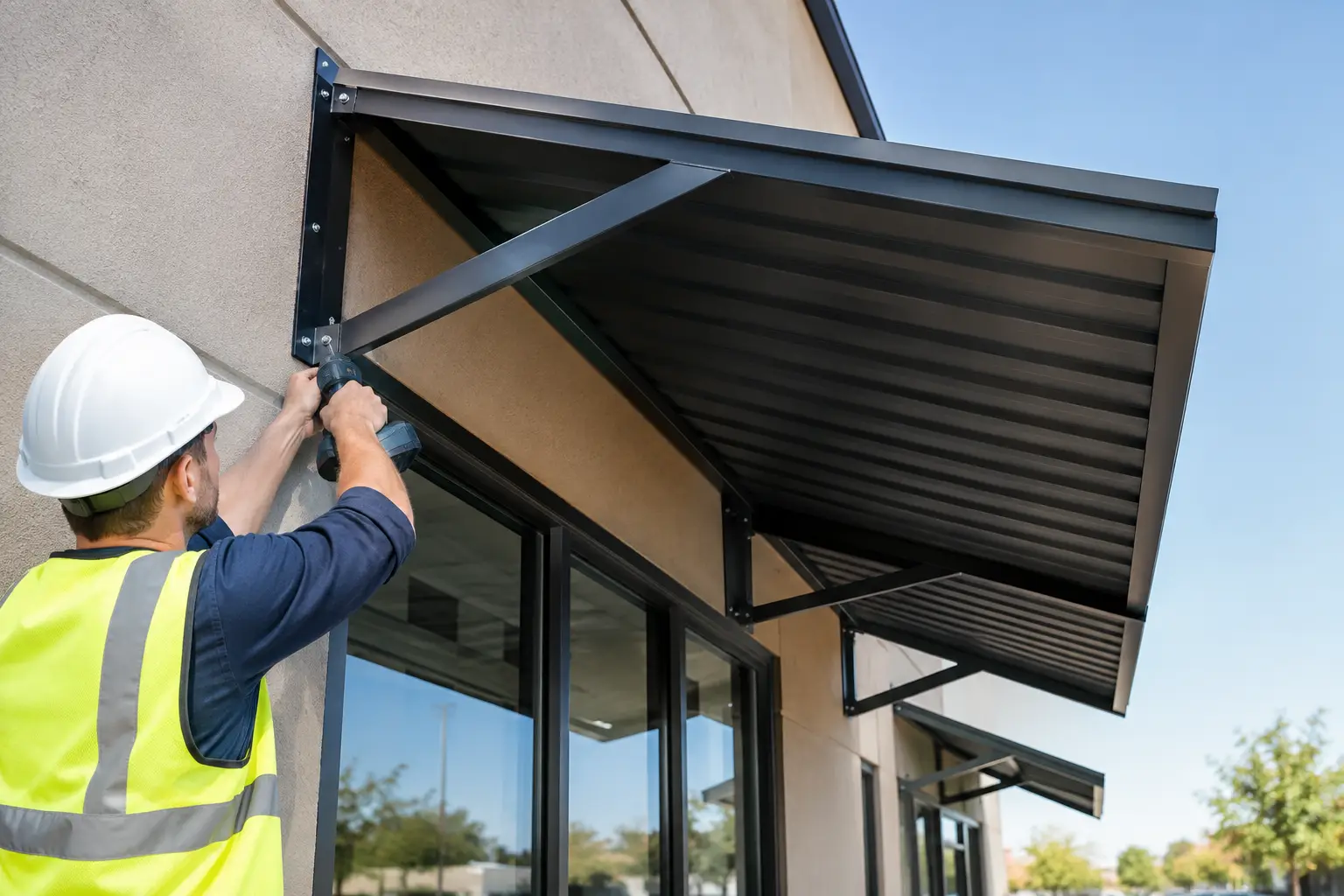
A shop front awning should feel solid and stay that way. If it rattles in wind, sags at one end, pulls away from the wall or drops debris onto the footpath, it is no longer just a maintenance issue. Knowing how to secure loose awnings starts with protecting the public, then finding the real cause before any repair work begins.
For a commercial property, a loose awning can affect trading, expose owners and tenants to liability, and create a serious risk for customers and staff entering the premises. Quick fixes may appear to settle the problem, but they can hide corrosion, failed fixings or movement in the supporting structure. The right response depends on what has moved, why it has moved and whether the awning is safe to remain in place.
When a loose awning needs urgent action
Not every loose panel means the full structure is about to fail. A small section of loose flashing, for example, is different from an awning frame separating from the building. The problem is that the cause is not always visible from ground level.
Treat the issue as urgent if the awning is visibly leaning, bouncing, sagging, cracking around its brackets, or pulling away from the facade. Rust stains around bolts, loose ceiling sheets, water pouring from unexpected points and movement after a vehicle strike also need prompt attention. After strong winds or heavy rain, an inspection is sensible even where the awning still looks mostly intact.
Keep people clear of the area beneath a suspect awning. This includes staff who might normally use the doorway, delivery drivers and members of the public passing along the footpath. If there is a real risk of falling material, arrange a safe exclusion zone and contact an experienced commercial awning contractor without delay.
How to secure loose awnings safely in the first instance
The first job is containment, not repair. Do not climb onto the awning, lean a ladder against a loose edge or ask staff to hold a moving section in place. Shop front awnings can conceal unstable framing, damaged roof sheets and electrical services.
Take these practical steps while you arrange an assessment:
- Restrict access below and directly beside the affected awning using barriers, clear signage or a managed entry point.
- Move outdoor tables, displays, stock and vehicles away from the area where safe to do so.
- Take clear photos from ground level, including the wall connection, underside, drainage points and any visible damage.
- Note when the movement started and whether it followed wind, rain, impact or building works nearby.
- Avoid drilling new holes, tightening unknown bolts or tying the awning back with rope, wire or ratchet straps.
Temporary restraints can sometimes be installed by a qualified contractor, but only after the structure has been assessed. A restraint fixed to weak cladding or deteriorated steel may transfer the load to another failing point. It can also make later repairs more difficult and create a false sense of security.
If loose metal sheeting is flapping in wind, the priority is to prevent it becoming airborne. If the main frame is loose at its wall connection, the priority is different: the whole awning may need to be supported, made safe or removed in a controlled manner. Those are not jobs for a general handyman working from a ladder.
Find the cause before choosing the repair
A proper repair begins with an inspection of the frame, brackets, fasteners, wall substrate, roof covering and drainage. Replacing the visible damaged piece alone may not solve the problem.
Failed fixings and wall connections
Bolts can loosen over time, particularly where vibration, repeated wind loading or poor original installation has affected the connection. In older buildings, fixings may have been installed into weakened masonry, unsuitable cladding or timber that has deteriorated behind the facade.
The solution may involve replacing fasteners, installing suitable anchors, strengthening brackets or rebuilding the connection point. What is required depends on the wall construction and the load carried by the awning. Simply using larger screws is not a reliable fix.
Rust, corrosion and water damage
Sydney's wet weather and coastal conditions can be hard on exposed steelwork. Water entering through failed seals, blocked gutters or damaged flashing can sit inside box sections and corrode the frame from within. By the time paint bubbles or rust becomes visible, the steel may have already lost strength.
A lasting repair may require affected steel to be cut out and replaced, rather than painted over. Drainage should also be corrected. If water is still pooling or entering the wall connection, the same failure is likely to return.
Impact, alterations and overloaded structures
Vehicle strikes, delivery incidents and nearby construction can bend support members or loosen brackets. Changes to signage, lighting, planter boxes or ceiling linings can also add weight that the original awning was not designed to carry.
Where there has been an impact or a major alteration, the awning should be assessed as a structure, not treated as a cosmetic repair. Depending on the extent of damage, repair may be possible, or replacement may be safer and more cost-effective.
Temporary repairs versus proper repairs
A temporary repair has a place when it makes an area safe while materials, approvals or engineering advice are organised. It should be clearly treated as temporary and monitored until permanent work is complete.
A permanent repair addresses the cause of the movement. That might mean renewing corroded framing, replacing damaged roof sheets, rebuilding the wall connection, improving drainage and refinishing the repaired section so the shop front presents properly again. It may also involve controlled removal where a structure cannot be safely retained.
The cheapest option is not always the best value. Repeated patching can interrupt trade several times, damage the building facade and eventually cost more than a planned replacement. On the other hand, a full replacement is not automatically necessary where the frame is sound and damage is limited to a repairable section. A site inspection gives a clearer answer than assumptions made from photos alone.
What a professional commercial awning repair should cover
Commercial awning work needs to account for the public area below, access equipment, neighbouring tenancies and the condition of the existing building. A capable contractor should explain what is loose, what has caused it and what work is needed to make it safe.
For many projects, the work can include:
- inspecting the awning frame, sheeting, fixings and facade connection;
- making the site safe before repair, demolition or replacement begins;
- removing unsafe materials in a controlled manner;
- repairing or replacing structural steel, brackets, flashings and roof sheets as required; and
- arranging engineer certification support where the scope or building requirements call for it.
Good workmanship matters at the finishes as well as the frame. Straight lines, clean flashings, effective drainage and properly sealed wall connections all help protect the investment and maintain the appearance of a street-facing business.
Certification, access and public safety
Some awning repairs are straightforward maintenance. Others involve structural modifications, replacement of a large shop front canopy, changes to the building facade or work above a busy pedestrian area. Requirements can vary according to the building, location, scope and relevant approvals.
This is where experienced commercial contractors add value. They can identify when engineering input is needed, plan safe access and coordinate the work around trading hours where practical. For occupied shops, cafes and hospitality venues, keeping an entrance managed and the public protected is just as important as completing the physical repair.
Do not wait for a loose awning to become an emergency. Advanced Awnings can assess commercial awning damage, provide a clear quote and carry out repair, replacement or controlled demolition work across Greater Sydney. A sound awning protects more than the doorway below it - it protects the people who use it every day.