
Shopfront Awning vs Fascia Canopy
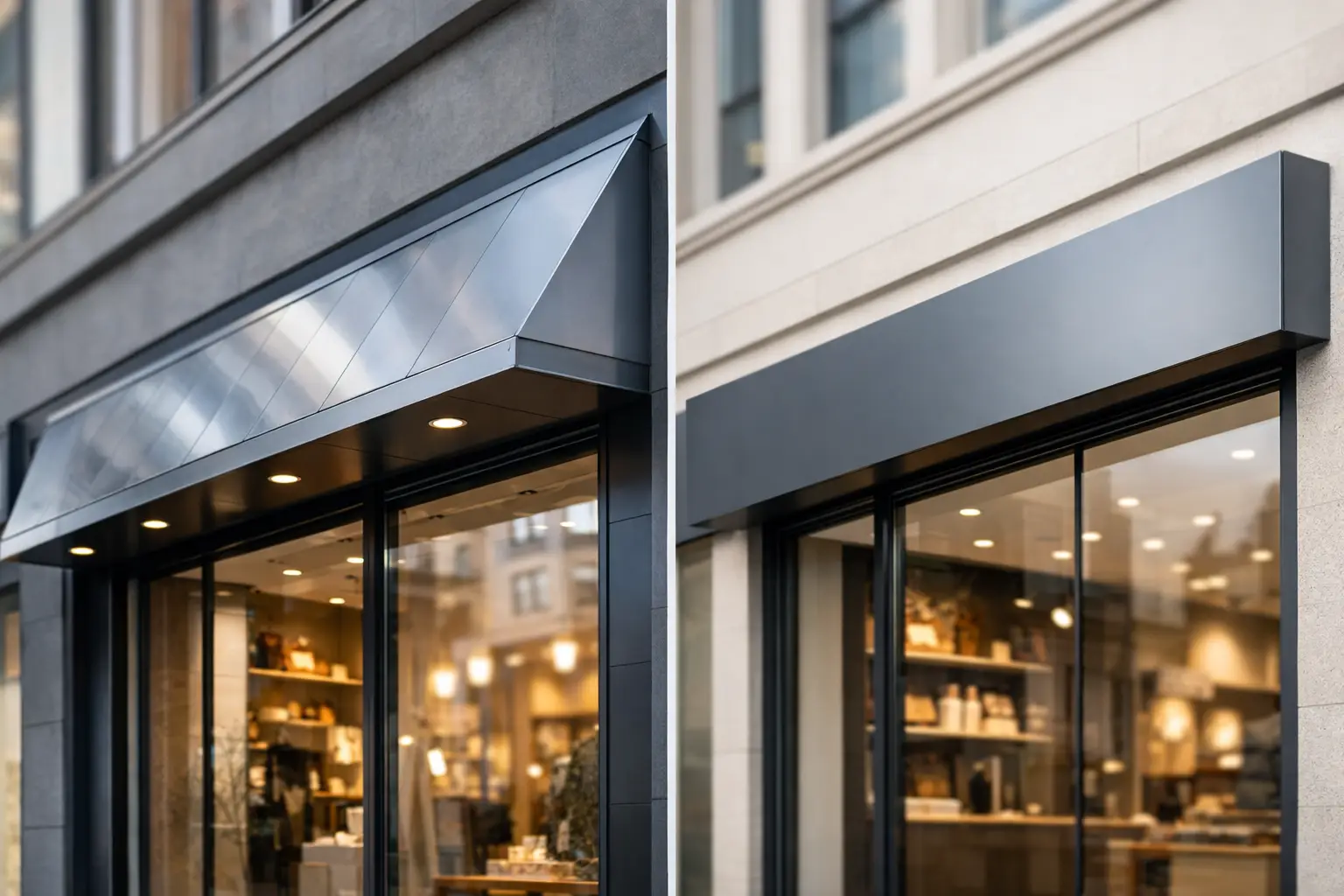
A lot of shop owners start with the same question once a frontage needs an upgrade - shopfront awning vs fascia canopy, which one actually suits the building, the street, and the day-to-day use of the site? The answer is not just about looks. It affects weather cover, signage, structural work, compliance, and how well the finished job holds up over time.
If you are planning works on a retail, hospitality or commercial frontage, it pays to get clear on the difference early. The wrong structure can create problems with drainage, access, council expectations, or simply leave you with a result that does not suit the premises.
Shopfront awning vs fascia canopy - what is the difference?
In plain terms, a shopfront awning is usually a projecting structure that extends out from the building line to provide practical cover over the entry and the pedestrian area below. It is commonly designed as a more substantial part of the frontage, often with framing, sheeted finishes, and enough depth to create real shelter.
A fascia canopy is generally a slimmer projection with a strong front face, or fascia, that gives the building a cleaner visual edge and a defined sign area. It can still provide cover, but in many cases its main role is presentation, branding and finishing off the front elevation rather than maximising deep weather protection.
That does not mean one is better than the other across the board. It depends on what the site needs. If the priority is shelter, stronger street presence and a more traditional commercial frontage, a shopfront awning may be the better fit. If the priority is a neater sign band, a lighter look and a more compact projection, a fascia canopy can make more sense.
When a shopfront awning is the better option
A shopfront awning usually suits premises that need proper cover at the door, especially where customers queue, browse, or wait outside. Hospitality venues, takeaway shops and busy retail sites often benefit from the extra projection because it gives practical useable cover rather than just a visual feature.
It can also be the stronger choice where the existing frontage already has the depth or structural arrangement to support a more substantial awning replacement. On older shopfronts, a like-for-like awning rebuild may also be the most sensible path from both a visual and construction point of view.
Another advantage is presence. A well-built awning can help anchor the tenancy in the street. It gives the frontage weight and can make a narrow shop look more established. For some landlords and operators, that matters just as much as the weather protection.
The trade-off is that a shopfront awning often involves more structural consideration, more materials, and sometimes more demolition and reinstatement work if an old awning is coming off. That can affect budget, approvals and installation timing.
When a fascia canopy makes more sense
A fascia canopy is often the practical choice when the site needs a clean, modern frontage without the bulk of a deeper awning. If signage is a key part of the brief, the fascia itself can provide a strong, readable face to the street.
This style can suit newer shopfronts, refurbished facades and tenancies in strips where consistency across neighbouring frontages matters. It also works well where there is limited room to project or where the building design calls for a simpler line.
From a construction point of view, a fascia canopy may allow a more controlled and streamlined finish, particularly on fit-outs where the frontage is being refreshed rather than completely rebuilt. That said, it still needs proper design, fixing, drainage planning and safe installation. A slimmer canopy is not a shortcut around structural responsibility.
The main compromise is cover. If the projection is shallow, it may look sharp but offer less practical protection from rain and sun. That can matter more than people expect once the shop is open and staff are using the entry every day.
Signage, visibility and street appeal
For many commercial clients, the decision comes down to how the frontage will present from the road and footpath. Both structures can support signage, but they do it differently.
A shopfront awning often gives you a broader visual element across the tenancy and can be detailed to suit bold branding. It tends to feel more substantial and can help define the whole shopfront.
A fascia canopy usually creates a cleaner sign zone. If you want a tidy front face with a straightforward branding panel, it can be a smart option. On some buildings, this cleaner profile suits the architecture better than a heavier awning.
The right answer depends on viewing distance, surrounding buildings, and the kind of business operating from the site. A busy food venue may value cover and visibility equally. A boutique retail fit-out may prioritise a sharp fascia line. A property manager may be more concerned with keeping the frontage consistent across multiple tenancies.
Compliance and structural reality
This is the part that should never be treated as an afterthought. Whether you choose a shopfront awning or a fascia canopy, the work has to suit the building, be installed safely, and meet the job’s structural and compliance requirements.
Existing awnings can hide all sorts of issues - corrosion, failed fixings, water damage, poor previous modifications, or non-compliant elements left behind from older works. On replacement jobs, demolition has to be handled properly to protect the public, the tenancy and the building itself.
Engineer certification may also be required depending on the structure and scope. For commercial sites, especially in active public areas, clients are right to ask questions about insurance, installation method, load considerations and site safety controls. A tidy finish means very little if the structure behind it is not done properly.
This is also where experience matters. There is a big difference between a contractor who occasionally installs general canopies and one who understands the realities of shopfront awning work in live commercial environments.
Budget and long-term value
Cost matters, but headline price alone can send people the wrong way. A cheaper option up front is not always the best value if it falls short on cover, needs more maintenance, or does not suit the building properly.
A shopfront awning may cost more where the structure is larger or the replacement work is more involved. But if it solves weather exposure, improves the frontage and gives the tenancy a stronger presence, the extra spend can be justified.
A fascia canopy may be the more cost-effective fit where the goal is to modernise the frontage, create a clear signage band and avoid unnecessary bulk. If that solution matches the site, there is no sense paying for a heavier structure that the tenancy does not need.
Long-term value comes from choosing the right type in the first place, then having it fabricated and installed to a proper standard. Poor drainage, weak fixings and cheap finishes usually show up fast on a commercial frontage.
How to choose between a shopfront awning and fascia canopy
The best starting point is not style. It is use. Ask what the frontage needs to do every day. Does it need to protect waiting customers? Does the site need stronger branding? Is the building suited to a deeper projection? Are you replacing an existing structure or starting from scratch?
After that, look at the physical constraints. Projection limits, structural fixing points, neighbouring tenancies, drainage, access during works and public safety all influence the right approach. So does the condition of the existing frontage.
It also helps to think beyond handover day. The right structure should still make sense after months of rain, wind, sun exposure and general commercial wear. A good-looking canopy that does not perform is not a good result.
For many projects, the answer only becomes clear after a proper site assessment. That is especially true on older commercial buildings, where what looks simple from the street can involve a fair bit more once the existing frontage is opened up.
The better question is what suits the site
The shopfront awning vs fascia canopy decision is really about matching the structure to the building, the business and the practical demands of the site. There is no one-size-fits-all answer, and that is exactly why the job should be assessed properly before anyone starts quoting based on guesswork or photos alone.
If the site needs real shelter and a stronger frontage, a shopfront awning is often the right call. If it needs a cleaner line, efficient signage space and a lighter visual finish, a fascia canopy may be the better option. What matters is getting a structure that works in the real world, not just on paper.
On commercial frontages, the best result usually comes from keeping the brief simple - build the right thing, build it safely, and make sure it lasts.