
Best Awnings for Corner Shops That Last
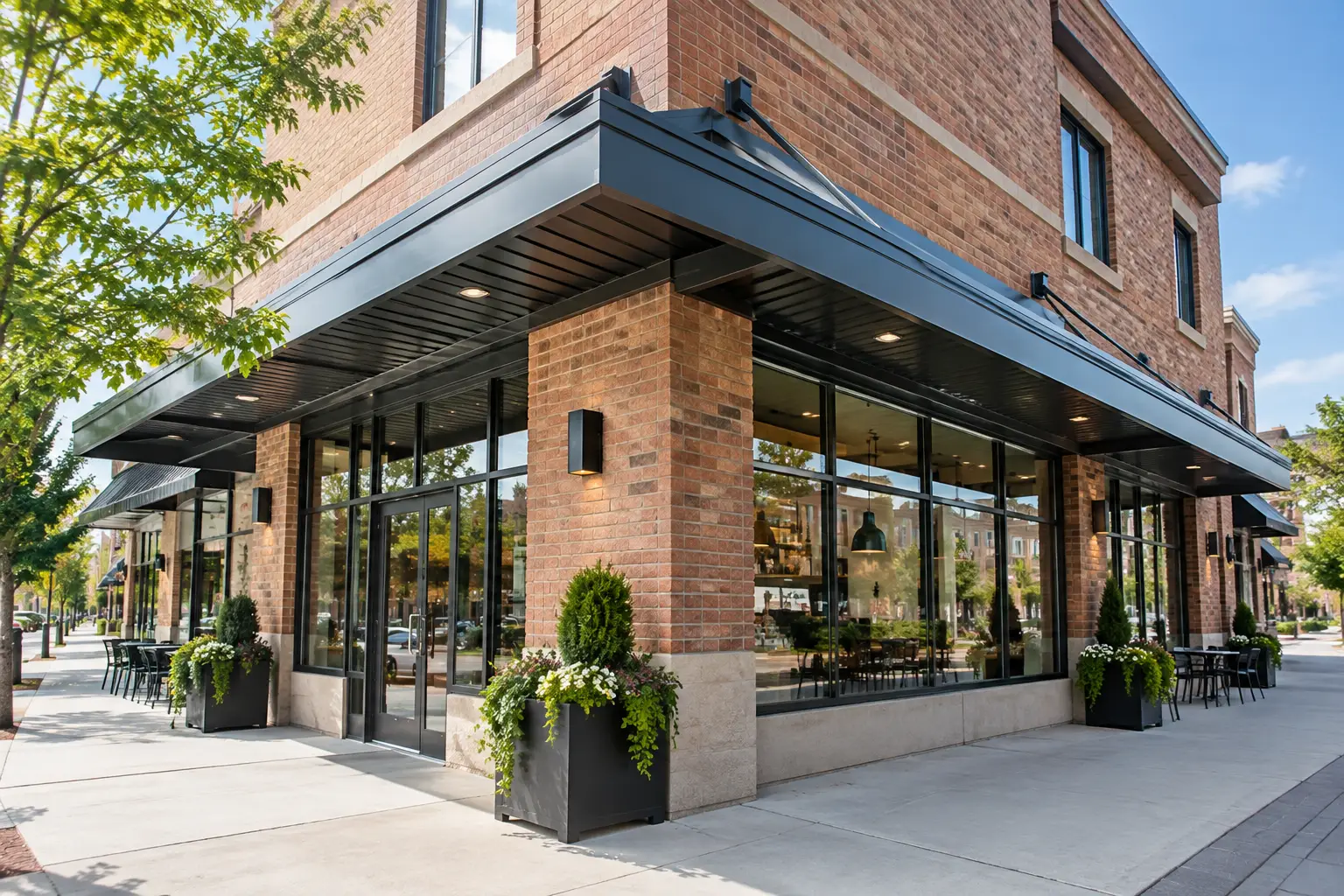
A corner shop has twice the exposure and twice the opportunity. With two street-facing elevations, the right awning can improve shade, protect customers at the entry and make the business easier to spot from either direction. The best awnings corner shops use are not chosen on appearance alone. They need to suit the building, handle weather from more than one direction and be built safely over busy public areas.
For a café, retail store, takeaway venue or commercial tenancy, an awning is part of the premises, not an afterthought. It needs to look right on opening day and continue doing its job through heat, rain, wind and daily foot traffic.
Why corner shops need a different approach
A standard shopfront on one frontage can often be assessed as a straightforward installation. Corner sites are different. They may have a return awning around the building, a feature entry on the corner, different wall heights, signage on both elevations and a greater area above the footpath.
The corner itself is usually the key detail. A poorly planned junction can look patched together, allow water to track back towards the building or create an awkward low point over the entry. A well-designed canopy creates a clean, continuous line while allowing for proper falls, drainage and structural support.
Corner locations also tend to catch wind. An awning that is adequate on a sheltered strip of shops may need a more considered structural design when it wraps around an exposed intersection. This is where material thickness, fixing method, support brackets and engineering matter far more than a quick visual comparison.
Best awnings for corner shops: start with the building
There is no single best awning for every corner tenancy. The right answer depends on the building construction, existing façade, streetscape requirements, business use and the condition of any old awning already in place.
For many established Sydney shopfronts, a fixed steel-framed awning with metal roof sheeting remains a practical choice. It is durable, can be shaped to suit the frontage and gives a solid base for fascia signage. It also works well where the client needs substantial weather protection across a wide pedestrian area.
Aluminium framed awnings can suit lighter applications or contemporary façades where weight and a cleaner profile are priorities. Fabric awnings can create a softer retail or hospitality look, but they need the right fabric, tensioning and maintenance plan. They are not always the best choice for a highly exposed corner or a site that needs a permanent, heavy-duty canopy.
If the shop is in a heritage area, a busy retail strip or part of a strata commercial building, appearance may be governed by existing controls or building requirements. Matching the surrounding awning line, fascia depth and colours can be just as important as selecting the material itself.
Fixed canopies for reliable coverage
Fixed shopfront canopies are generally the strongest option where the goal is all-weather cover and a long service life. They suit food venues with outdoor queues, retailers with large display windows and businesses with entrances that take the full force of afternoon sun or rain.
The trade-off is that fixed structures require careful planning before work begins. The contractor needs to inspect the wall or supporting structure, determine how loads will be transferred and confirm clearances over the footpath. A solid-looking frame is not enough if the existing façade behind it is weak, damaged or unsuitable for the proposed fixings.
Fabric awnings where presentation is the priority
Fabric awnings can be effective for boutiques, cafés and small hospitality venues seeking a traditional or more decorative finish. They provide useful shade and can carry branding without the heavier look of a steel canopy.
However, fabric is not maintenance-free. Sun exposure, pollution, bird droppings and coastal conditions can affect its appearance over time. On a corner, wind loading and water runoff need particular attention. A fabric awning may be the right choice, but only where the site conditions and the owner’s expectations support it.
Signage-ready fascia systems
Many corner shop awnings do double duty as signage structures. A deep fascia can carry the business name across both street frontages, making the premises visible to passing vehicles and pedestrians without cluttering the windows.
Signage should be considered at the design stage, not bolted on later. Allowing for lettering, lighting, electrical work and access for future maintenance avoids a messy result. It also helps maintain sensible clearances and prevents unnecessary penetrations through a finished roof.
Safety and compliance are part of the job
Any awning extending over a public footpath needs to be treated seriously. Pedestrians, customers, neighbouring businesses and workers below the site all need to be protected while work is underway.
Before replacing an existing awning, the old structure should be inspected properly. Rusted steel, loose sheeting, failed fixings and water-damaged fascia can make demolition unpredictable. Safe removal may require exclusion zones, pedestrian management, controlled dismantling and the right access equipment. Rushing this stage to save time can create a real risk to the public and the crew.
The new awning should be assessed for its structural requirements and, where required, supported by an engineer’s certification. Council approvals, landlord consent, strata requirements and building rules vary by location and by the type of work proposed. A replacement that appears like-for-like can still need checks if the size, structure, signage or fixing arrangement changes.
Height is another practical issue. The canopy must provide suitable head clearance while still achieving enough fall for drainage. It also needs to work around doors, windows, services, air-conditioning units and existing signs. These details are often where cheap installations fall short.
Get water management right from day one
Water is one of the biggest causes of premature awning problems. A roof that looks level may hold water after heavy rain. Water can then stain the fascia, corrode steel, damage shopfront finishes and eventually find its way into the building.
A corner awning needs a planned drainage path across both elevations. That can include falls towards gutters, downpipes positioned away from entry points and flashing that properly connects the awning to the wall. The aim is simple: water should leave the structure without running across the footpath, pooling at the corner or tracking behind the roofline.
If the existing awning has recurring leaks, the answer is not always more sealant. Failed flashing, corroded sheets, blocked gutters or movement in the frame may be the actual cause. A proper inspection identifies the source before repair work starts.
Balance street appeal with practical performance
A good awning makes a corner business look established. It frames the windows, provides a clear line for signage and gives customers cover before they step inside. But visual impact should not come at the expense of useful coverage or long-term maintenance.
Choose colours and finishes that suit the façade and the business identity, but consider how they will look after years of Sydney sun and grime. Darker colours can show fading, while very light finishes can show dirt and staining. Metal flashings, fascia cappings and junctions should be finished neatly because they are highly visible from the street.
It is also worth thinking about access. Can gutters be cleaned safely? Can signs be maintained without damaging the awning? Can a damaged sheet or section of fascia be replaced without pulling apart the whole structure? These questions matter long after the project is complete.
What a proper quote should cover
Comparing quotes is not just about the final figure. One price may cover a complete removal, supply, installation and site clean-up, while another may leave demolition, access equipment, engineering or rubbish removal as extra costs.
A clear commercial awning quote should set out the proposed materials, dimensions, finish, scope of demolition where needed, installation method and any exclusions. It should also explain whether engineering, approvals and signage work are included or separately arranged. This gives the property owner or tenant a fair basis for comparison.
For occupied premises, staging matters too. The contractor should discuss trading hours, customer access, noise, dust and how the work area will be secured. Most shops cannot simply close for an open-ended building job, so a practical work plan protects both the business and the public.
Repair, replace or remove?
Not every damaged awning needs full replacement. Localised repairs can make sense where the main frame remains sound and the issue is limited to roof sheeting, gutters, flashing or fascia. Timely repairs are often the best way to prevent a minor leak turning into structural deterioration.
Replacement becomes the smarter option when corrosion is widespread, fixings have failed, the awning no longer suits the tenant’s needs or the structure cannot be safely brought up to an acceptable standard. In some cases, removal is the right call, particularly where an old canopy is unsafe and a new façade treatment is planned.
The useful approach is to assess the condition honestly. Spending money patching a frame that has reached the end of its life can cost more in the long run than replacing it properly.
For corner shop owners and property managers, the right awning is one that works hard without becoming another maintenance problem. A site inspection, clear scope and experienced installation team give you a better result than choosing from a photo or the lowest price alone. Advanced Awnings can help assess the condition of an existing shopfront awning and provide a practical quote for repair, replacement or a new installation.