Best Awning Repairs Sydney for Shop Fronts
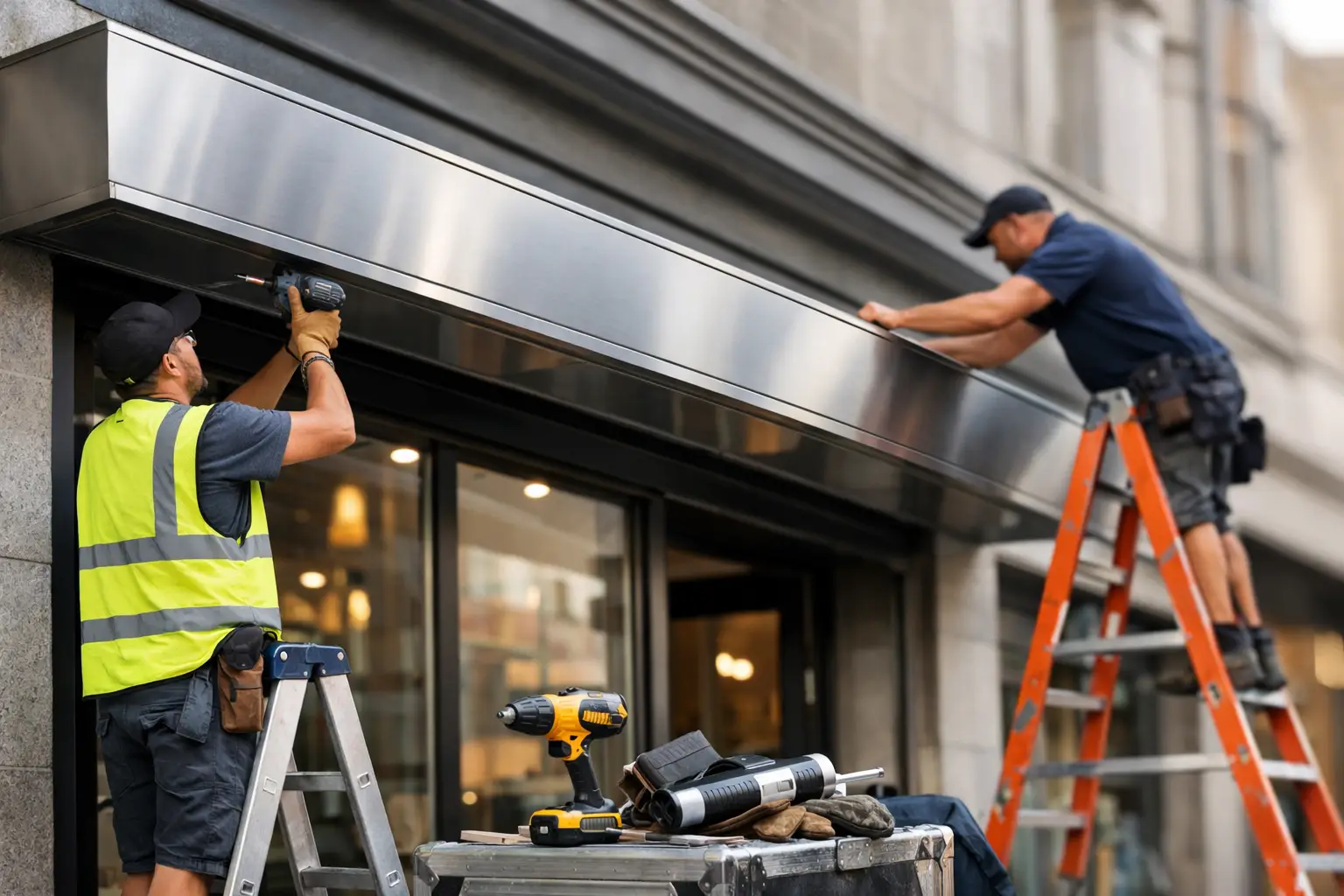
A loose shop front awning is not just an untidy maintenance issue. Over a busy entry, footpath or outdoor dining area, it can become a genuine public safety problem. When searching for the best awning repairs Sydney businesses can rely on, the priority should be a contractor who can assess the structure properly, make the site safe and complete work that holds up over time.
Commercial awnings are exposed to sun, wind, rain, vehicle vibration and the everyday movement of a busy street-front premises. Small faults can often be repaired before they become major structural work, but only if they are dealt with early and by people who understand how commercial awnings are built.
What a proper awning repair should address
A quality repair is about more than covering a rust spot with paint or reattaching a loose fascia panel. The contractor needs to identify why the fault appeared in the first place. That may be water entering at a flashing, corrosion around a connection point, movement in the support frame, failed fixings or impact damage from a vehicle, delivery equipment or storm debris.
The repair approach depends on the awning's construction and condition. A steel-framed shop awning may need corroded sections removed and replaced, new brackets or upgraded fixings. A damaged fascia can require replacement to restore the appearance of the frontage and prevent water from reaching the frame behind it. If a roof sheet has failed, the work may involve replacing sheeting, flashings and drainage details rather than patching one visible hole.
The right repair should restore safe load paths, weather protection and a neat street-facing finish. For commercial property owners, that means fewer repeat call-outs and a better result for tenants, customers and the public below.
Warning signs your awning needs attention
An awning does not need to be visibly collapsing to need repair. In fact, the most sensible time to act is when the first warning signs appear. Arrange an inspection if you notice:
- rust staining, bubbling paint or flaking coating around posts, brackets, joins or the underside of the frame
- water dripping through the awning, stained ceiling linings or pooling near the shop entry after rain
- loose sheets, rattling fascia panels, damaged soffits or movement in strong winds
- bent members, impact damage, sagging sections or gaps opening where the awning meets the building
- cracked welds, missing bolts or fixings pulling away from the wall.
A shop manager may first notice a leak or a noisy panel, while a property manager may spot deterioration during a routine inspection. Either way, do not ask staff to climb ladders, tighten roof sheets or work above the footpath. Access and temporary safety controls need to be planned properly, particularly where the awning extends over a public area.
Best awning repairs Sydney: repair or replacement?
Not every damaged awning needs to be replaced. Localised corrosion, a damaged roof sheet, faulty flashing or isolated impact damage can often be repaired effectively if the main frame remains sound. Repairing early can be the more cost-effective option and may limit disruption to trading.
Replacement becomes the better choice when deterioration is widespread, multiple structural members are compromised or the existing awning no longer suits the premises. For example, an old structure may have recurring leaks, significant corrosion hidden behind cladding, unsuitable drainage or a tired appearance that does not match a new shop fit-out. Repeated patch repairs can cost more over time than removing the old structure and installing a properly designed replacement.
There is no one-size-fits-all answer. A site inspection should consider the condition of the frame, connections to the building, roofing materials, drainage, access requirements and the awning's role in the overall frontage. Where structural changes are required, engineering input or certification may also be needed depending on the scope of work and site requirements.
What to expect from a commercial awning assessment
A serious contractor will not quote from a single photo if the repair involves a structural frame, overhead work or a safety concern. Photos are useful for an initial conversation, but an on-site assessment is usually needed to inspect the awning safely and understand what sits behind the visible damage.
The inspection should look at the roof covering, flashings, gutters, fascia, support frame, welds, brackets and wall fixings. It should also consider the area below the awning. A repair outside a retail shop, café or medical practice may require work to be staged around customers, deliveries, outdoor seating and pedestrian traffic.
Clear quoting matters. The scope should explain what is being repaired or replaced, what materials are proposed and whether temporary protection, access equipment, removal of existing materials or disposal is included. If the problem cannot be fully confirmed until cladding or roof sheets are removed, that should be explained before work starts rather than presented as a surprise later.
Safety and compliance are part of the job
Shop front awning work often happens above active public areas. That makes planning just as important as the repair itself. A contractor should assess safe access, exclusion zones, overhead hazards, weather conditions and the risk of loose materials falling onto the footpath or shop entry.
This is particularly relevant for demolition work. Rusted sheeting, unstable fascia, damaged timber backing or heavily corroded steel can behave differently once fasteners are removed. Controlled removal, appropriate access equipment and proper site protection help reduce risk to workers, customers and nearby pedestrians.
Commercial clients should also ask about insurance and relevant licensing or trade capability for the proposed scope. For work involving structural modification, certification support and engineer involvement may be required. It is better to identify these needs at the quoting stage than discover them after a tenant is waiting to reopen or a construction programme has already started.
Choosing a contractor for shop front awning repairs
The best result usually comes from a specialist who regularly works on commercial awnings, rather than a general repairer treating the job as a small roofing patch. Experience matters because shop front awnings combine metalwork, roofing, drainage, building connections, public safety and presentation in one visible structure.
Ask practical questions. Has the contractor repaired similar commercial awnings? Can they manage safe demolition if parts of the existing structure need to come down? Do they understand the need to keep access open where possible? Will they coordinate with builders, property managers or tenants when work has to occur outside normal trading hours?
You should also look for straightforward communication. A good contractor explains what can be repaired, what should be replaced and where there are unknowns. They do not promise a cheap patch when the frame itself is no longer safe or serviceable.
Advanced Awnings brings more than 20 years of shop front awning experience to repair, replacement and installation work across Greater Sydney, with a practical focus on safe work practices and solid finishes.
Managing repairs without unnecessary disruption
For a street-facing business, an awning repair needs to be planned around operations. Some work can be completed early in the morning, after trading hours or in stages, depending on access and noise restrictions. The goal is to protect the site and complete the work efficiently without creating avoidable disruption for customers or staff.
Before work begins, remove outdoor furniture, signage and stock from the affected area where practical. Let staff know if an entry will be temporarily redirected. If the awning protects a café frontage, loading zone or pedestrian path, make sure the contractor understands those daily site movements before booking the job.
Weather can also affect timing. Roofing and flashing repairs need dry conditions for a reliable finish, while high winds can prevent safe elevated work. Allowing a little flexibility in the programme is preferable to rushing an overhead repair in unsuitable conditions.
Get the condition checked before the next storm
The right repair can extend the life of a commercial awning, protect the appearance of your premises and reduce the chance of a small defect becoming a costly safety issue. If you have noticed leaks, corrosion, movement or damaged cladding, arrange a proper inspection and obtain a clear quote before the problem has a chance to spread.