
Best Weatherproof Storefront Awnings for Sydney
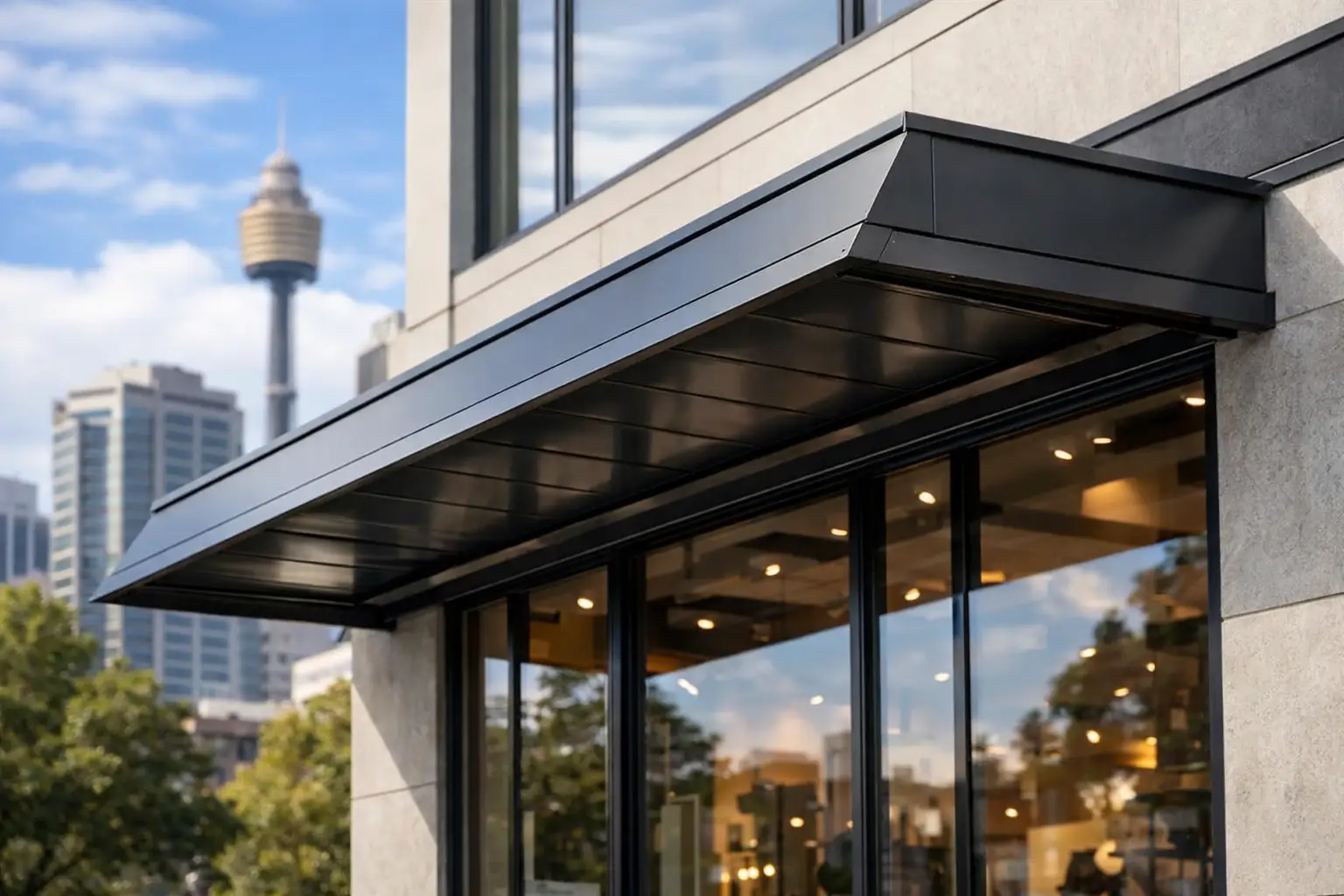
A shopfront awning has to do more than look sharp above the shop window. It needs to shed heavy rain away from doors and display areas, handle strong sun, stand up to wind, and remain safe over a busy footpath. The best weatherproof shopfront awnings are designed as commercial structures first, with the finish and signage considered as part of the job - not as an afterthought.
For shop owners, landlords and property managers, the right choice comes down to the building, the street exposure and what is happening below the awning every day. A lightweight fabric option may suit a sheltered cafe frontage. A fixed metal canopy may be the better long-term answer for a retail strip exposed to western sun, wind-driven rain and constant pedestrian traffic.
What Makes a Shopfront Awning Weatherproof?
Weatherproofing is not just about putting a cover over the entrance. It is the way the whole awning manages water, wind, heat and movement over time. A well-built shopfront awning has a sound frame, suitable roof sheeting or fabric, properly detailed joins, adequate fall for drainage, and secure connections back to the building.
If one part is overlooked, problems usually show up quickly. Water can pool and stain the frontage. Rain can run back toward doors rather than away from them. Loose flashings can let water into the wall. In high winds, a poorly fixed awning can become a public safety issue rather than an asset.
The best result is usually a purpose-built solution based on a site inspection. Older buildings, heritage-style facades, shared tenancy walls and narrow footpaths all affect what can be installed safely and practically.
The Best Weatherproof Shopfront Awning Types
There is no single awning that suits every commercial premises. The best weatherproof shopfront awnings are the ones matched to the conditions on site and the expected working life of the property.
Fixed metal shopfront awnings
For many Sydney commercial properties, a fixed metal awning is the most reliable all-round choice. These structures can be made with steel or aluminium framing and finished with metal roof sheeting, fascia panels and integrated guttering. They are suited to shops, medical practices, takeaway venues, warehouses and other premises that need permanent cover.
The main advantage is durability. With the right pitch and drainage, a fixed metal awning handles regular rain far better than a flat or lightly supported cover. It can also provide a clean area for signage and help reduce heat at the shopfront.
The trade-off is that installation needs proper planning. A fixed awning adds a structural load to the building, and its size, support method and location may require engineering input or approvals. This is not a job for guesswork, particularly where the awning projects over a public area.
Aluminium composite panel awnings
Aluminium composite panel, often called ACP, can create a neat, modern commercial finish. It is commonly used on fascia faces and can be incorporated into awning designs where appearance matters as much as weather cover. It is low-maintenance, available in a broad range of colours and gives a crisp finish for retail and hospitality frontages.
However, panel selection and compliance matter. Not all composite products are suitable for every application. The supporting structure, fire performance requirements and local project conditions need to be assessed before materials are chosen. A professional contractor will not simply match a colour and start fixing sheets to a wall.
Retractable fabric awnings
Retractable awnings work well where flexible shade is the priority. Cafes, restaurants and boutique retailers often choose them to create outdoor seating cover or soften afternoon sun without permanently enclosing the frontage.
A quality fabric awning can resist light to moderate rain, but it is not usually the first choice for a fully weatherproof shopfront. Fabric needs adequate pitch to shed water, and retractable systems should be retracted in high winds or severe weather. If customers are expected to stand underneath it during heavy rain, a fixed canopy generally provides more dependable protection.
Polycarbonate awnings
Polycarbonate roofing can bring natural light into an entry while keeping most rain out. It can suit building entrances, service counters and darker frontages where a solid roof would make the interior feel closed in.
The practical issue is long-term appearance. Lower-grade polycarbonate may discolour, scratch or become brittle with UV exposure. It also needs correct support spacing and allowance for thermal movement. A clear roof can look good initially, but material quality and workmanship decide whether it still looks good after several summers.
Drainage Is Where Many Awnings Fail
A weatherproof awning should direct water away from the building and away from the path of customers. That sounds simple, yet drainage is one of the most common causes of leaks, staining and premature repairs.
A proper design includes enough fall across the roof, a gutter sized for the catchment area, and downpipes positioned where they will not create a trip hazard or dump water at the entry. Flashings where the awning meets the building are equally critical. This junction needs to stop water being driven behind the roof line during rain and wind.
Flat-looking awnings can still drain correctly, but they need a planned fall. If an existing canopy is holding water after rain, has rust marks below the fascia or drips at the doorway, repair work should address the cause rather than just patch the visible leak.
Start With the Building, Not the Brochure
The wall behind an awning has to carry its load, either directly or through an engineered support arrangement. Brickwork, concrete, steel framing and older mixed construction each need a different approach to fixings. An awning that looks modest from the street can apply significant leverage to its connection points, especially during strong winds.
Before replacement or installation, check the condition of the facade, existing fixings and any signs of water damage. A new canopy should not be installed over compromised cladding, loose brickwork or rusted structural members without rectification.
This is also the point to consider what sits above and around the awning. Upper-level windows, neighbouring signage, air-conditioning units, access requirements and fire services can all affect the design. For commercial premises, good installation work means resolving these details before materials arrive on site.
Compliance and Public Safety Matter
A shop front awning is often installed directly above a footpath, outdoor dining area or customer entry. That makes safe demolition, installation and site control essential. The work area may need barriers, overhead protection, traffic or pedestrian management, and a clear plan for removing old materials without putting the public at risk.
Depending on the awning type, size, property and local authority requirements, engineer certification and approvals may be needed. There is no benefit in choosing a cheaper option if it creates compliance issues, delays a fit-out or leaves the owner responsible for a structure that has not been properly documented.
For landlords and strata or property managers, keep records of the scope of works, materials used, engineering documentation where required, and the contractor's insurance. These details are useful long after handover, particularly if the tenancy changes or the frontage needs future repairs.
Choose Materials for the Exposure, Not Just the Look
A sheltered arcade and a corner shop facing driving rain are two different jobs. Coastal and exposed sites may need extra attention to corrosion resistance, fixing selection and protective finishes. Dark roof colours can look excellent but may increase heat underneath. Lighter finishes can reduce heat gain but may show street grime sooner.
Steel is strong and versatile, but it needs proper protection against corrosion. Aluminium is lighter and corrosion-resistant, though its structural use depends on the design. Colorbond steel roofing is a familiar choice for fixed commercial canopies because it is durable, readily available and available in finishes that suit many facades.
The right material package is usually a balance between budget, maintenance, appearance and expected lifespan. Spending properly on the frame, flashings and fixings is generally wiser than putting the entire budget into a premium fascia finish over a weak structure.
When to Repair and When to Replace
Not every leaking or tired awning needs full replacement. Localised damage to roof sheets, gutters, flashings or fascia panels can often be repaired if the frame remains sound. Repairs make sense where the overall structure is straight, securely fixed and free from major corrosion.
Replacement becomes the safer option when there is widespread rust, sagging, water pooling, cracked supports, loose connections or recurring leaks. It is also worth replacing an old awning when a new shop fit-out needs better signage space, improved street appeal or more effective weather cover.
A thorough assessment should be honest about this. Cosmetic patching may buy time, but it will not correct a failing frame or an awning with inadequate drainage.
Get the Detail Right Before Work Starts
The most dependable commercial awnings are not rushed from a standard size chart. They are measured on site, planned around the building and installed by people who understand structural fixings, waterproofing and public-facing work.
For a new installation, repair or replacement across Greater Sydney, ask for a clear scope that covers materials, drainage, flashings, support method, safety controls and any engineering requirements. Advanced Awnings approaches shopfront work with that practical focus: build it safely, finish it properly, and make sure it performs when the weather turns.