How to Inspect Shop Awnings for Damage
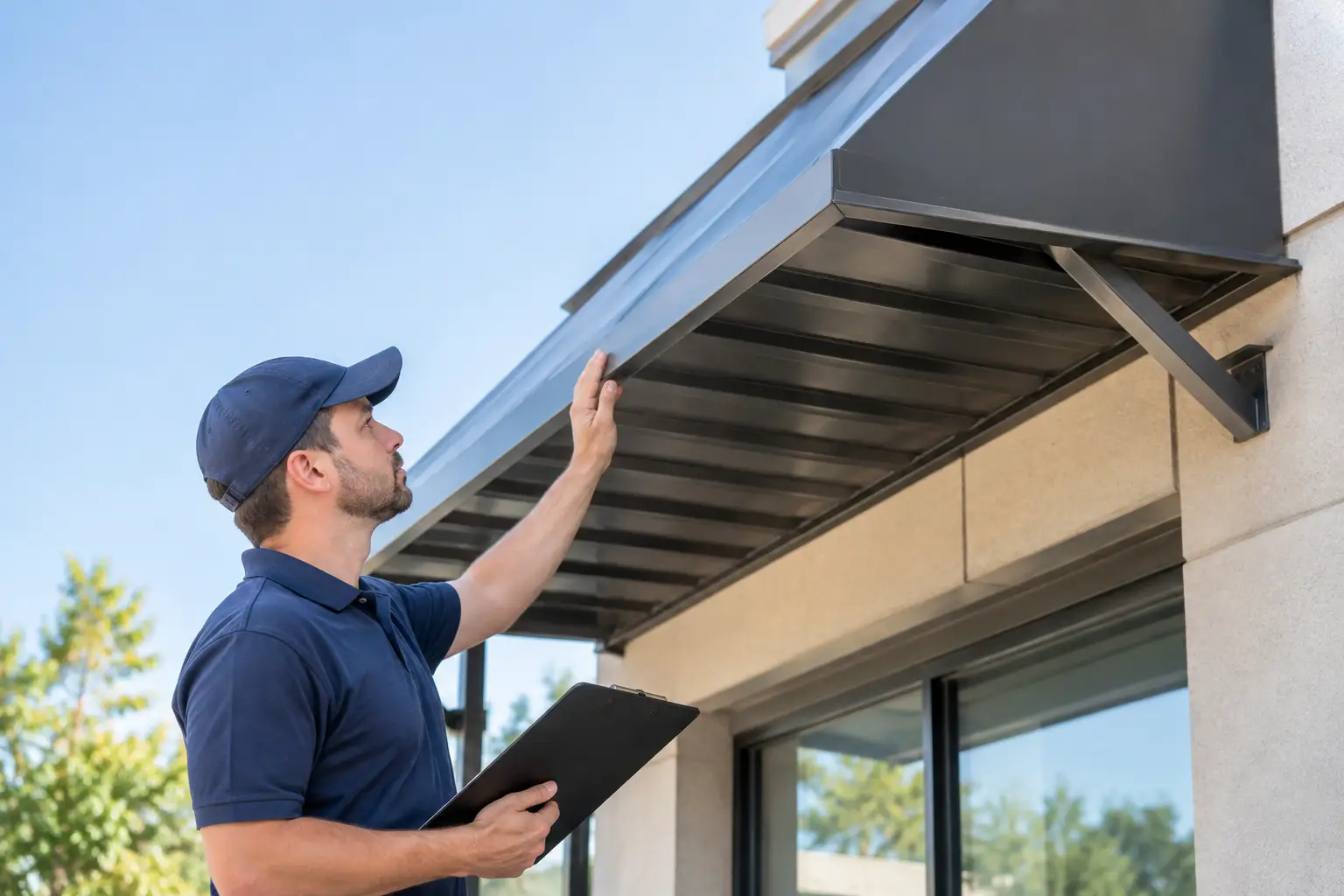
A shop awning can look sound from the street while corrosion, water damage or failing fixings are developing where nobody sees them. Knowing how to inspect shop awnings helps owners and property managers spot problems early, before a repair becomes a safety issue, an expensive replacement, or a risk to people using the footpath below.
For most commercial premises, a regular visual inspection is sensible. It does not replace an assessment by a qualified contractor or engineer where there are signs of structural damage. It does give you a clear record of the awning’s condition and a better basis for deciding what needs attention.
Start with safety, not a ladder
Do not climb onto an awning, lean ladders against its fascia, or pull at loose material to see how bad it is. Shop front awnings can conceal weakened steel, rotten timber, corroded brackets and deteriorated sheeting. A section that appears stable may not safely support weight.
Carry out the first inspection from ground level and, where possible, from inside the tenancy or upper-level windows. Choose daylight and dry conditions. If anything looks loose above a public area, keep customers and staff clear of the affected section and arrange a professional inspection promptly.
Take clear, dated photos from several angles. Include close-ups of visible defects and wider shots showing where they sit on the awning. This is useful for maintenance records, tenant-landlord discussions, insurance enquiries and obtaining an accurate repair quote.
How to inspect shop awnings from ground level
Walk the full length of the awning slowly, looking up from the front edge, underneath and along both side returns. Do this from more than one position. Sun glare, signage and shadows can hide damage when viewed from only one angle.
Check the roof line and drainage
Look for standing water, sagging roof sheets, blocked gutters, damaged flashing or water marks running down the fascia. Water should drain in a controlled direction, not spill over the front edge or track back towards the building.
A persistent overflow often points to blocked gutters or downpipes, but it can also indicate poor falls, dented sheeting or a failed outlet. In Sydney’s heavy rain events, a drainage issue can quickly become a corrosion issue. Water held against metalwork shortens the life of coatings and fixings.
Also check whether leaves, branches, rubbish or bird nesting are collecting at the roof edge. Do not reach up or climb to clear a commercial awning yourself if access is unsafe. The cause of the blockage may be straightforward, but safe access still matters.
Look closely for rust and corrosion
Surface rust is not always an immediate structural failure, but it should never be ignored. Pay particular attention to joints, welded areas, bolt heads, brackets, the underside of steel members and locations where different metals meet. These are common places for moisture to sit and coatings to break down.
Warning signs include bubbling paint, orange staining, flaking metal, pitting, swollen steel sections and rust streaks running onto walls or signage. Corrosion around a connection point is more concerning than a small mark on an open, non-load-bearing surface because the connection is carrying the awning’s load.
If you can see holes in steel, heavy flaking, distorted brackets or rust at wall fixings, treat it as a priority. Do not assume a coat of paint will fix the issue. The affected section may need repairs, replacement components or an engineer’s assessment.
Inspect the underside, fascia and lining
The underside of a shop awning often reveals problems before the roof does. Look for sagging ceiling panels, cracked or missing soffit lining, loose trims, staining, mould, peeling paint and gaps around light fittings or signs.
Water stains can indicate a current leak, but they may also be evidence of an older problem that was never properly repaired. Check whether the stain is dry, expanding, soft to the touch or accompanied by rust marks. A stained section that is sagging or soft should be assessed without delay.
Loose fascia panels and trims deserve quick attention. Even a lightweight panel can injure someone if it falls onto a busy footpath. Strong winds can worsen a small loose section overnight.
Check fixings and support points
From a safe viewing position, inspect visible bolts, brackets, hangers, posts and connections back to the building. You are looking for movement, missing bolts, open gaps, bent plates, cracks around welds and separation between the awning and wall.
Awnings fixed to older masonry need particular care. Cracks in brickwork, damaged render around anchor points or water entering at the wall connection may affect the fixing system. The issue could be localised, but it needs a competent person to determine whether the wall, fixings or awning structure has been compromised.
Do not tighten bolts at random. Over-tightening, using the wrong replacement fastener or disturbing a corroded connection can create a bigger problem. Record what you can see and have the repair method assessed properly.
Check for movement and change over time
An awning does not need to be visibly falling to require action. Changes in alignment are often the first clue that something is moving. Stand back across the street, where safe to do so, and check whether the front edge looks level and straight. Compare it with older property photos if you have them.
Look for a new dip in the roof line, a fascia that no longer sits square, uneven gaps between the awning and building, or posts that appear out of plumb. Doors and windows below the awning can also provide a reference point for changes in position.
Keep a simple inspection record with the date, weather conditions, photos and notes. For properties with multiple tenancies or an active maintenance programme, this helps prevent small defects being forgotten when management changes.
Do not overlook signs, lights and services
Many shop front awnings carry signage, electrical cabling, downlights, security cameras or other services. Check that sign faces, brackets and light fittings are secure and that no cable is hanging, exposed or rubbing against sharp metal edges.
Flickering lights, water entering near fittings, cracked electrical covers or exposed wiring require prompt attention from appropriately qualified trades. Do not open electrical fittings yourself, particularly after rain. Water and electricity beneath a metal awning are a serious combination.
Signage may add load to the awning structure. If a new sign has been installed, enlarged or altered since the awning was built, it is worth confirming that the support arrangement remains suitable. This is particularly relevant where the original structure is older or has visible corrosion.
When a visual inspection is not enough
Call a commercial awning specialist promptly if you see loose or falling material, major corrosion, cracking at support points, water damage with sagging linings, structural movement, or damage after a storm, vehicle strike or impact from nearby works.
A professional inspection may involve safe access equipment, close examination of concealed areas, testing the condition of fixings and advice on whether repair, partial replacement or full demolition and replacement is the right option. The right answer depends on the age of the awning, its construction, the extent of damage and whether the structure can still be made compliant.
For significant alterations, replacement work or structural concerns, engineer’s certification may be required. This is not paperwork for its own sake. It helps confirm that the proposed awning and its connections are suitable for the site, loads and public-facing location.
Set an inspection routine that suits the site
For a typical street-facing shop, inspect the awning at least twice a year, before the wetter months and after periods of severe weather. High-traffic locations, hospitality venues, older buildings and properties beneath large trees may need more frequent checks.
You should also inspect after any event that could have affected the structure, including high winds, intense rain, impact damage, roof works, signage changes or building façade repairs. A quick check at the right time can prevent a closure, protect the public and extend the usable life of the awning.
If you are unsure whether what you are seeing is cosmetic or structural, err on the safe side. Advanced Awnings can assess commercial shop front awnings and provide practical advice on repairs, replacement or safe removal. A well-maintained awning should protect your frontage and the people beneath it without becoming another risk to manage.